

All sites are different, with some more arduous than others, but a good walk in the fresh air is achieved. With the Ham Fen being quite open it does not take too long to find the cattle. At the Blean woodland sites it can take a few hours just to locate and find the livestock.
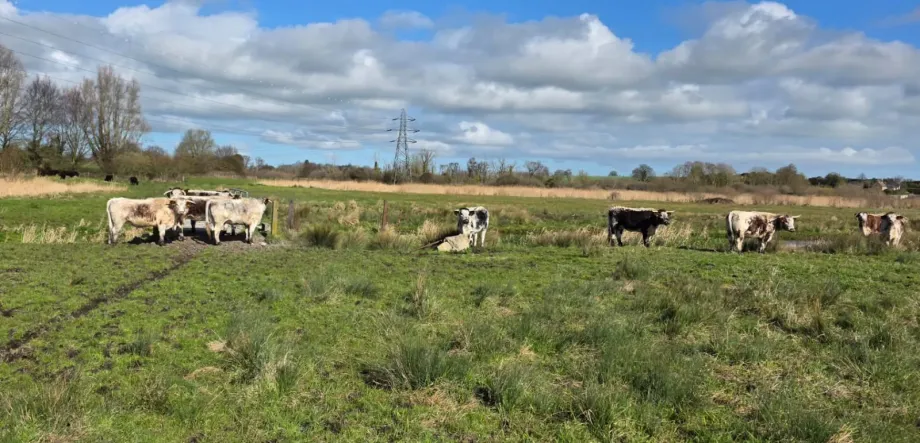
Cows at Ham Fen. ©️ Steve Dallison
They have trackers that give us a recent location, although if they are deep in the woods, it can be a few hours old! Often, to reach them involves climbing through the thick undergrowth of gorse and brambles, so in practice it takes all morning. The driving wind and rain in January or the heat of the summer present different challenges. At South Blean the Sussex are noisy eaters, crashing through the undergrowth, so can often be heard from 70 metres away, long before we see them. In wind or rain, we can be found peering at a fallen tree, or stump, to see if it is actually a ruminating cow! Liz has a poor sense of direction, so once checks are complete the challenge for her is to know the way back out to a track or trail. It all adds to the experience!
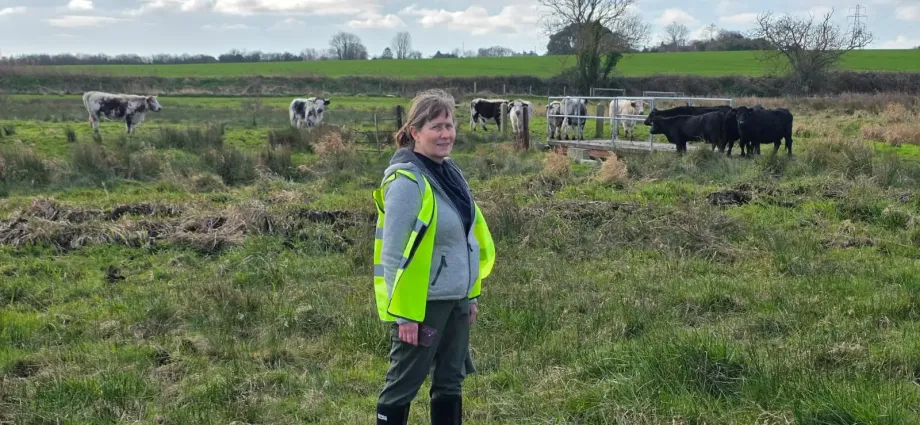
Liz checking on the cows at Ham Fen. ©️ Steve Dallison
It is good to embrace all the seasons (with the right clothing!) and see the change in the habitats and the way the livestock adapt their diet to the changing foods available. Just watching them eat gorse, bramble and holly is amazing. The Sussex girls create their own favourite pathways connecting seasonal food preferences and water sources. In January I was deep in the woods following one, when she pushed through the dense bushes and there, in the middle, was the hint of a narrow trail. It gradually got increasingly defined as cow wide, until eventually we both emerged at the back of their water trough.
Hence one difficulty for us is crouching down to follow them, as the path through gorse and bramble is not only cow wide, but only cow high! The right clothing here includes a thorn proof hat! The Sussex girls also pull down many young tree saplings to eat the top, succulent new growth. It is fascinating to stand nearby and watch them at work once our checks are done. This more dramatic feeding opens up the canopy before the trees get too big and lets the sunlight reach the ground covered with leaf litter. This creates fertile open areas for the woodland to diversify its species of flora, and of course hungry fauna follows on, regenerating the wood. The Longhorns don’t seem to be so reckless in their movements but still churn the ground and diversify habitat.
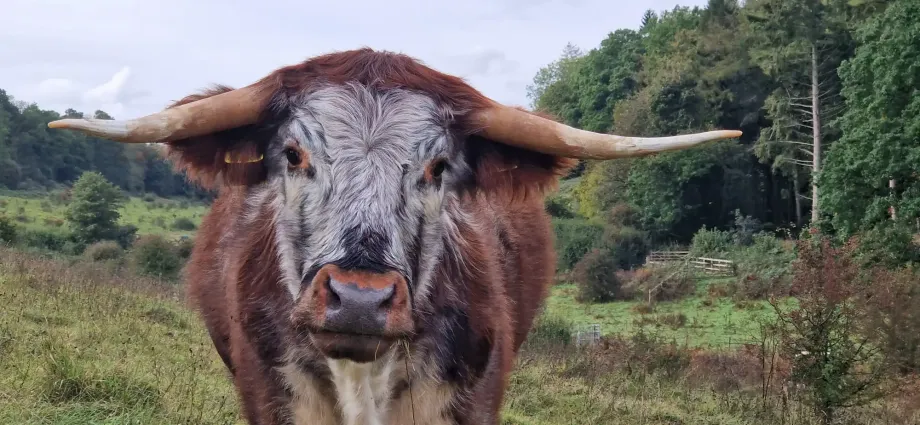
A longhorn cow at Park Gate. ©️ Steve Dallison
The checks we do need to be completed and sent to the area wardens in the mornings, so any issues arising can be dealt with by the experts KWT have, or we can be assured all is well. A helpful pictorial guide supplied after “in the field training” shows what to do. Each animal’s condition is assessed: eyes, ears, nose, body shape, tail, movement etc. as well as for any injury and their general disposition and confidence. After all, many share their environment with the public, and occasionally dog walkers are not always conscious of the impact their pets can have. Sometimes we remind owners of the need for leads to actually be attached to the dog, but they normally understand. We have found with regular checking that the temperament of the livestock is easier to read as they get used to us, though some will always have a healthy caution around people. As we do around them! It is important not to invade their space as the responses will no longer show them at ease. Also too close to them has potential health and safety concerns for us and them. We find the Iron Age pigs can be especially unpredictable, so we are particularly attentive and keep a good distance from them. Common sense really! There are also some specific illnesses we may be asked to look out for, flagged as a current issue by the wardens to us.
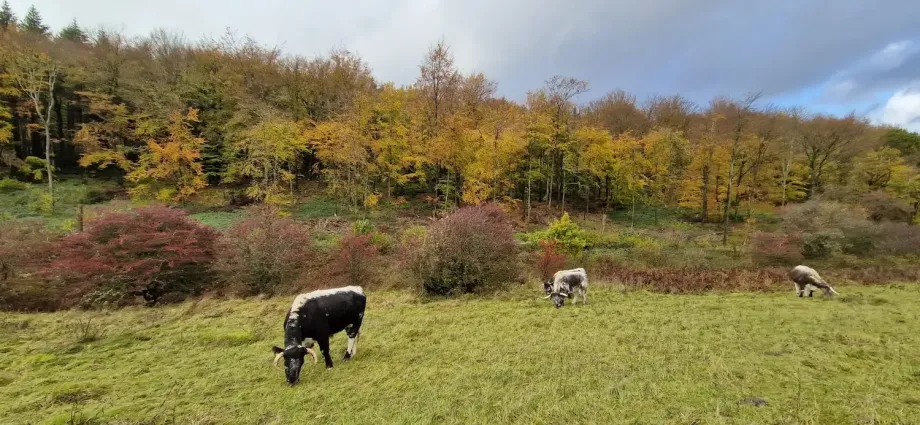
Longhorns grazing at Park Gate. ©️ Steve Dallison
As you can see, checking livestock is not just like counting sheep, though there may be sheep to be counted too! The checks help Liz and I to see how the animals work in their ecosystem and how they are affecting it, and how it affects them. It is also a good way to see all the seasonal changes in a specific area, keeping our eyes open and taking in the detail all around us. We see many other species along the way too, from fighting foxes, rutting deer, and nesting buzzards to scarpering snakes. If, as Mark Twain said, “golf is a good walk spoiled”, then livestock checks are a good walk enhanced, with a greater appreciation of the interconnected synergy of nature, including us of course! Liz and I also like that by doing this essential but time-consuming task volunteers free up wardens to do other things.
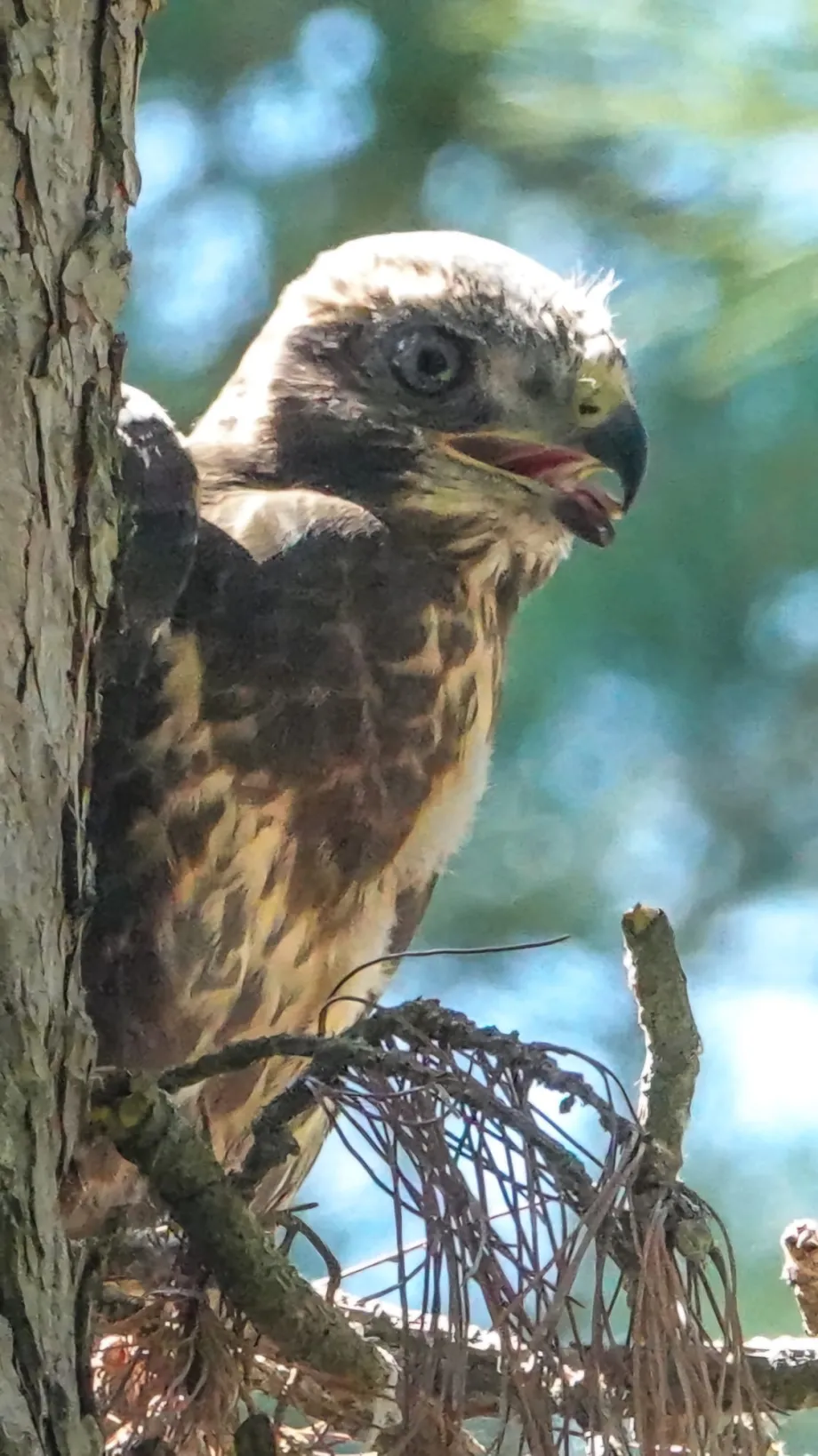
A nesting buzzard. ©️ Steve Dallison
For anyone thinking about joining us, now would be a good time to start. After all, bleak midwinter checks, that make the spring so much more rewarding to look forward to, will soon be on their way.
Check the livestock volunteering page for the list of locations where volunteer checkers are needed right now!