
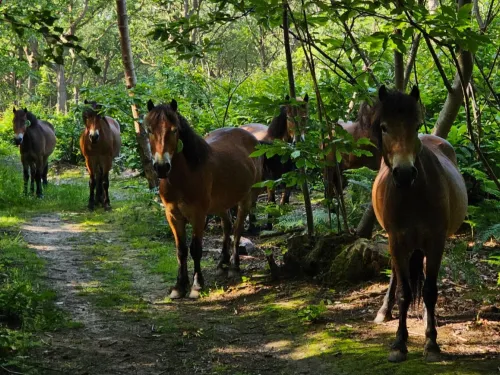
Exmoor ponies
Information page
Find out about Exmoor ponies and why we use them in conservation.

Longhorn cattle can be a variety of colours from terracotta red, rich red, through roan to red brindle and plum brindle with variable amounts of white, invariably a long white line down the spine - known as finch back. They have large horns which generally grow forward with a downward sweep but can also curve inwards towards the mouth, known as bonnet horns.
Origins - What's the History?
Longhorn cattle date back to medieval times and were most common in the Midlands and Northern England[i]. At this time the breed was known as a triple purpose breed – used for beef, milk and as a heavy draught (working) animal[ii]. The origin of the Longhorn we know today was the hard work of two men – John Webster and Robert Bakewell.
John Webster lived in Canley, near Coventry in 1713. He focused on breeding his herd for their large frame, strong constitution and ability to fatten well with large sturdy bones; but their most striking feature was their large, crooked horns. Whilst there was no other breeder at the time who could contribute to his herds genetics, he somehow was able to keep improving the breed, continuing to increase the size of both the bulls and heifers. Around 1733 some of Webster’s stock was starting to get a good reputation as the purest bred animals within the breed. One of his cows “Old Comeley” was the mother of “Twopenny”, Robert Bakewell’s prize bull of 1771[iii].
Robert Bakewell of Dishley Grange, was born near Loughborough in Leicestershire where his family were tenant farmers. In 1760, after spending most of his young adulthood travelling Europe learning of other farming methods, he took over the farm from his father. His well-known method for ‘improving’ a breed was through inbreeding. He bought two longhorn heifers from John Webster and a Bull from Westmorland, whose offspring he inbred intensively to produce animals which matured and fattened quickly with relatively little bone, making them very efficient meat producers[iv]. The breed became very popular in use as beef cattle with longhorns being able to eat less but put on more weight than other breeds at the time. However, after Bakewell’s death in 1795, his apprentice Charles Colling, alongside his brother Robert Colling, brought two bloodlines of Durham cattle together leading to the start of what resembled a beef shorthorn. The bull that was born from these two blood lines was called Comet and lead to Bakewell’s Longhorns going out of fashion[v].
Uses in Conservation
The breed is well known for its 20+ years life span, docility and calving ease. Longhorns have one of the largest pelvic aperture to bodyweight ratios which along with its low birth weight makes it one of the easiest of calving breeds around. They don’t require intense supplementary feeding, meandering through reserves in a bulldozer-like fashion, surviving off the range of forage on offer. They will readily eat course grasses, thistles, and bramble over other types of vegetation which makes them great for opening up areas that have been left to over grow and have become a habitat of just a handful of species.
Longhorn cattle are classed as large cows with bulls weighing up to 1000kg compared to other breeds such as Highland cattle which are classed as a medium breed. They are hardy, have good temperaments and are adaptable to a variety of habitats and varying weather conditions – the latter being a factor which we need to consider more frequently with the changing climate.
A good example of a new project which we will be using longhorn cattle for specifically is Furnace and Hoathly Farm near Lamberhurst.
Furnace and Hoathly farm is a regeneration project with the aim of restoring species diversity and richness to a habitat that is currently a monoculture of course grass. The solution? Six steady, experienced Longhorn cattle which will act as the catalyst in regenerating the arable fields that blanket the landscape.
Their heavier weight coupled with the year-round grazing should start to break up the tight matt of course grass that has formed across the fields through consistent sheep grazing. Sheep graze tightly, which causes grass blades to tiller (produce multiple shoots from one root) creating a thick carpet of grass that suppresses plant variety. The Longhorn cattle will graze at random, opening up the turf creating space for less dominant herbaceous plant species to come through. Over time, this process will increase scrub and plant diversity, adding species such as birds foot trefoil, ox eye daisy and common chickweed which will support other insects and wildlife.
With the cows utilising their rip and tear grazing technique, a mosaic of differing sward heights will start to appear, creating microhabitats for insects to breed as well as vital cover for small mammals to traverse the landscape. Furthermore, as plant diversity increases, so will the soil quality. The increased variation in plant root length will help stabilise the earth whilst retuning nutrients to the soil. A good indicator of good quality soil are ant hills. These insects aerate the soil, improving water infiltration and oxygen flow to plant roots, helping them flourish.
The longhorns that will be used have been part of another restoration project at Heather Corrie Vale in Sevenoaks - a previously intensely managed golf course that had the same matt of course grass which Furnace and Hoathly farm has. Instead of sheep grazing however, this thick carpet was the result of consistent mechanical mowing. The land has slowly been transformed back to a wilder state, supporting a rage of wildlife from ivy mining bees utilising the abandoned sand pits to palmate news taking up residence in the reclaimed femoral ponds. Since the cattle went on in early 2024 the site has changed considerably, with the cows allowing the woodland edge habitat to encroach, increasing scrub whilst keeping sections of the pasture open.
[i] Stanley, P. (2023) A history of the breed, History of Breed. Available at: https://www.longhorncattlesociety.com/knowledge-base/category/breed-history/a-history-of-the-breed-by-pat-stanley (Accessed: 13 February 2026).
[ii] Breed history - Longhorn Cattle (2026) Longhorn Cattle Society. Available at: https://www.longhorncattlesociety.com/the-breed/breed-history (Accessed: 13 February 2026).
[iii] Poulson, R. (2022) The purest fountain of Canley blood, A History of the Breed. Available at: https://www.longhorncattlesociety.com/knowledge-base/category/breed-history/a-history-of-the-breed-by-pat-stanley (Accessed: 13 February 2026).
[iv] History - Robert Bakewell (2014) Robert Bakewell (1725 - 1795). Available at: https://www.bbc.co.uk/history/historic_figures/bakewell_robert.shtml#:~:text=Robert%20Bakewell%20(1725%20%2D%201795)%20was%20an,and%20exaggerate%20traits%20that%20were%20thought%20desirable (Accessed: 13 February 2026).
[v] Beef Shorthorn history (2023) Beef Shorthorn History – Beef Shorthorn Cattle Society. Available at: https://www.beefshorthorn.org/about-beef-shorthorn/beef-shorthorn-history/ (Accessed: 13 February 2026).
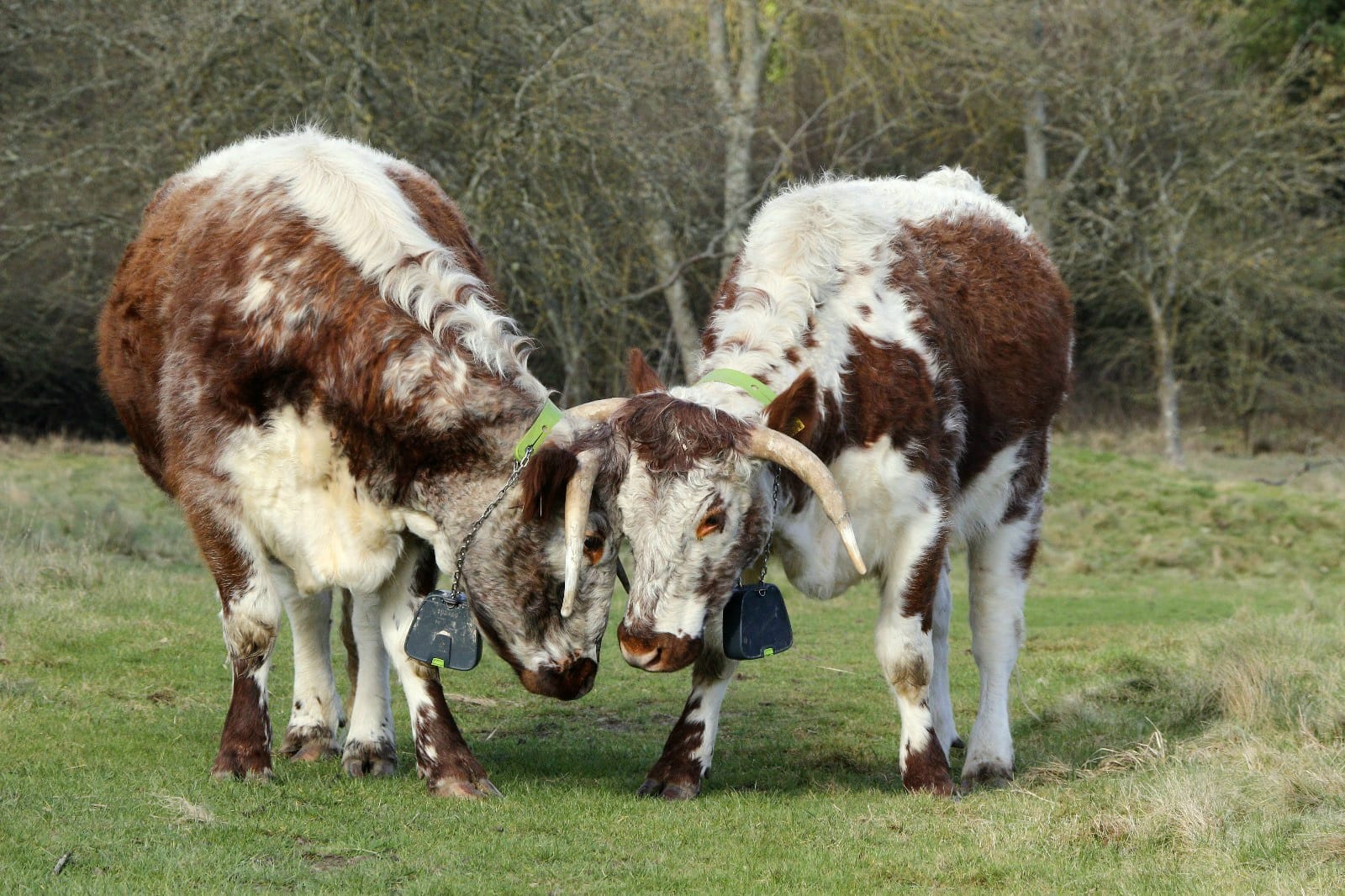
Longhorn Cattle at Heather Corrie Vale in Sevenoaks
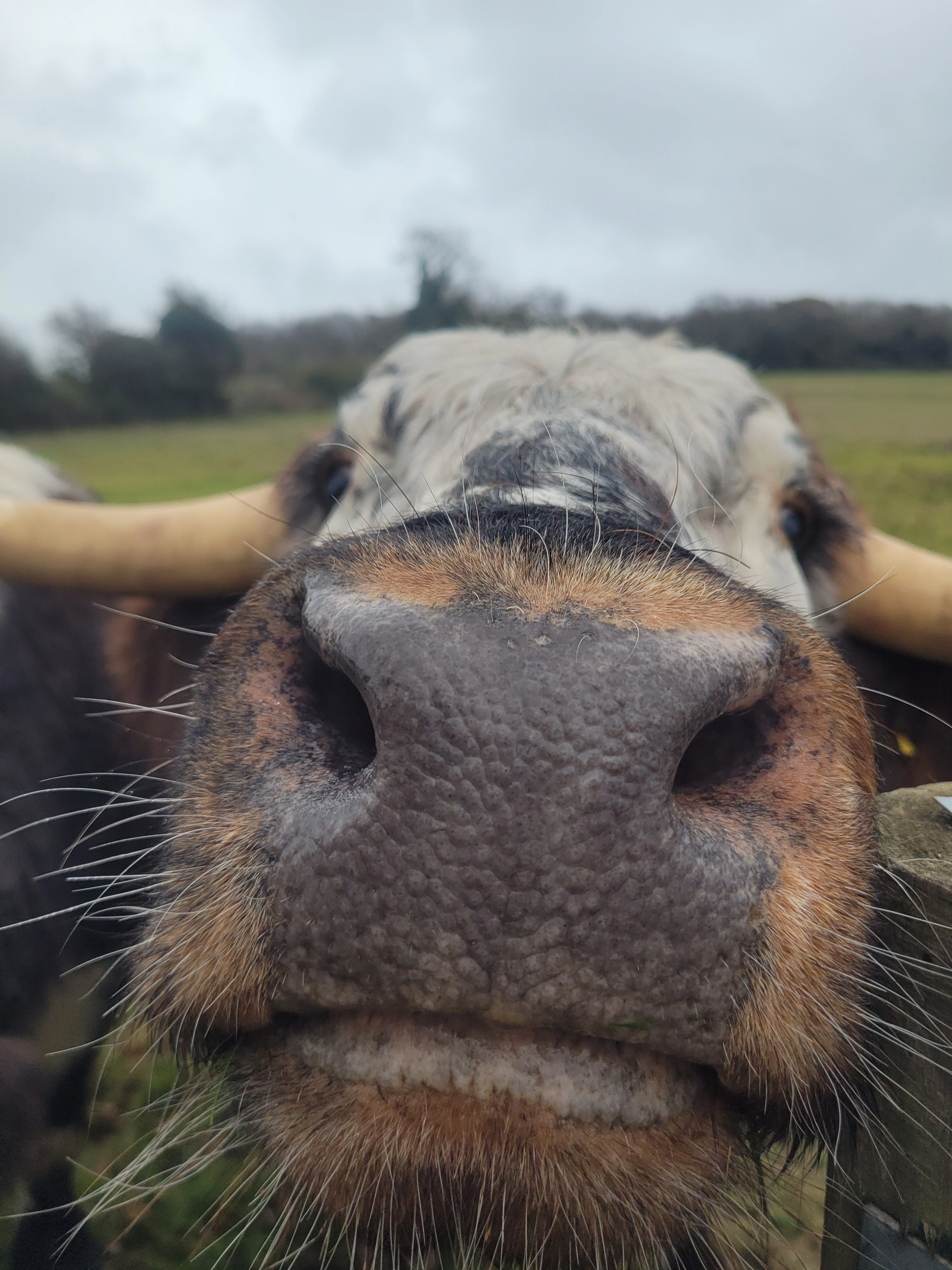
Longhorn Cow at Queendown
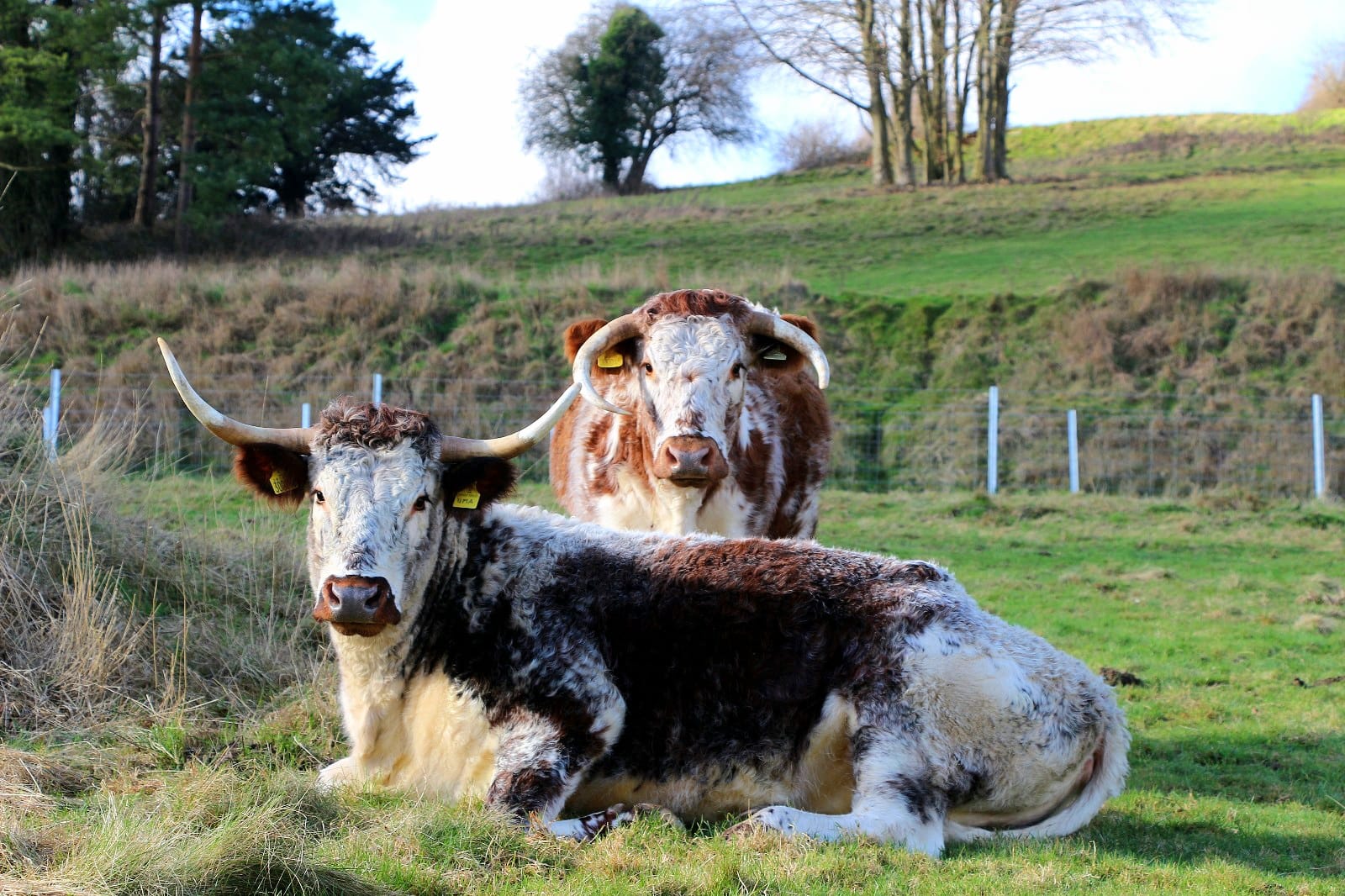
Longhorn Cattle at Heather Corrie Vale in Sevenoaks
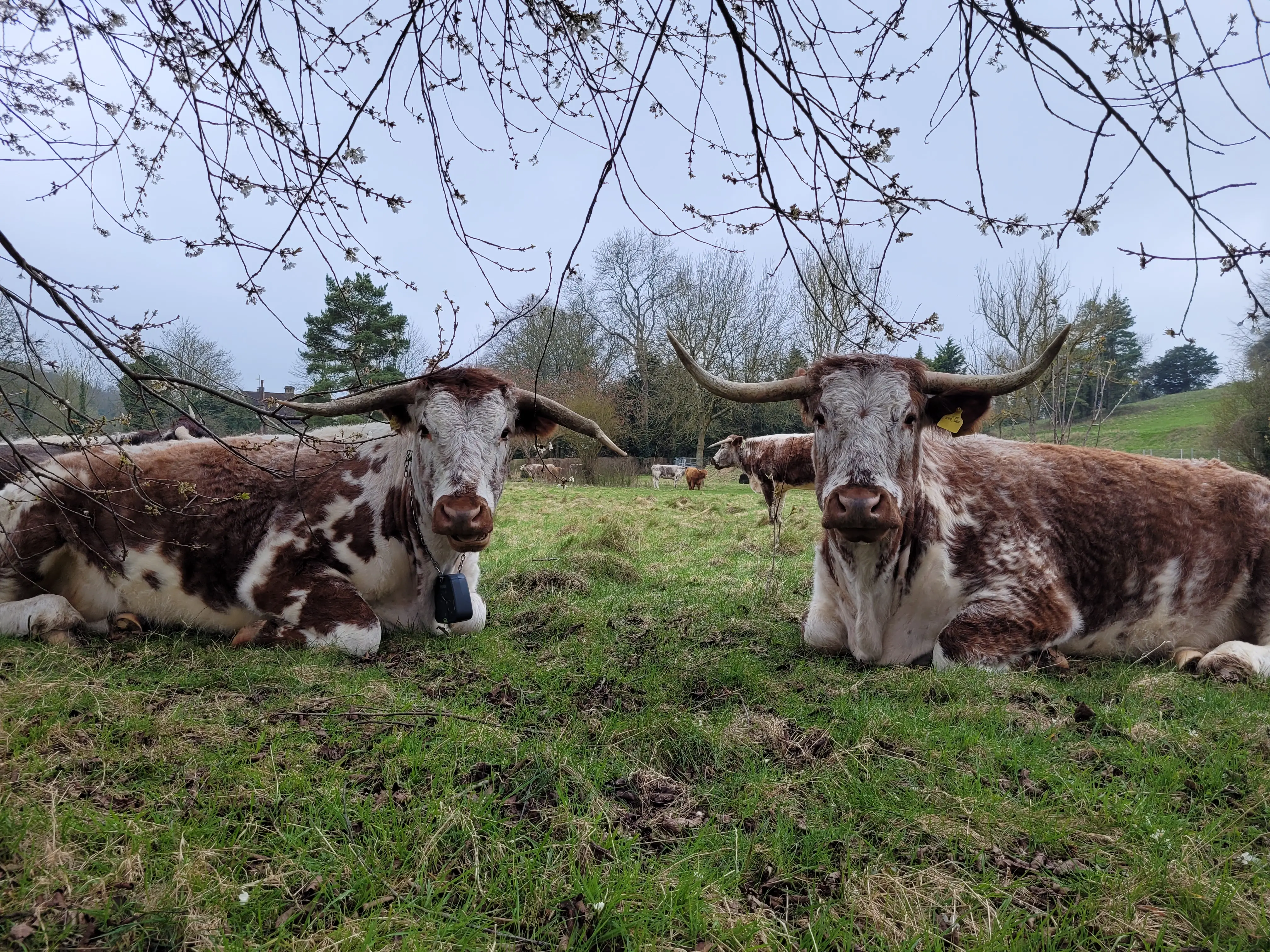
Longhorn Cattle at Heather Corrie Vale in Sevenoaks
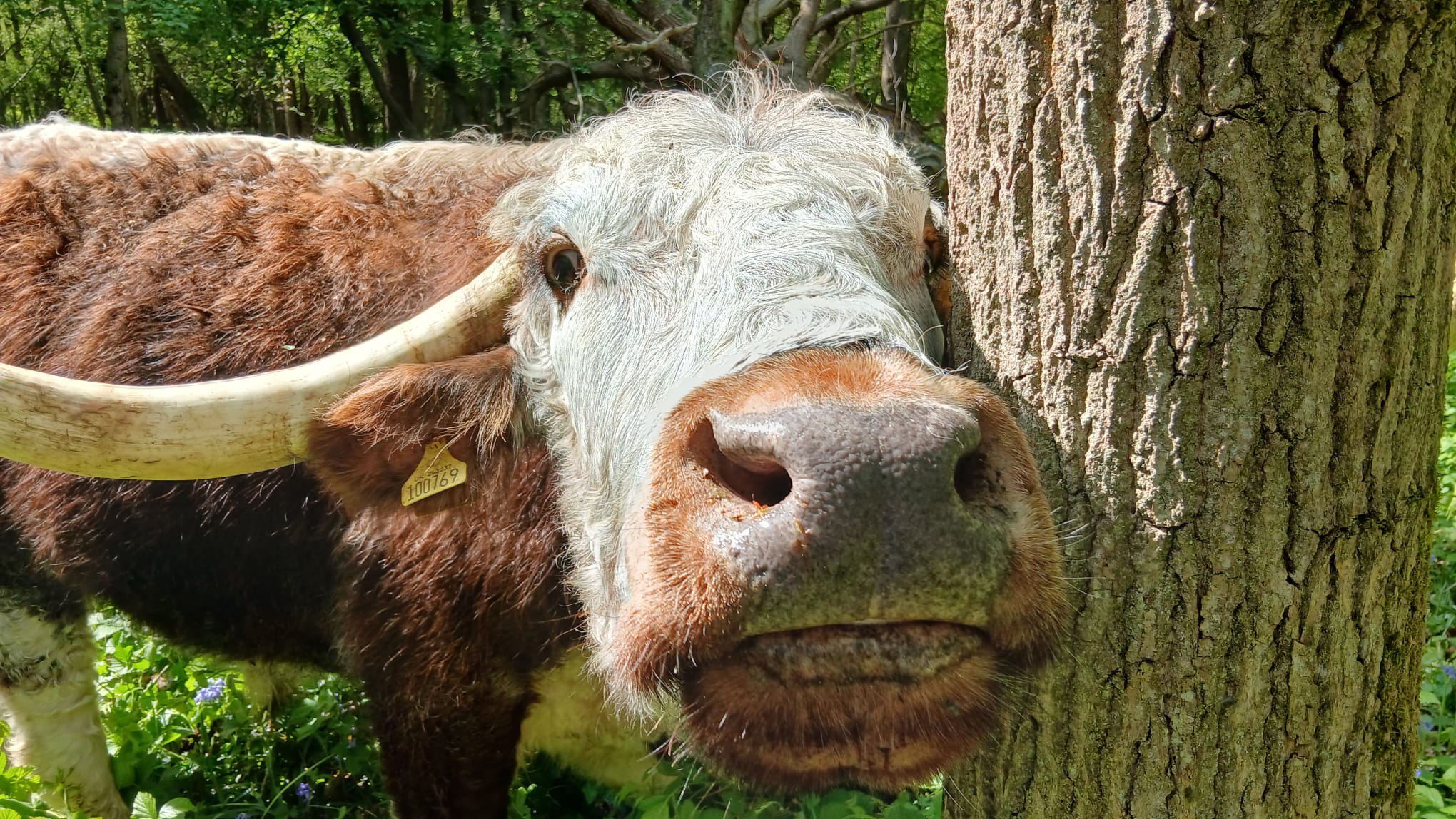
Longhorn Cow at Broadham
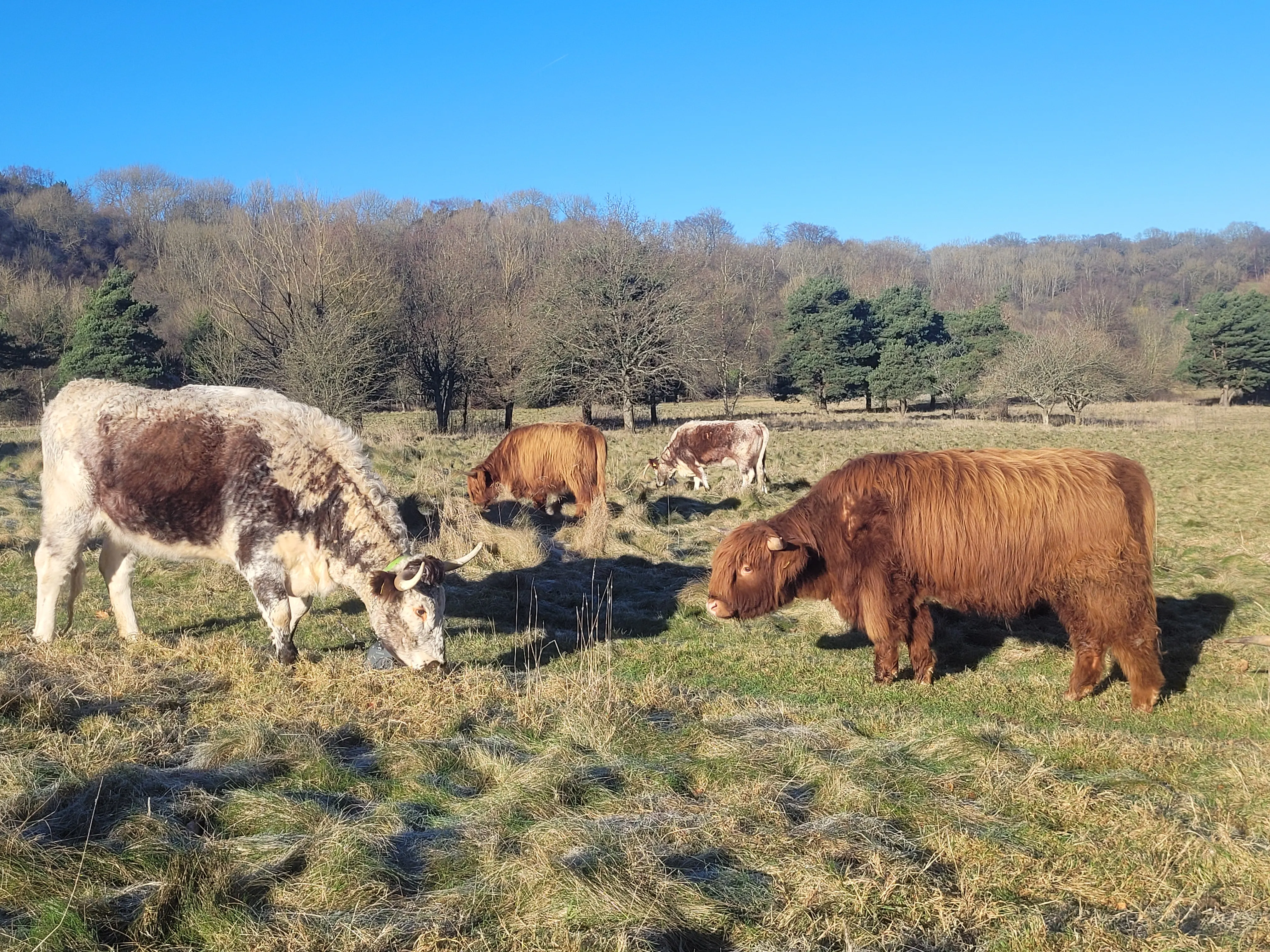
Longhorn and Highland Cattle at Heather Corrie Vale in Sevenoaks
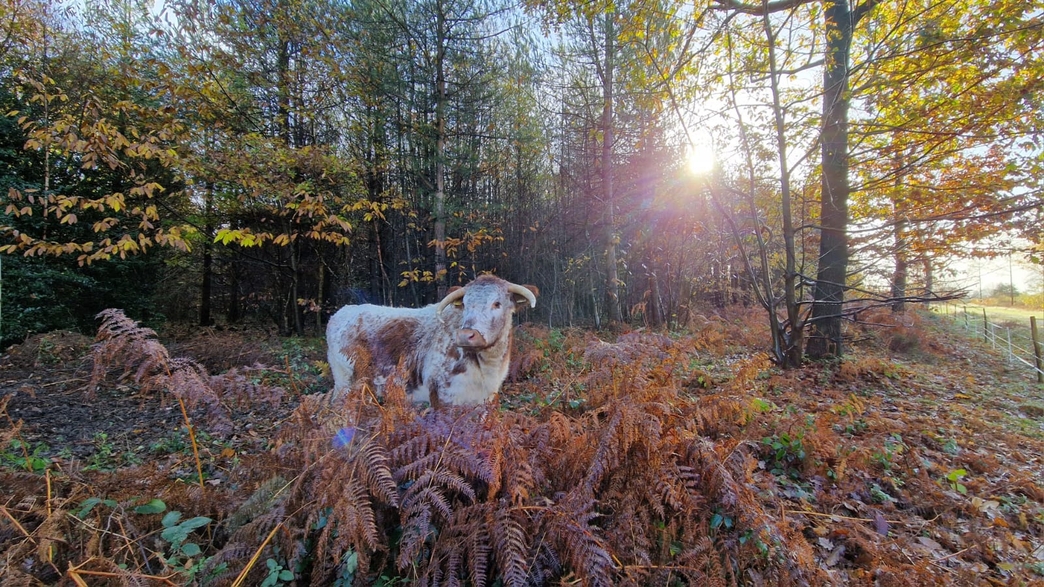
Longhorn cow at Covert Wood
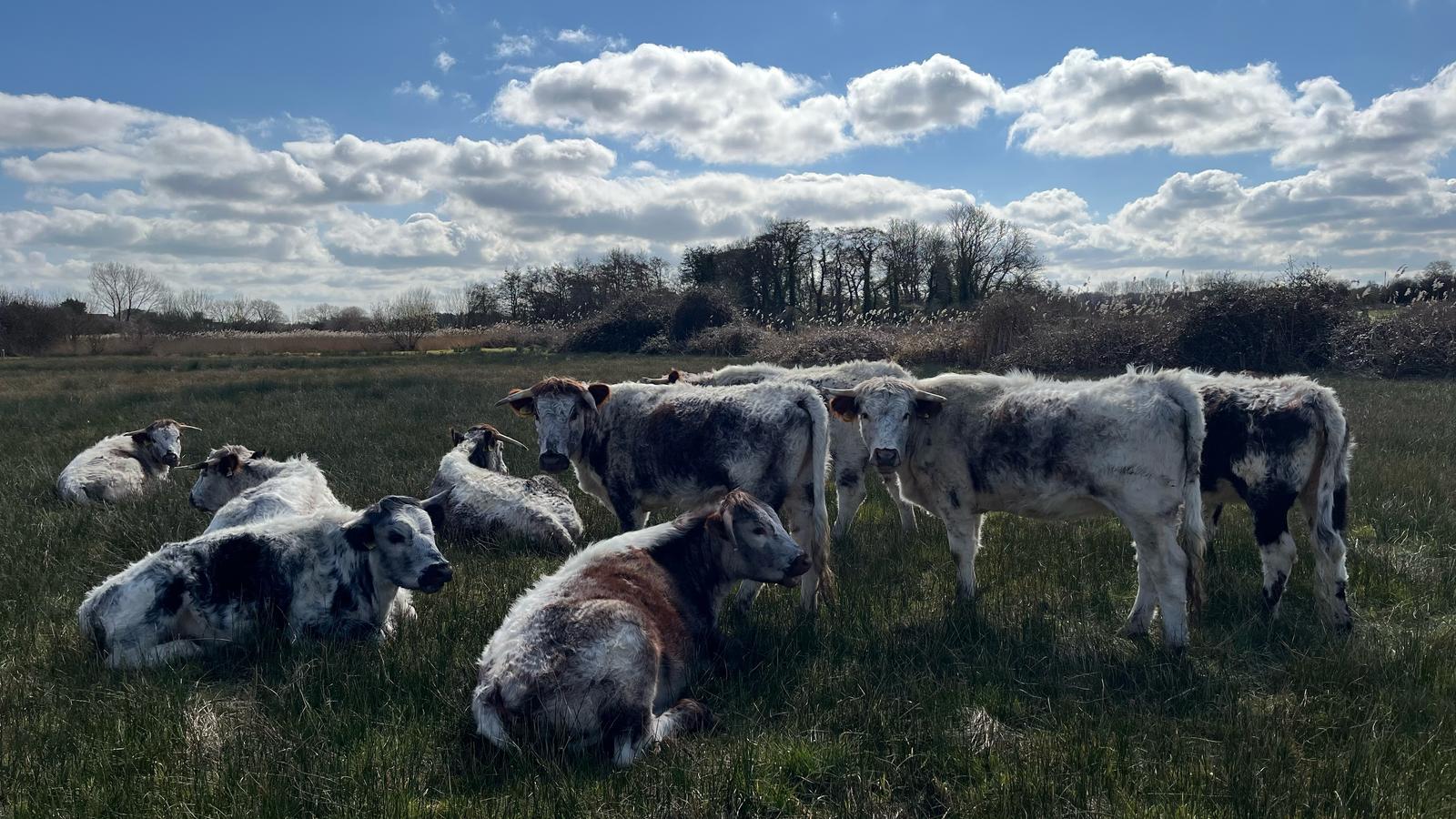
Longhorn Cattle at Ham Fen
Find out about Exmoor ponies and why we use them in conservation.
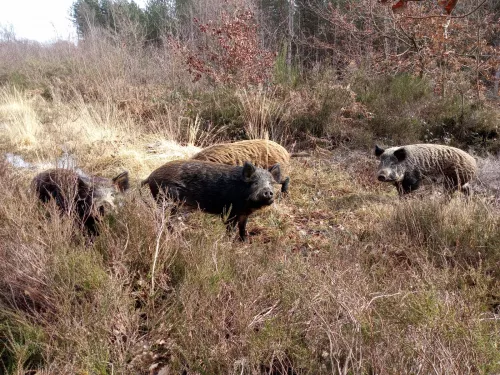
These pigs are as close as you can get to the wild boar and also, despite being a domesticated version of this wild species, share many of its traits.
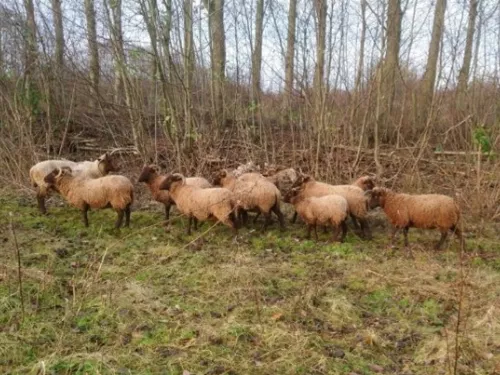
A striking unusual milky coffee coloured-sheep, often with four horns and sometimes as many as six. This primitive breed is originally from the Isle of Man. Their fleece self-sheds but they can also be shorn.