
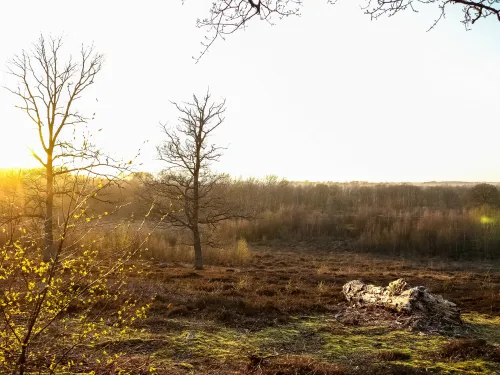
Changing seasons at Hothfield Heathlands
Blog
Ashford Area Warden, Will Glasson, explores autumn conservation and wildlife at Hothfield Heathlands - and how you can get involved.

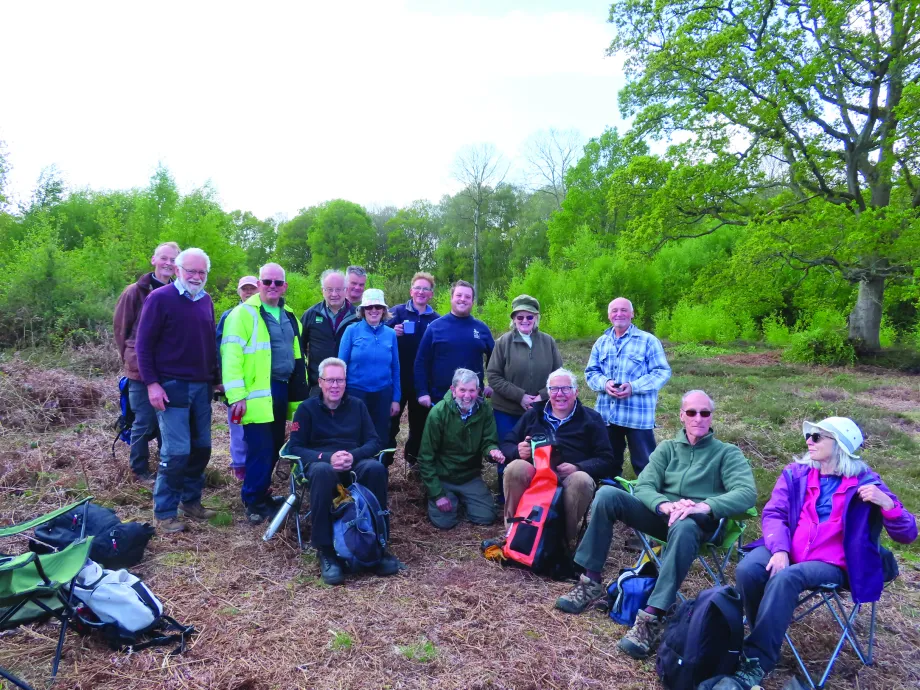
Margery with volunteer team
I’m mainly a desk volunteer, working to a monthly deadline. I read, research and speak to other volunteers to build a picture of what’s happening on the reserve. I visit whenever I can and I follow updates through the volunteer groups online.
There’s always something new to write about. While my background is in botany, the reserve is so rich that I’m constantly learning about animals, insects, birds and fungi too. Together with the knowledge of the other volunteers, we build a fuller understanding of how everything connects.
One of my most valuable experiences was taking part in botanical surveys between 2016 and 2019. We spent days walking the reserve, recording plants in detail. It was hard work but incredibly rewarding, and it deepened my understanding of management issues on the site and how much has changed over time.
I love the moments of discovery – when volunteers spot something new, like rare fungi that hadn’t been recorded on the reserve before. There’s also something magical about being there at unusual times, like a summer evening moth-trapping session and walking through the woods at midnight under the moonlight.
One very special moment was being given a book of my articles – I was speechless! I arranged for copies to be printed and sold, with proceeds donated back to the Trust.
But overall, some of the best moments are the everyday ones – spending time with fellow volunteers, learning from them and sharing that sense of purpose.
Just try it! Talk to people, think about what you enjoy and what you can offer. There’s such a wide range of roles, and all the volunteers are incredibly welcoming. People come from all backgrounds and bring all sorts of skills.
Being outdoors, helping to care for a place like Hothfield Heathlands, is deeply rewarding. These places matter – not just locally, but globally. As has been said of great peatland landscapes, their loss would be “an irreparable loss to humanity.” Even here, on our doorstep, we all have a part to play in protecting them.
The biggest change I’ve noticed is how much drier it’s become, particularly in the summer. Climate change is definitely having an impact.
This has led to important work around water management – creating leaky dams, restoring ponds and managing drainage to help retain water. These efforts are vital for the plants, invertebrates and birds that depend on wet habitats.
One concern we all share is the decline in insects and butterflies. It’s something I and the other volunteers have seen first-hand over the years, and it underlines how important places like Hothfield are.
The best moments are the everyday ones – spending time with fellow volunteers, learning from them and sharing that sense of purpose.
A huge thank you to Margery for her efforts, time, and dedication to Hothfield Heathlands over the past decade.
Below you can read Margery's very first article for KWT, written in March 2016!
Ashford Area Warden, Will Glasson, explores autumn conservation and wildlife at Hothfield Heathlands - and how you can get involved.
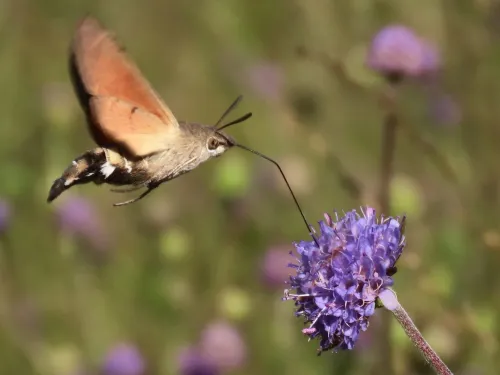
Margery Thomas, volunteer, has been writing articles about Hothfield Heathlands' flora and fauna since 2016. In this month's article, she reflects on some of August's sightings and recent updates.
It's been a hot few months on Hothfield Heathlands! Long-time volunteer, Margery Thomas, reflects on recent work and sightings.
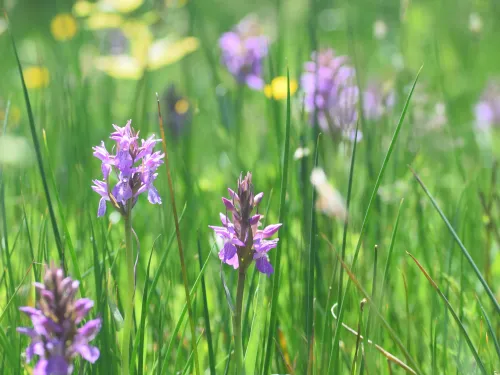
Hothfield's evening bat and amphibian walk revealed pipistrelles, newts, and a nightingale's song, while rare heath spotted and Southern marsh orchids bloom in the reserve's acid bogs.
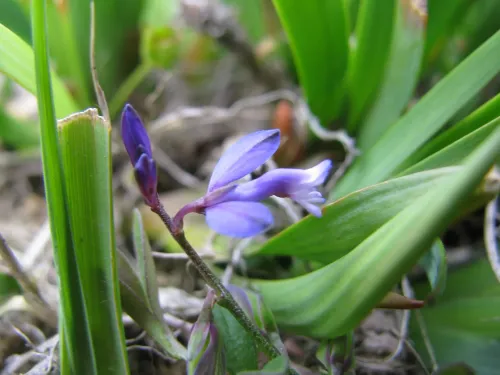
Hothfield Heathlands is abuzz with life in June! In the sky, on the ground, above the water, and under the surface - the reserve is busy, and so are our volunteers.
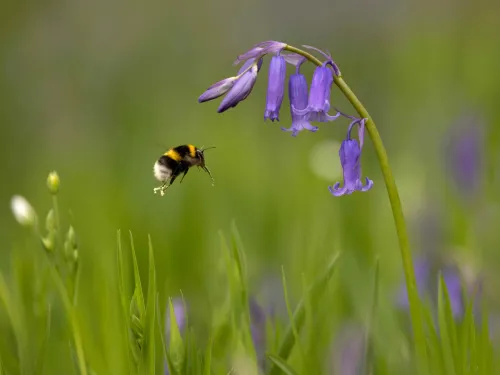
The glossy green spears that pierced dense leaf litter in late winter are now transformed into sheets of violet-purple-blue in the woodland edges of the reserve. The magical bluebell weeks began fairly early, a soft scent and a flood of colour that…