

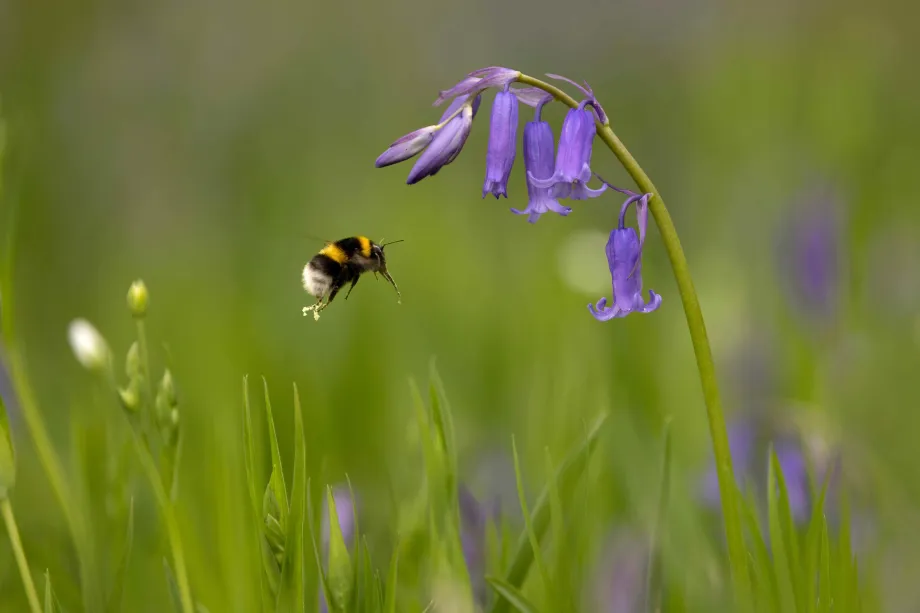
Bumblebee and a bluebell. ©️Jon Hawkins – Surrey Hills Photography
The botanical name I learned as a child, Endymion non-scripta, changed twice late last century and is now Hyacinthoides non-scripta ie like a hyacinth with no markings, the latter epithet used originally to distinguish it from the classical Greek hyacinth. It is in the Asparagaceae family but is not edible. A reminder that digging up the plant or trading wild bulbs and seed is prohibited.
A group of less spectacular but significant plants, the sedges, is also starting to flower now, a source of pollen ahead of the grasses, on the heathland and in the bogs and mires, part of what Alex Lockton considers to be the most distinctive plant community of the reserve. Sedges have triangular flower stems and, like plantains, have no petals. The clusters of male and female flowers are often held separately on the same stem, the prominent often cream coloured stamens attracting the eye. In flower now around the edges of bog no 2 (with the causeway), is star sedge, Carex echinata, 30cm tall, axiophyte of mires and wet heath, recorded here back in 1875 and listed on the current Kent Rare Plant Register. Also on the register and in flower is the carnation sedge, Carex panicea, up to 40cm tall with blue-green leaves ending in triangular tips, found in all the bogs, an axiophyte of acidic flushes and wet grassland which is very rare in Kent.
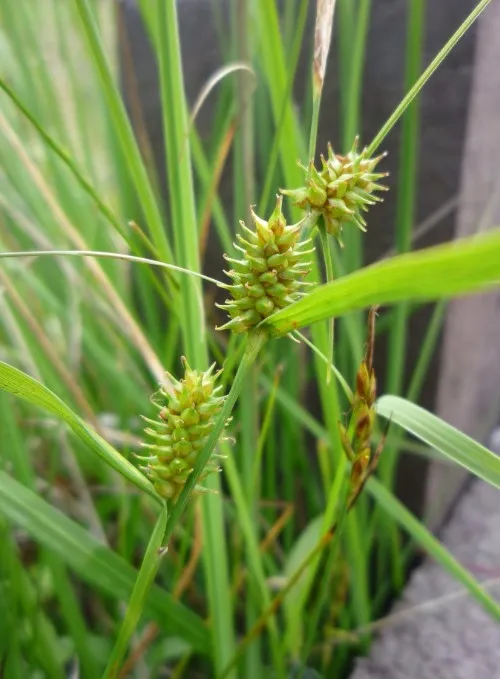
Yellow sedge
In early April volunteer David Rayner spotted green tiger beetle, sun beetles and a slow worm, with spring butterflies and early damselflies about. Colleague Neil Burt heard nightingale, willow warbler and firecrest singing in mid-April but no cuckoo so far. Come and discover for yourself.
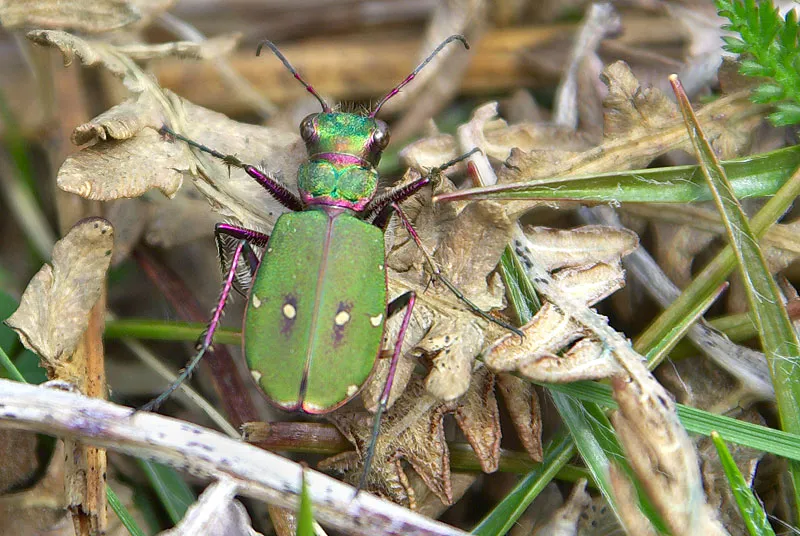
Green tiger beetle. ©️John Bridges

Learn more about bluebells...
Here are 10 incredible things you may not know about Hyacinthoides non-scripta... aka bluebells.