
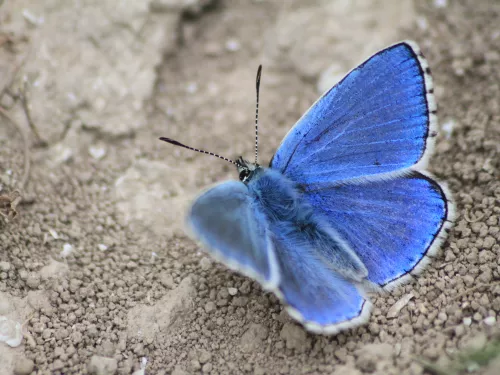
12 fun butterfly facts you probably didn't know
Blog
Discover 12 fun butterfly facts, from their life cycle to tasting with their feet. Learn why butterflies matter and how you can help.

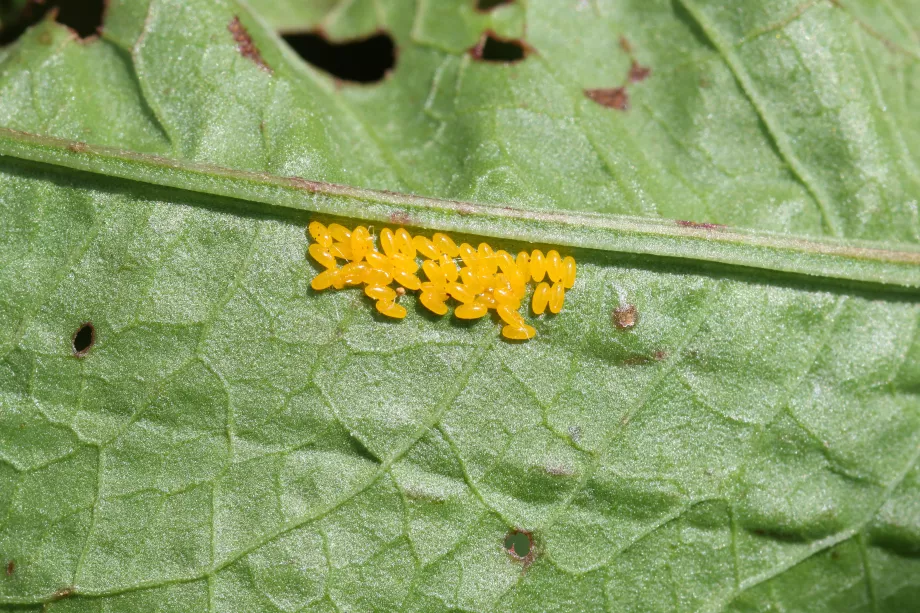
Green Dock Beetle eggs (Gastrophysa viridula) on the underside of the leaf © Vaughn Matthews
Most insect pollinators synchronise their life cycle with the preferred food source either of the adults in flight or of the hatching eggs transforming into hungry larvae. Dependent on the insect, the peak season is when there is the greatest food abundance, which might be pollen or nectar from plants for adults, but can also be other insects such as aphids and grubs for pollinator larvae such as wasps, beetles and hoverflies. While the adult flight times vary from species to species depending on their preferred food source, the busiest feeding times for adults and larvae are spring and summer.
The larvae feeding preferences of one group of fascinating pollinators, the hoverflies, is very diverse. Some have adapted to aquatic life - eating all kinds of decaying materials in water. In order to breathe, they develop a long pipe at the rear end of the body, which they stick into the air, which is why these hoverfly larvae are named rat-tailed maggots. Other hoverfly larvae hunt for plant lice or aphids, and some live within decaying wood, or sap runs on live trees. Providing a range of stagnant water, decaying plant material and trees, for hoverfly larve, as well as a diverse range of flowering plants for the flying adults, will support a wide range of these beautiful pollinators.
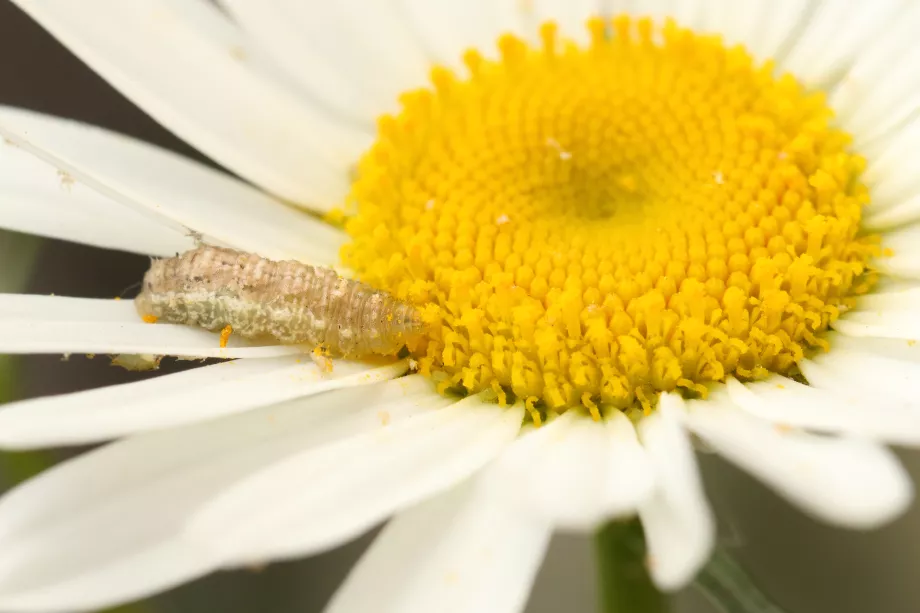
Aphideater fly larva, a genus of hoverflies (Eupeodes sp) © Vaughn Matthews
Towards the end of the adult feeding season, mating will take place, so that the next generation of eggs are fertilised. Some eggs are laid at the end of the adult peak feeding season, and in other species, the fertilised eggs persist within the overwintering female to be laid the following spring – such as in bumblebee species.
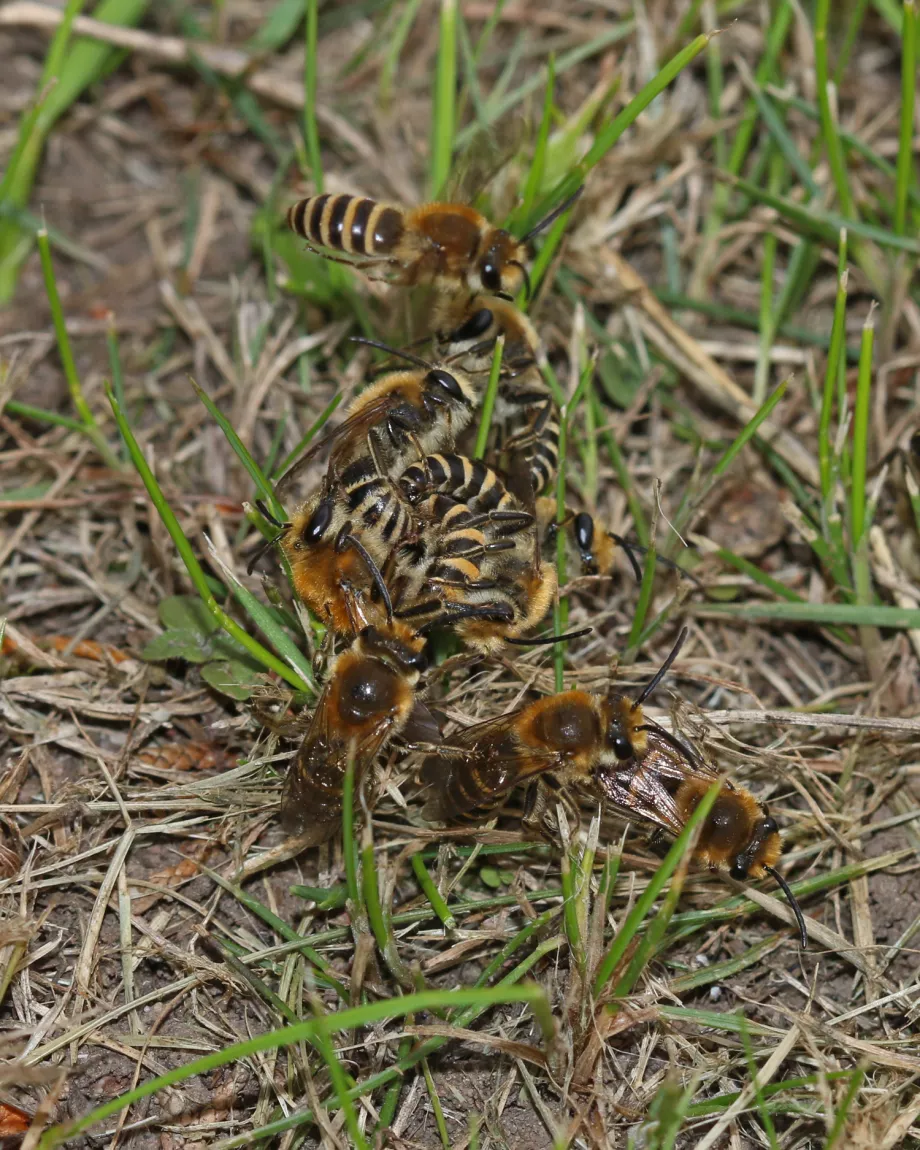
Ivy mining bees in a mating ball © Wendy Carter
Pollinators overwinter in different stages of their life cycle. Some adult butterflies such as peacock and comma, become dormant and hibernate in tree hollows, structures and wall cavities. Queen bumblebees hibernate in hollows underground. Other insect species overwinter as pupae in the soil, on plant stems and leaves, on decaying wood, and in hedgerows. Many other species survive the dark, wet winter months as eggs or larva.
Providing habitat piles of vegetation, dead wood, leaves and areas of lose rocks and soil undisturbed in winter is hugely beneficial for pollinators.
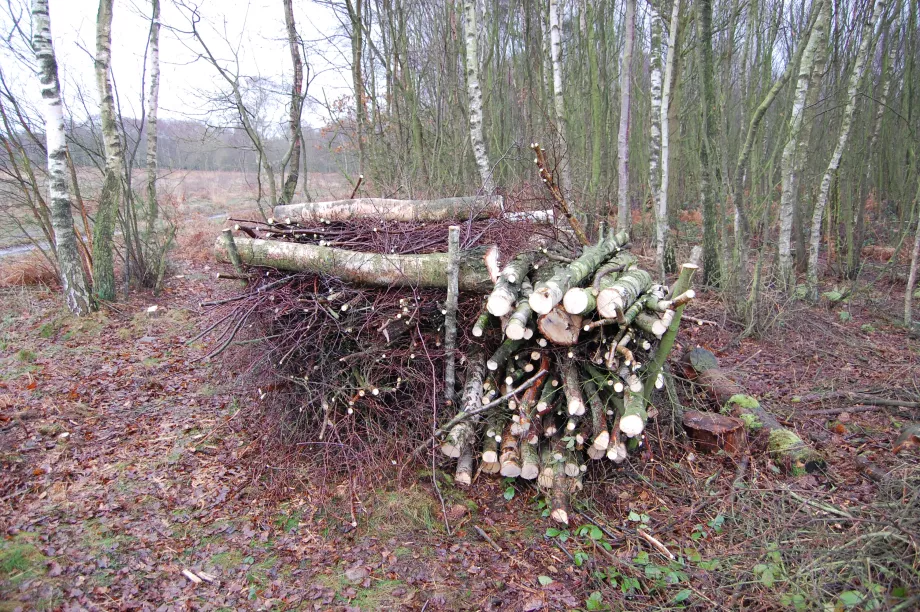
Habitat pile in woodland © Scott Petrek
Discover 12 fun butterfly facts, from their life cycle to tasting with their feet. Learn why butterflies matter and how you can help.
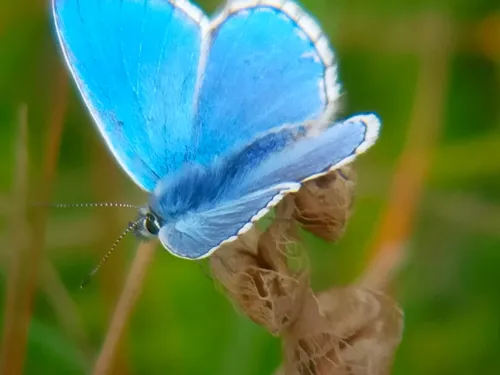
Butterfly expert Alan Sumnall offers a thorough guide to one of our most enchanting groups of butterflies – the blues.
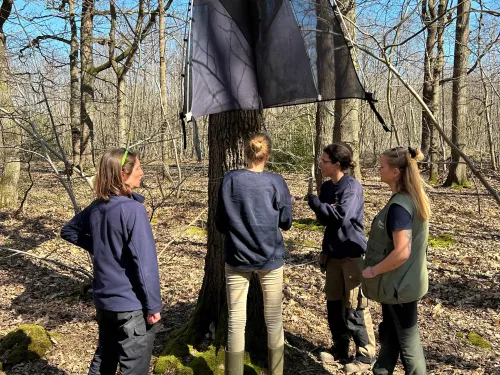
The invertebrate sorting volunteers are the unsung heroes of the Wilder Blean project - working hard over the winter months at Tyland Barn to ID & record West Blean & Thornden Wood's insect species.