

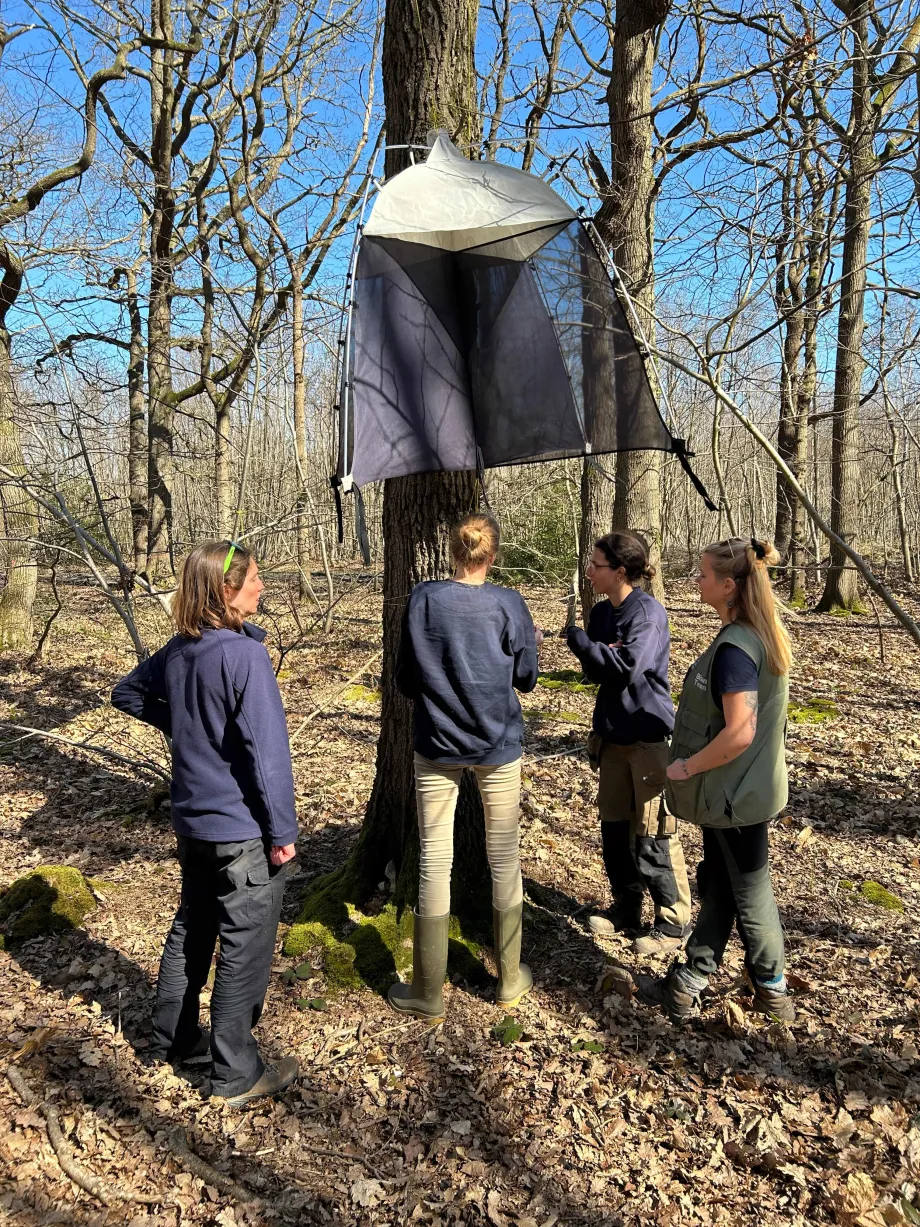
Deploying a SLAM trap. ©️ Richard Bradley
What have we found?
In terms of volume of numbers, the biggest factor so far appears to be the weather as the year-on-year change is quite variable, with 2021 and 2025 being the better years as regards the number of insects recorded. Before the Bison bridges have been built (two were built in 2025 with two more due to be completed in 2026/2027) only one of the trap locations was in the Bison enclosure so we haven’t been able to see any significant impact of the Bison to date, although we are hoping to see an increase in insect numbers in both numbers and diversity of species in the future due to the role of bison as ecosystem engineers, changing the vegetation and improving the habitat for other species. A section of the Kent Wildlife Trust website summarises the findings from 2021-2024.
In terms of individual specimens, the most interesting was initially a few male glow-worms (roughly one a year). Despite the name glow-worms are beetles, and the males of the more common of the two UK species fly but do not glow. These then look for the flightless females who glow on the ground. As the traps are located above ground it is unlikely we will capture any females.
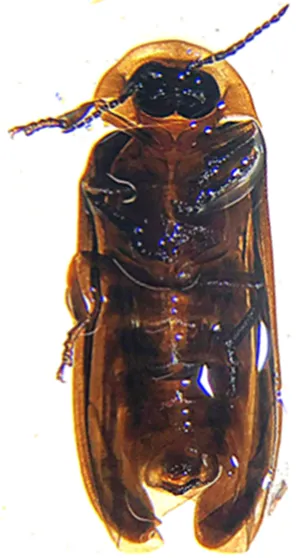
Male glow worm. ©️ Richard Bradley

©️ O.Silvell, Natural History Museum
Aenigmatias lubbocki
Experts at the Natural History Museum in London identified it as a female Aenigmatias lubbocki ((PDF) British Phoridae - introduction to genera). These are unusual as the females do not have wings and are carried by the male who has extra long legs to do so. We have since found the male in the same pot!
If reading this blog post interested you and you would like to help... Kent Wildlife Trust is currently looking for UKBMS butterfly survey volunteers! Butterfly transect surveys are an extremely important method of robustly measuring changes in butterfly populations. Some of the existing transects have been carried out for many years, giving a fantastic amount of data on how our management of our reserves is helping butterflies.

Volunteer for UKBMS butterfly survey
We need your help walking these transects weekly or sharing a transect with others, identifying butterfly species and recording them as you go.