

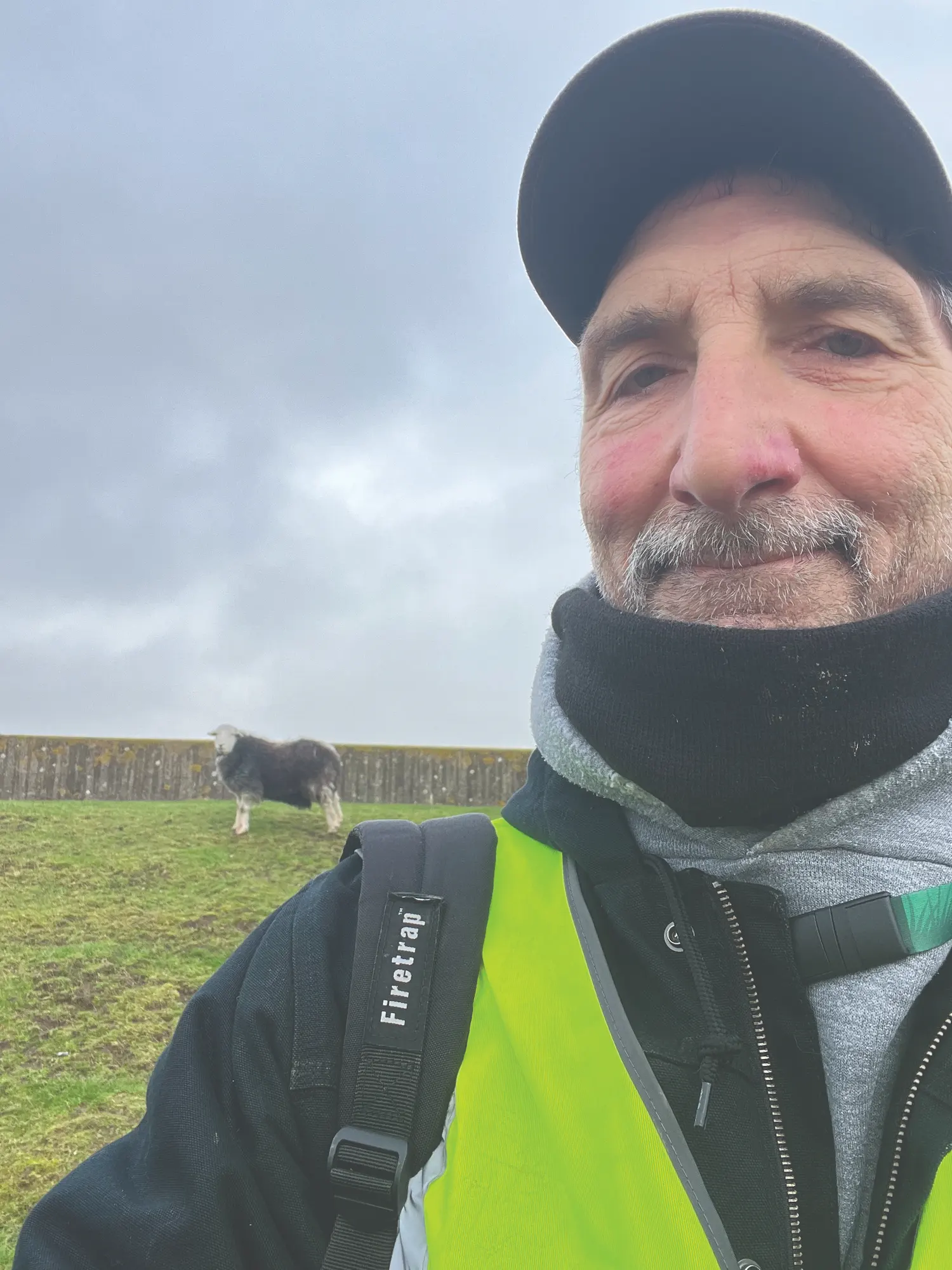
Ken, Swale area
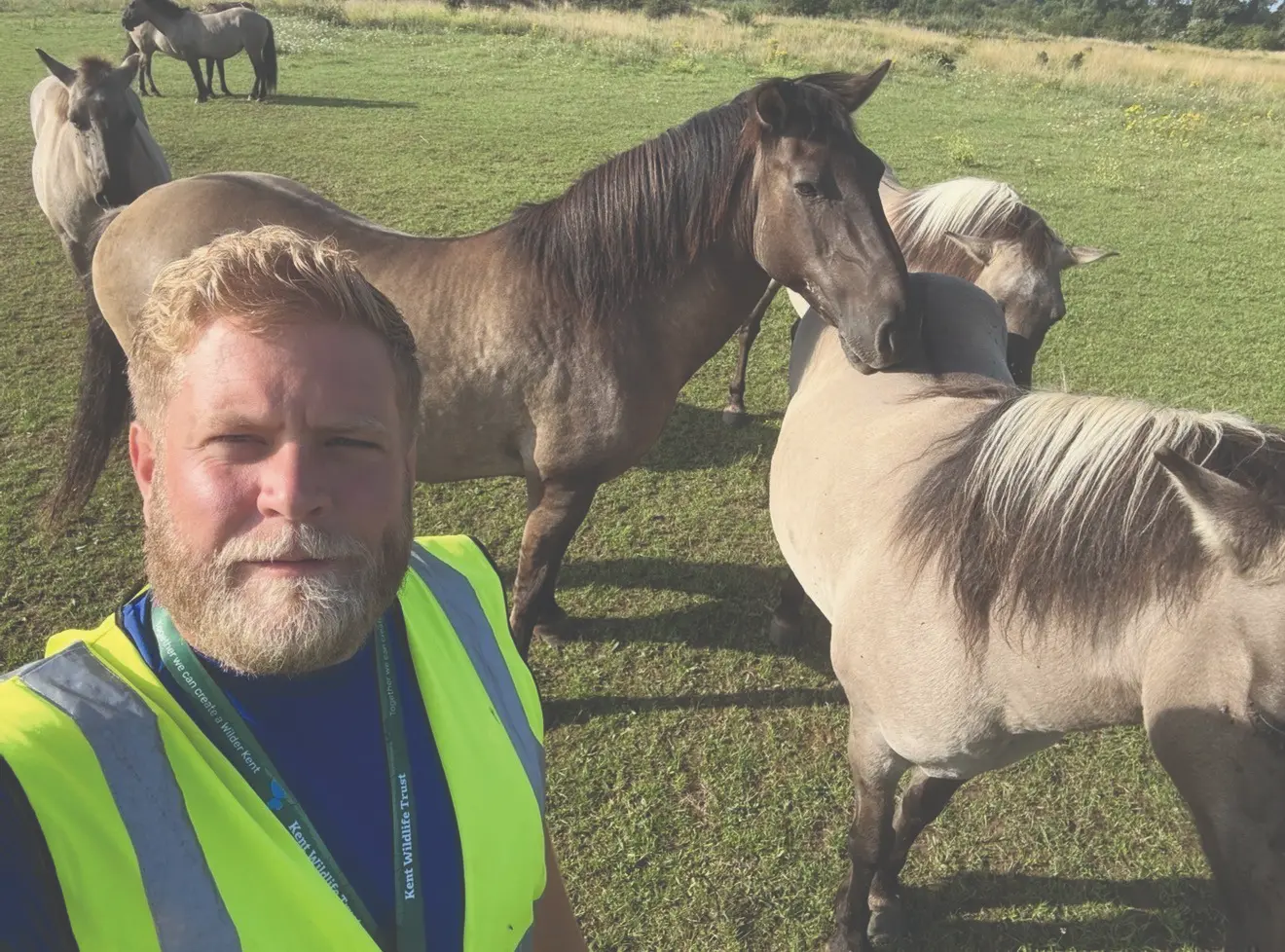
Iain, Pegwell Bay area
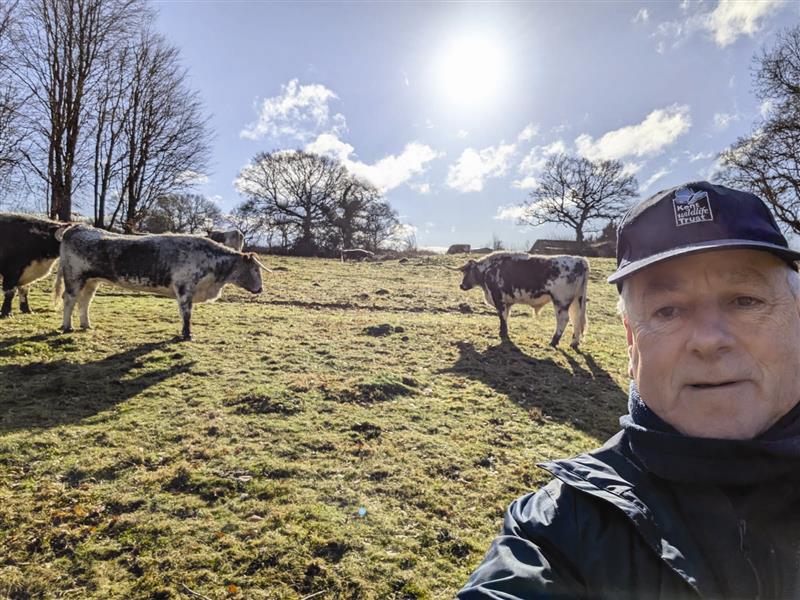
Mark, West Kent area
What inspired you to become a livestock checker? What first attracted you to the role?
Mark
"I was already a volunteer with Kent Wildlife and had observed Livestock checks being undertaken and as I have a natural love for all animals I was interested as to what was involved. Having discussed the role with the Kent Wildlife Warden I support (Max Goodwin) I realised I could help with my time, and it would be another way I could support Kent Wildlife and observe animals that are supporting the eco structure of the reserves."
Iain
"I was inspired to become a livestock checker after a chance encounter while walking my dog near the country park. I witnessed some members of the public disturbing the Highland cattle, which caused them to panic and stampede, and one animal became caught in the fencing. It really highlighted how vulnerable the animals can be and how important regular checks are.
"As I had recently moved close to the park, I contacted Kent Wildlife Trust to see if I could help. The role felt like a practical and meaningful way to contribute to animal welfare while supporting conservation locally."
Emma
"Harry, my son said they needed checkers in the Dover area. I had spare time at the weekend, and that was that! I have now been a checker for a year now."
Ken
"Originally from upstate New York, I moved to the London with my wife Diedre where I landed into a career of arboriculture. We moved to Wales, where I used my skills to tend to the trees and fields on our land and we looked after a range of rescue animals. After the passing of my wife, I moved to Kent in March 2025. One of my neighbours is a member of Kent Wildlife Trust, and one day she dropped off a Wilder Kent magazine and I read an article about Wilder Grazing and livestock checkers. I knew I wanted to get myself out there, so I met with the team and started my journey!"
What does your typical livestock check involve, and what are you looking for?
Mark
"My checks involve being part of a team of Livestock Volunteers who are allocated an agreed day of the week and an agreed site with Livestock on that site by the Livestock Ranger.
I visit my allocated site on my agreed morning and check the Livestock as follows (before 12pm):
a) count the Livestock to agree all are on site, this involves finding on the reserve as they can be spread out and not always easy to see
b) check that the Livestock seem well and are happy and moving ok and have no injuries
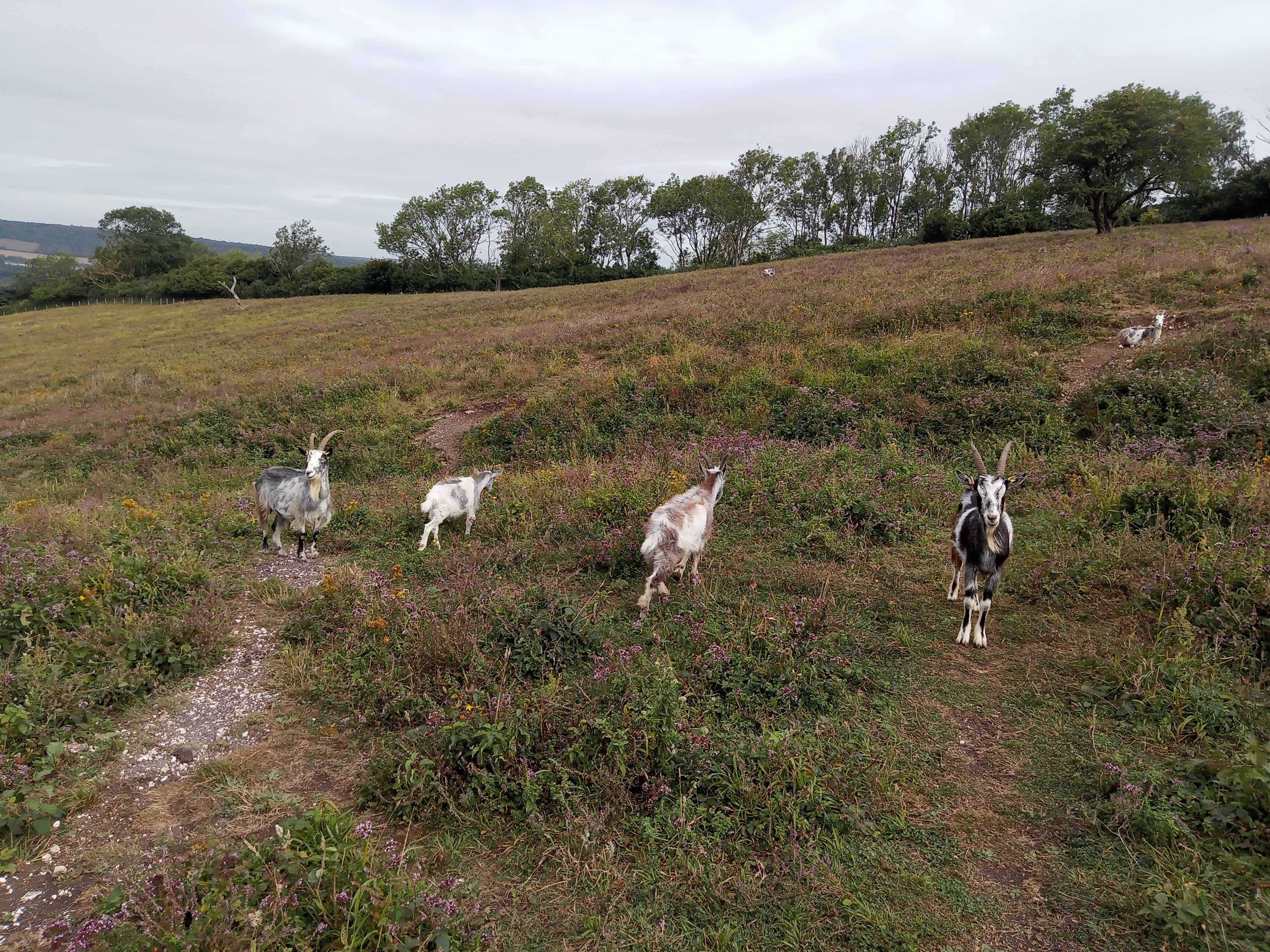
c) Some sites have animals that need supplemental feed so ensure this is given as directed by the Livestock Ranger - (Goats at Sevenoaks)
d) take a few photos and a small video clip of the Livestock and then post on the relevant reserve WhatsApp group that the volunteers and KWT Livestock team have access to updating if there are any issues with any of the animals or just confirming all is ok for that mornings visit.
e) whilst on site check the water troughs that the animals have to ensure that they are full with clean water and in winter months are free from ice, leaves and debris
f) walk the key areas of the reserve that the Livestock are in so as to ensure no damages to fences or gates and the site is secure. Check signs that warn the general public that Livestock are on site are in place, especially for dog walkers as we may have sheep on the reserve.
g) Identify any litter and remove if possible so as to ensure no harm comes to the animals."
Iain
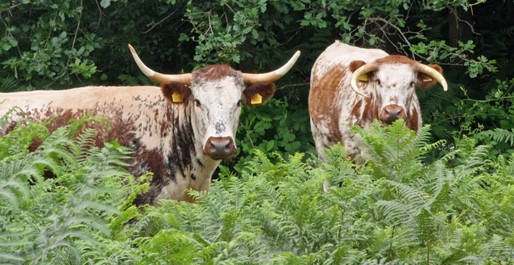
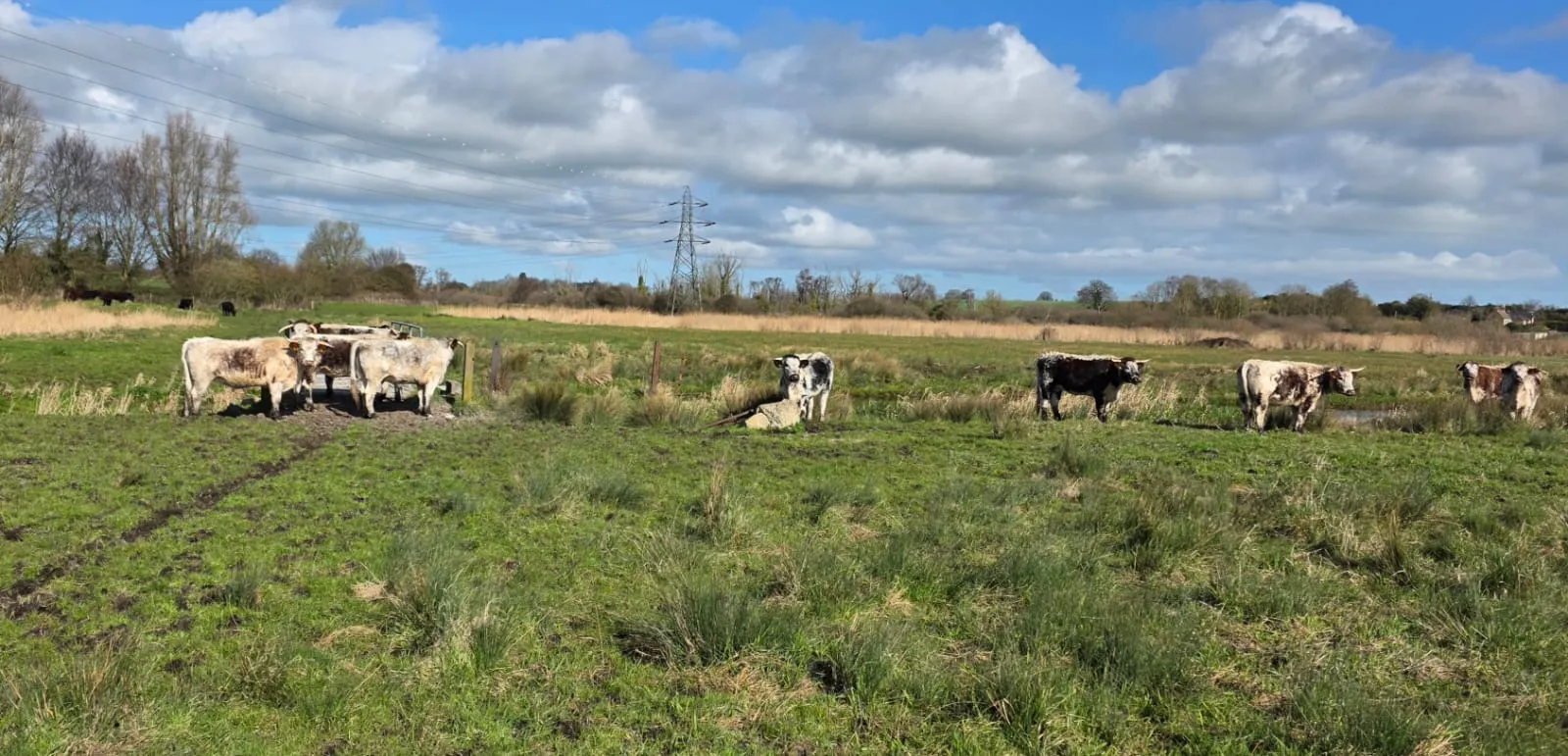
"A typical check involves locating all the animals, four Highland cattle and six Konik ponies. It sounds straightforward, but you would be surprised how well four very large Highland cows can hide on occasion.
Once located, I check that all the animals are moving comfortably and show no signs of injury or distress. I also make sure water troughs are full, clean, and functioning properly. In winter this can sometimes mean breaking ice.
The check also includes walking the site perimeter to ensure fencing and gates are secure. We often engage with members of the public as well, answering questions about the animals and, where necessary, politely asking dog walkers to put dogs on leads."
Emma
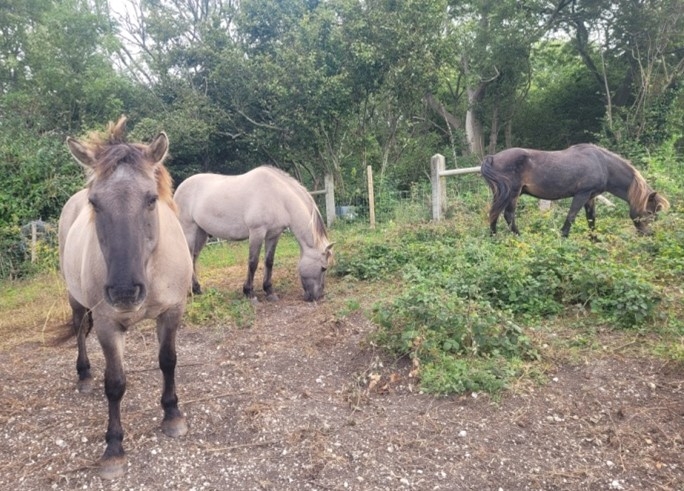
"My check is the Konik ponies. Once located, using the tracker app, I look at their general condition and are they moving ok. I then take a closer look at their head, eyes etc. I check their hooves for any damage. Once everyone has been looked at I check their water trough and any gates. If I remember, I sometimes take a carrier bag for any rubbish (that’s mainly in the summer). It’s not required but I want the ponies to live in a safe clean environment."
What has been a highlight or memorable moment from your time as a livestock checker so far?
Mark
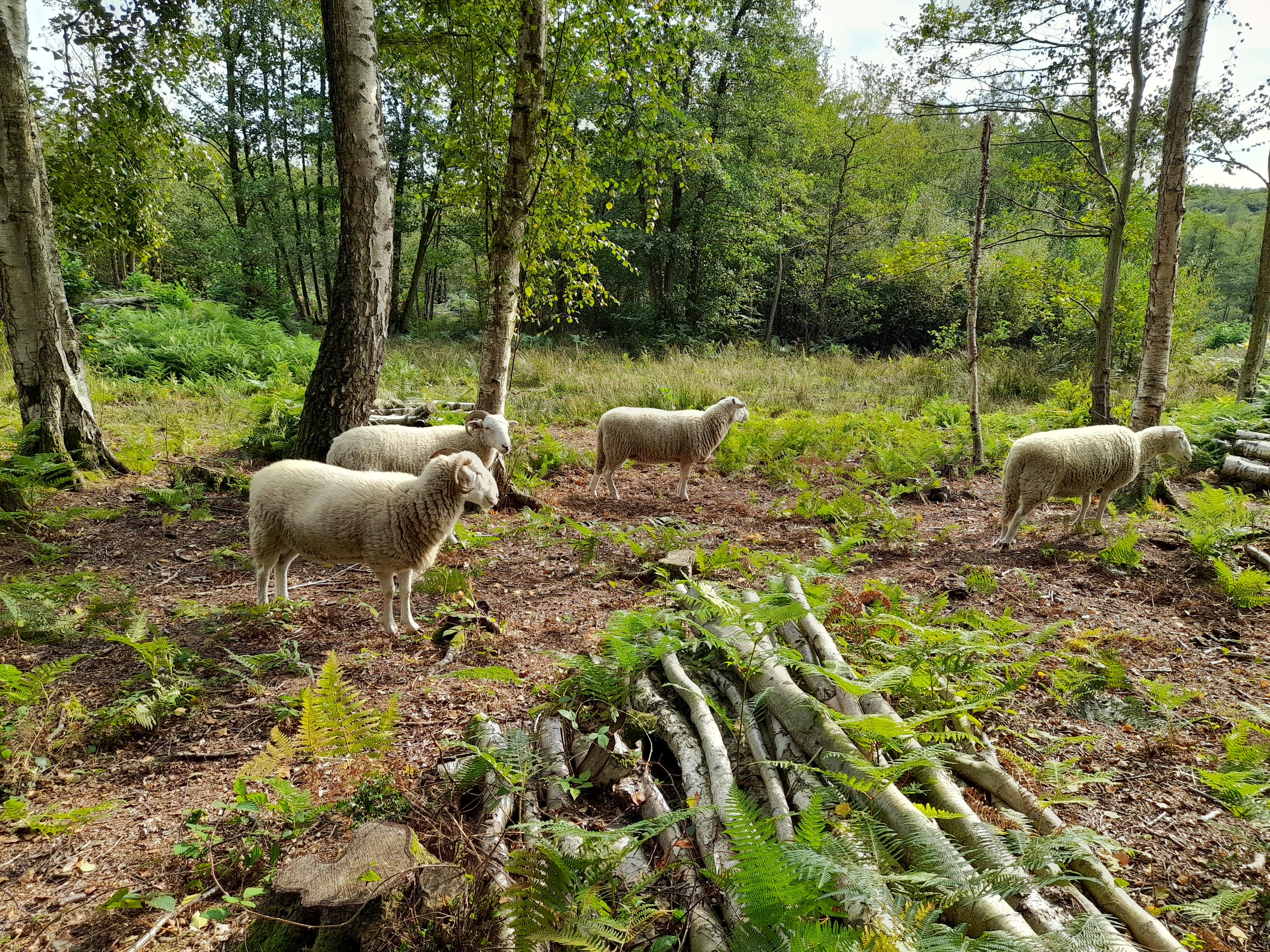
"This is easy to answer; I love seeing all the different animals and especially observing different character traits in the animals. I did however have a moment once when on a reserve where I just could not find all of the Hebridean Sheep that were onsite. I knew there were x 15 on the reserve but after walking the site for a considerable amount of time I could only find x 13 and was really concerned x 2 had escaped. It turns out the missing x 2 had somehow managed to get into another fenced off part of the reserve but just would not come back to rest of their friends even with all my hard efforts of encouragement. I later found out that they made their own way back when they were ready!!!"
Iain
"One of the biggest highlights has been reaching the point where the Koniks feel relaxed and safe enough to lie down and sleep while I am carrying out my checks.
Building a rapport with the animals is incredibly rewarding, especially when you consider how large and powerful they are. Being trusted by them, even in a small way, is a really special feeling. On par with this was the experience of 4 huge highland cows running over to you like giant puppies last winter when we supplemented their feed with bales of hay."
Emma
"Last summer as I finished my check, I headed back to the car and noticed one of the ponies had decided to follow me. I took a video of me and the pony behind. She followed me all the way to the gate, very unusual. Still makes me smile. There are lots of little quirks of their behaviour make me laugh."
Ken
"It’s been amazing to feel the rapport I have built up with the animals I check on. Each of the sheep have their own personality, and one sheep always leads the way for the group and will come up to me right away. When they all come over and look at you with their inquisitive faces, it makes it all worth it."
How does being a livestock checker make you feel more connected to nature?
Mark
"Whilst I am on site Livestock checking I really enjoy being out in the open and observing the natural wildlife, listening to birdsong and the identifying the natural habitat of wild plants & trees. Being out in the open doing Livestock checks helps with my exercise and mental health (even in all weathers)
Looking out for the wellbeing of the animals I am checking on gives me a sense of purpose and I enjoy checking on them. I also am very interested on how the animals are helping with the environment and development of the reserves they are on."
Iain
"Being a livestock checker has deepened my connection to nature by encouraging me to slow down and really observe what is happening around me. It is fascinating to see how quickly grazing animals can change an overgrown paddock, and how the flora responds over time.
It is also amazing to see how other wildlife interacts with the grazing animals. You often see pheasants nesting close to the Highland cattle for protection, or magpies riding on the Koniks’ backs. You begin to see the landscape as a living system, with the animals at its heart."
Emma
"Being outdoors, I just love plodding around, and enjoying the beautiful views. In summer months you can really see the positive effects of grazing."
Ken
"I grew up around rolling hillsides so spending time in nature brings me home. Going out on my livestock checks connects me more to our landscape. My feet are on the ground, I can smell the air and see everything that is going on. Sometimes I stand on the sea wall and look out across the landscape, spotting wildlife like harriers and geese."
What would you say to someone thinking about becoming a livestock checker themselves?
Mark
"I would encourage anyone who is thinking of being a Livestock checker to have a go, there are so many positives such as supporting the goals and achievements of Kent Wildlife and in turn supporting nature, animal welfare and personal health both Physical & Mental. Being a Livestock checker is such a positive experience and I am really happy to be supporting Kent Wildlife and of course the animals."
Iain
"I would say it is a big commitment, but one that is absolutely worth it. You gain a unique perspective on these incredible animals and the role they play in nature recovery.
Kent Wildlife Trust provides excellent training, so you never feel out of your depth, and your understanding of the animals only grows with time. It is a genuinely rewarding way to contribute to conservation while spending meaningful time outdoors."
Emma
"Livestock checking is one of the hi lights of the week for me. If you don’t mind being out in any weather and walking up hills and love nature then it’s for you. The WhatsApp group is great too, for support, fantastic photos and laughs."
Ken
"Joining the livestock checking team has helped me get out, meet new people and has allowed me to come back to myself. Kent is my home now, and I’m grateful to be part of the bigger mission. It’s incredibly rewarding to be a spokesperson for the Trust too. I’d encourage anyone who is curious to give it a go!"
If you’re curious about becoming a livestock checker, take a look at which areas are looking for checkers here.
Support our checkers & grazers with the Amazing Grazing appeal
Will you help transform more stunning wild spaces this year by donating to our Amazing Grazing appeal today? We need to raise £120,000 by the end of April to scale up our Wilder Grazing programme and bring more land back to life. Every hoofstep helps nature recover.