
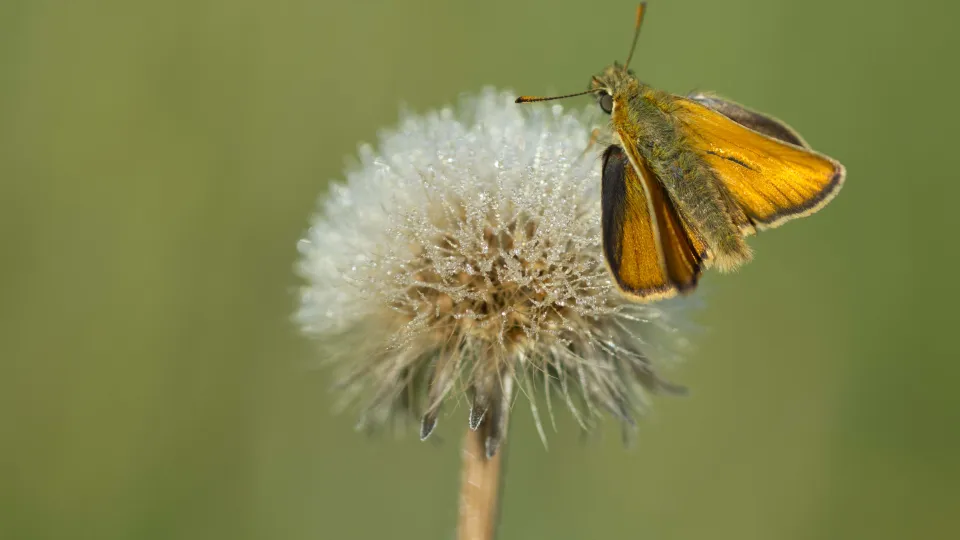
Small skipper
Often found basking on tall grasses, or buzzing between stems, the small skipper is a small, orange butterfly. It prefers rough grassland, verges and woodland edges.
Often found basking on tall grasses, or buzzing between stems, the small skipper is a small, orange butterfly. It prefers rough grassland, verges and woodland edges.
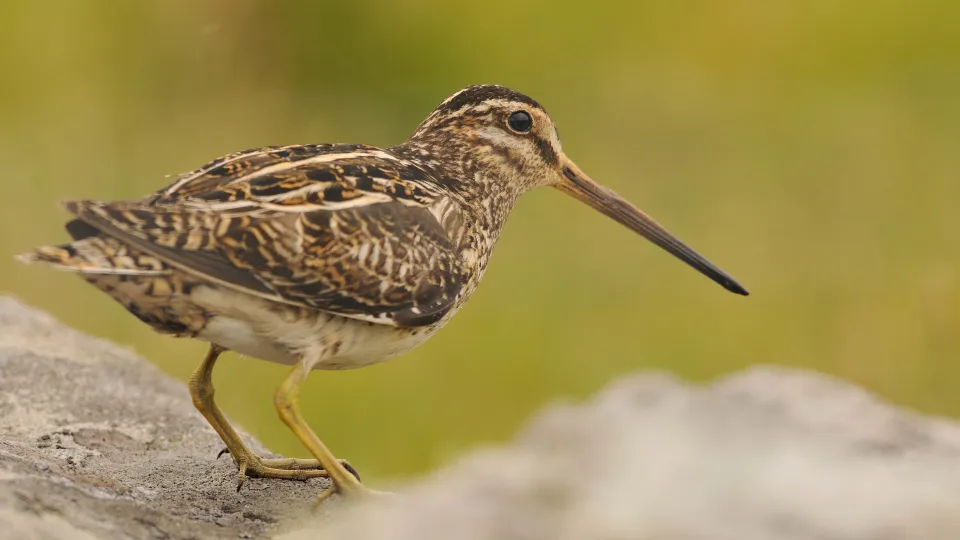
Listen out for the 'drumming' sound of a male snipe as it performs its aerial courtship display. It's not a call, but actually its tail feathers beating in the wind. Snipe live on wet grassland, marshes and moorlands throughout the UK.
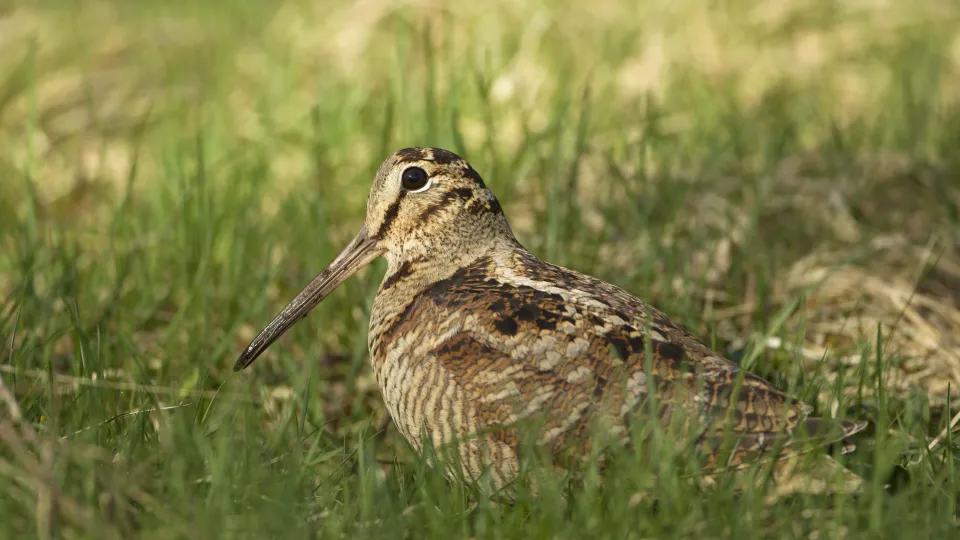
Sometimes known as the snipe of the woods, the exquisitely camouflaged woodcock is mainly nocturnal, hiding in the dense undergrowth of woodlands and heathlands during the day.
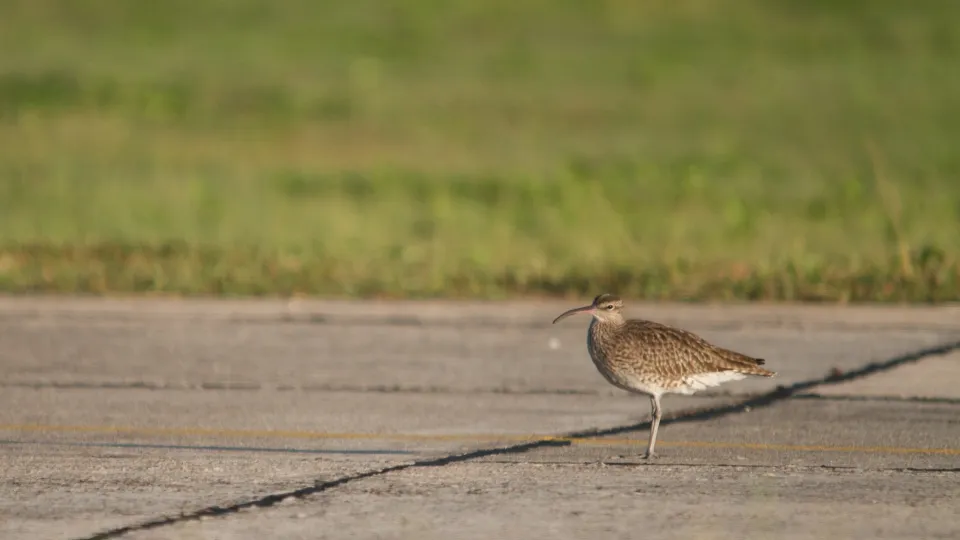
The whimbrel is very similar to the curlew, but a little smaller and with a striking face pattern. Its eerie call is a series of seven whistles; listen out for it around the coast as its passes through on migration.
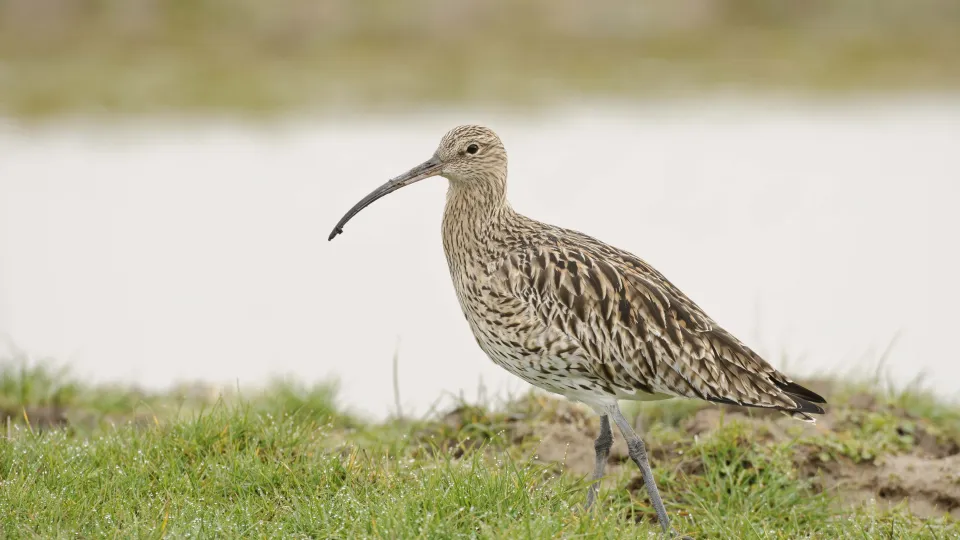
The eerie, 'cur-lee' call of the curlew is a recognisable sound of wet grasslands, moorlands, farmland and coasts. Its long, downcurved bill is an unmistakeable feature and perfect for probing the mud for prey.
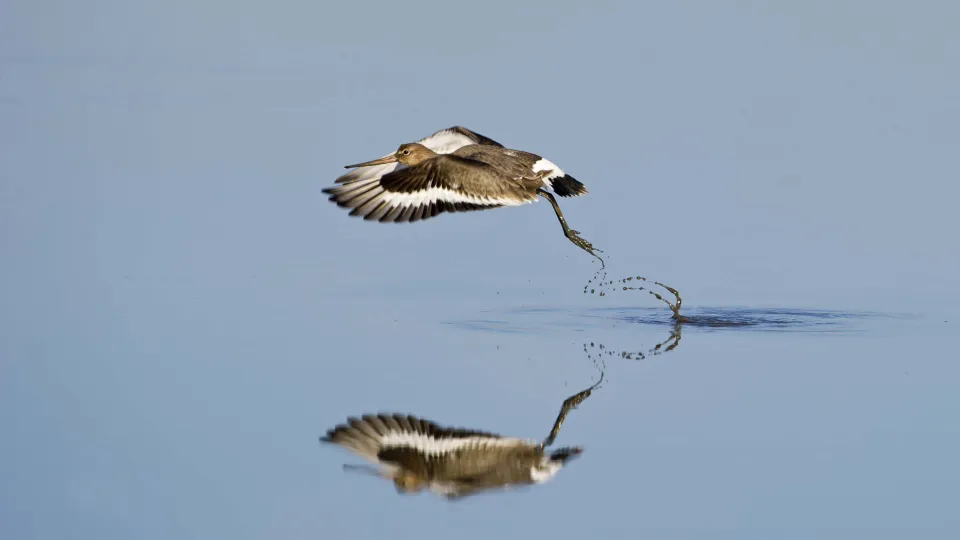
The black-tailed godwit is a rare breeding bird in the UK that has suffered from dramatic declines. It can most easily be spotted around the coast in winter and at inland wetlands when on migration.
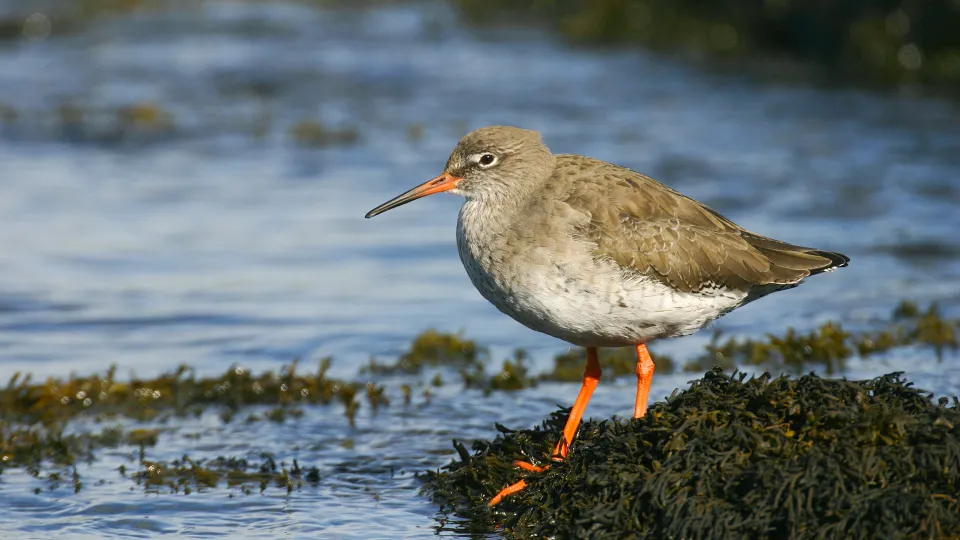
The redshank lives up to its name as it sports distinctive long, bright red legs! It feeds and breeds on marshes, mudflats, mires and saltmarshes. Look out for it posing on a fence post or rock.
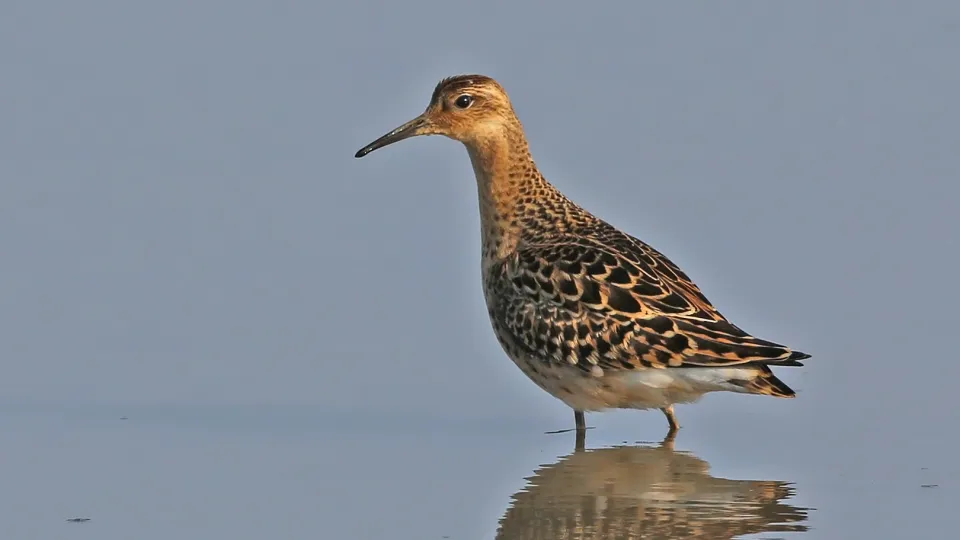
The UK hosts a small, but important, breeding population of ruff. The ruff is a large sandpiper that is so-called due to the large ruff of feathers around the males' neck. This is used in a showy display to attract a mate.
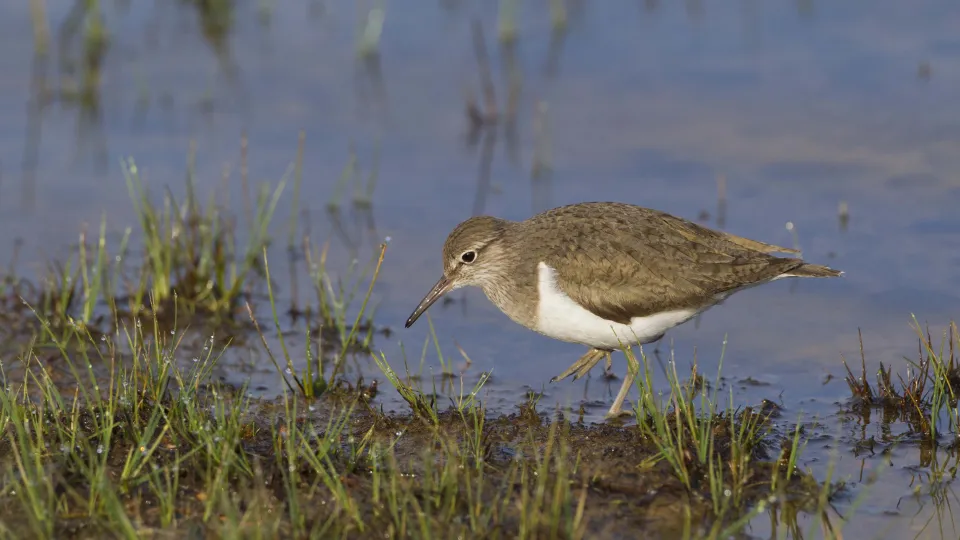
The common sandpiper breeds along rivers, and by lakes, reservoirs and lochs in upland Scotland, Northern England and Wales. It can be spotted as a passage migrant at many inland wetlands across the UK.
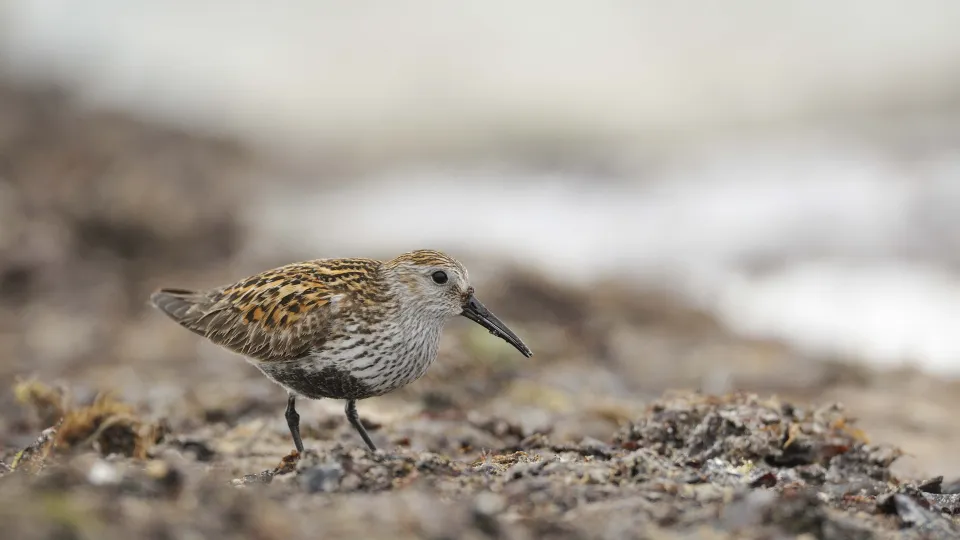
Found along the coast all year-round, the dunlin is a small sandpiper that breeds and winters in the UK. It can be seen in its upland breeding grounds in summer, when it turns brick-red above and sports a black patch on its belly.