
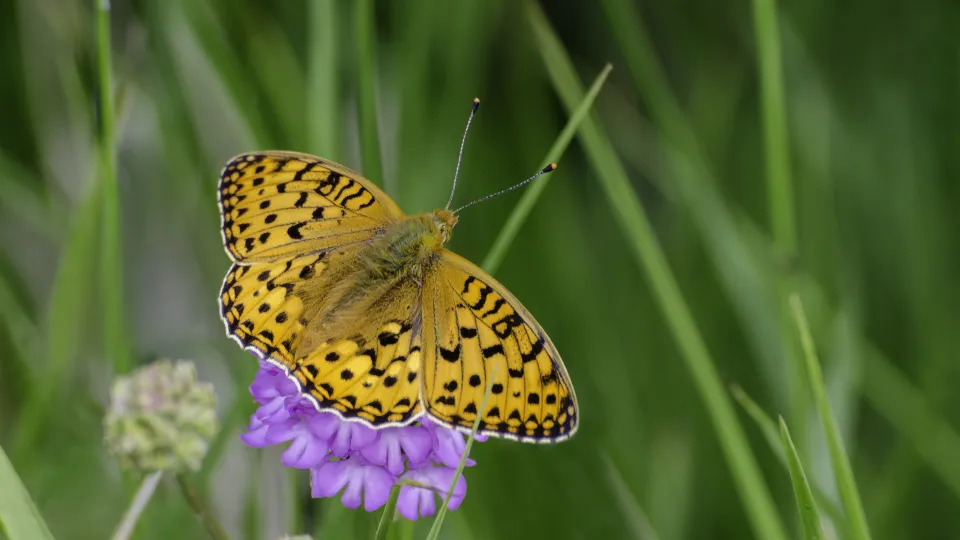
Dark green fritillary
The dark green fritillary is actually an orange butterfly with black spots. It gets its name from the dark green hue to the undersides of its hindwings. A strong flier, it can be seen on open, grassy habitats.
The dark green fritillary is actually an orange butterfly with black spots. It gets its name from the dark green hue to the undersides of its hindwings. A strong flier, it can be seen on open, grassy habitats.
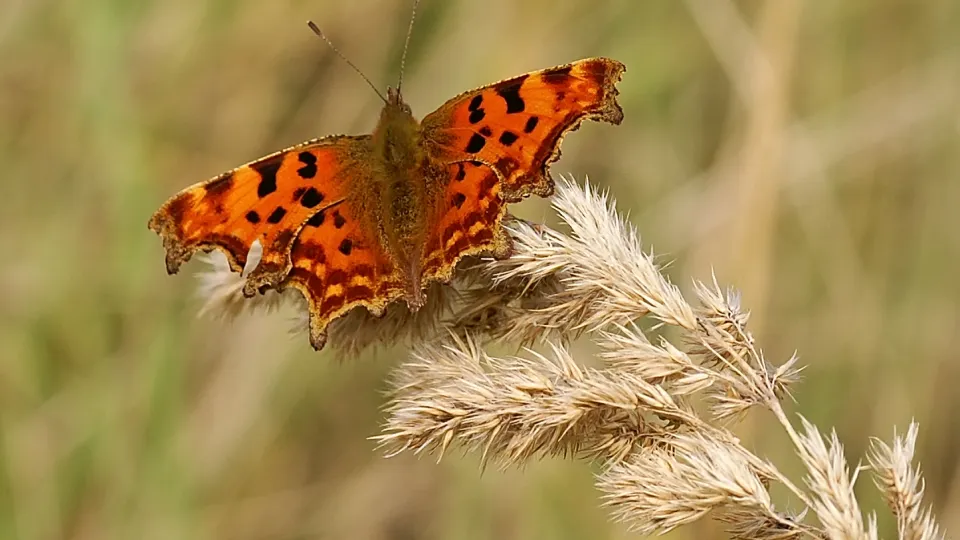
The comma has distinctively ragged wing edges, which help to camouflage it - at rest, it looks just like a dead leaf! It prefers woodland edges, but can be spotted feeding on fallen fruit in gardens.
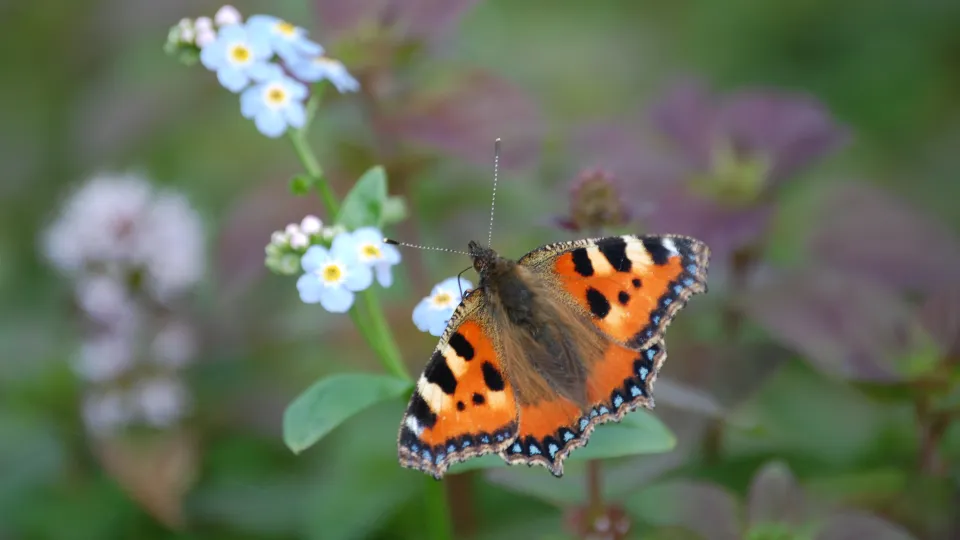
The pretty small tortoiseshell is a familiar garden visitor that can be seen feeding on flowers all year-round during warm spells. Overwintering adults may find resting spots in sheds, garages or even houses.
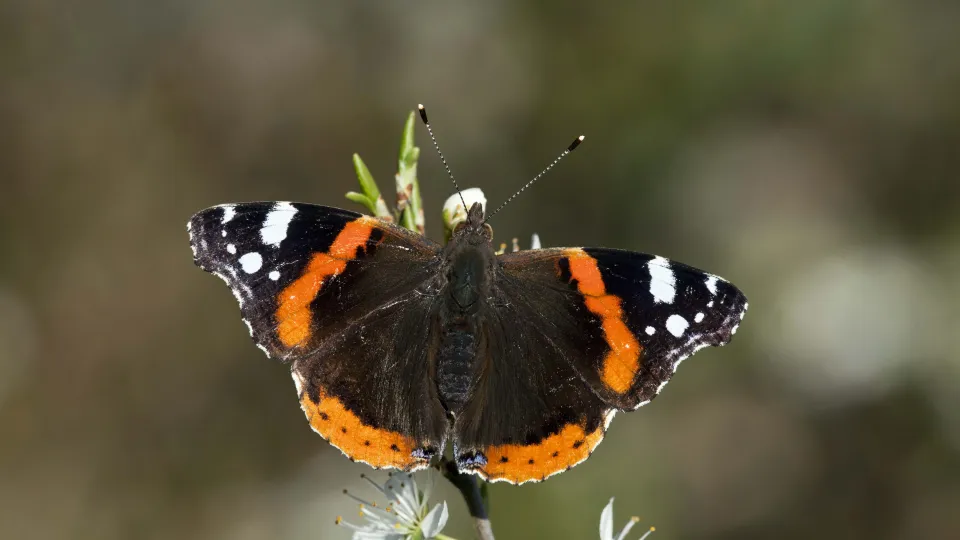
The red admiral is an unmistakable garden visitor. This black-and-red beauty may be seen feeding on flowers on warm days all year-round. Adults are mostly migrants, but some do hibernate here.
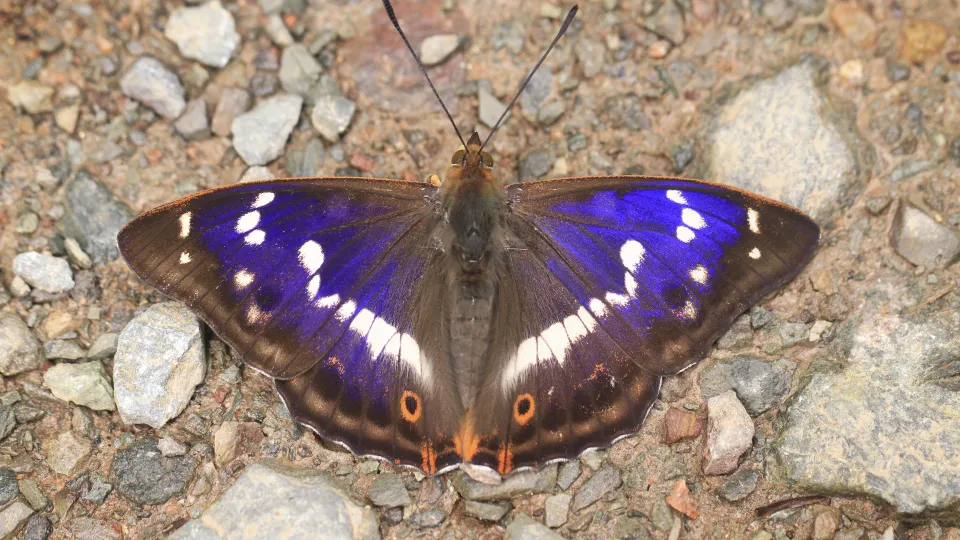
The male purple emperor is a stunning butterfly with a brilliant purple sheen. Look for it feeding around the treetops in woodlands, or on damp ground, animal droppings or even carrion in the morning.
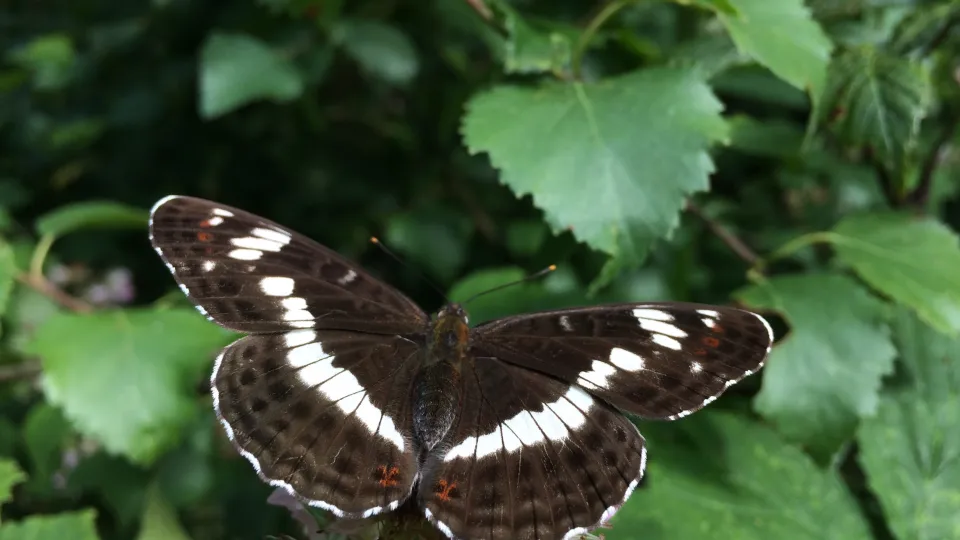
The White admiral is a striking black-and-white butterfly with a delicate flight that includes long glides. It prefers shady woodlands where it feeds on Bramble.
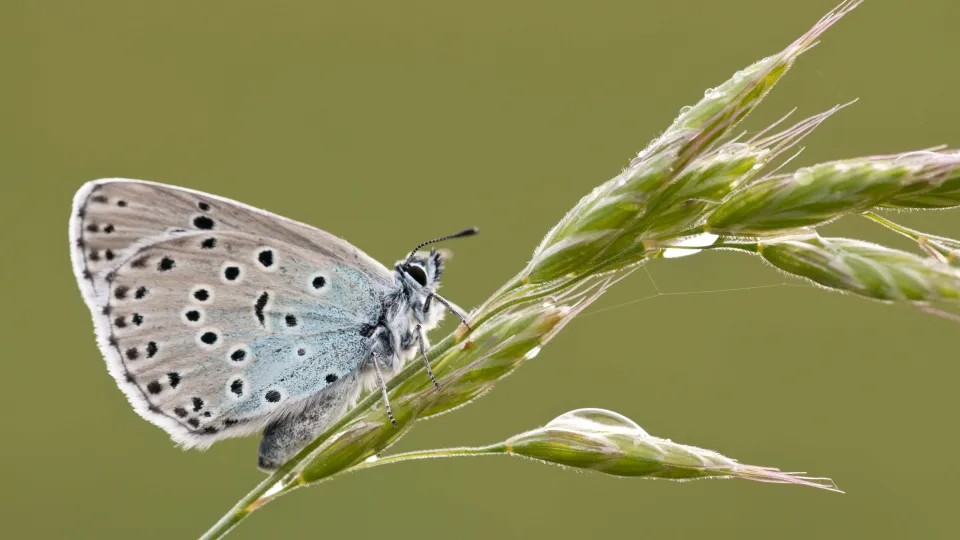
Despite its name, the large blue is a fairly small butterfly, but the largest of our blues. It was declared extinct in 1979, but reintroduced in the 1980s and now survives in southern England.
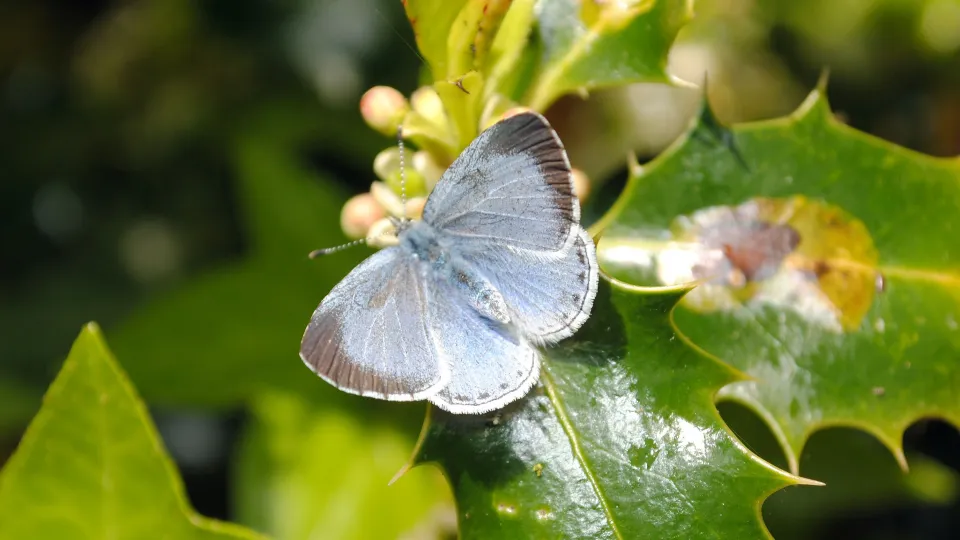
Look out for the small Holly Blue in your garden or local park. It is the first blue butterfly to emerge in spring, and a second generation appears in summer. The caterpillars are fond of holly and ivy.
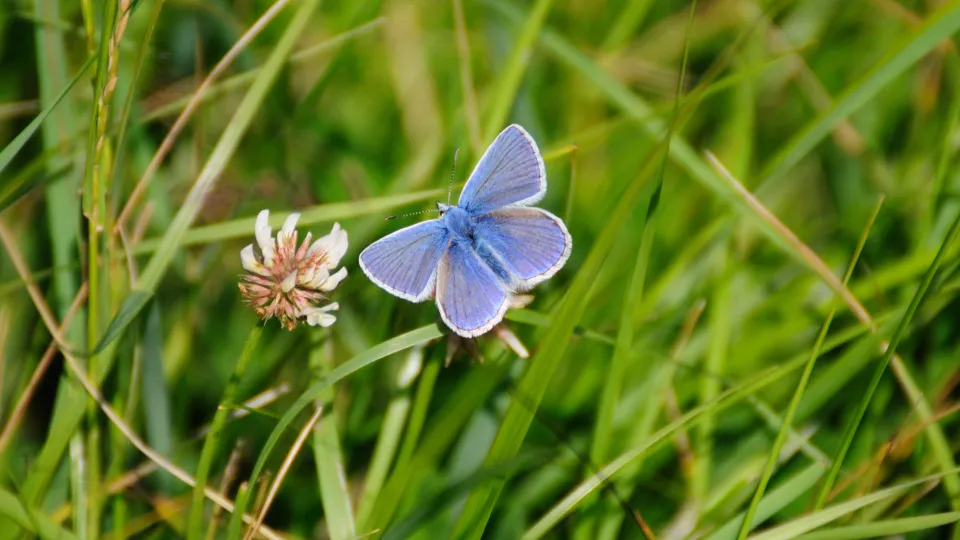
The common blue butterfly lives up to its name - it's bright blue and found in all kinds of sunny, grassy habitats throughout the UK! Look out for it in your garden, too.
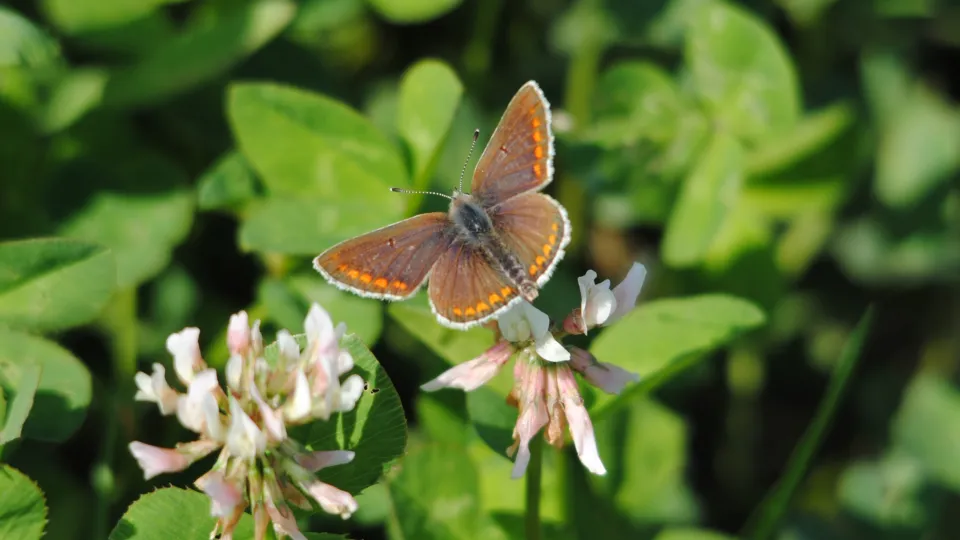
The Brown argus favours open, chalk and limestone grasslands, but can also be spotted on coastal dunes, in woodland clearings and along disused railways.