

With biodiversity in rapid decline, the charity is racing to raise £120,000 by April - harnessing the power of animals to restore vital wildlife habitats.
Kent Wildlife Trust is urgently appealing for donations to fund its Wilder Grazing programme, putting animals at the heart of restoring habitats and driving nature recovery across the county. With over 200 species now threatened or endangered in Kent and natural habitats continuing to shrink and degrade the charity is aiming to raise £120,000 by the end of April to turn the tide.
The programme works by introducing grazing animals to land where their natural behaviours actively shape the environment around them. By browsing scrub, churning soil, and creating open ground, these animals help establish the varied conditions that wildlife needs to flourish, supporting species ranging from nightingales and turtle doves to dormice, bee orchids, and dung beetles.
Kent Wildlife Trust currently manages the largest and most diverse conservation grazing herd in the county - nearly 900 animals spanning longhorn cattle, konik ponies, Hebridean sheep, goats, pigs, and European bison, working across 52 sites.
Alison Ruyter, Wilder Grazing Lead at Kent Wildlife Trust, said: "Conservation grazers are among our most powerful allies in tackling the biodiversity crisis. Their natural behaviours help bring life back to landscapes that machinery simply can't reach.
“These amazing animals are recreating the dynamic processes that once shaped Kent’s countryside, building a rich mosaic of habitats for countless species. Every donation to our appeal will help ensure our grazers can continue their vital work, and leave a wilder, more climate-resilient landscape for generations to come."
Each species brings distinct behaviours that benefit the land. Some browse hawthorn and bramble scrub, allowing light to reach the ground and delicate wildflowers to bloom. Iron Age pigs churn the soil, while European bison create bare patches through dust bathing, encouraging seeds to germinate and open up habitat for insects and reptiles Even bison dung plays its part: within weeks of the herd arriving at West Blean and Thornden Woods near Canterbury as part of the Blean Bison Project - a partnership between Kent Wildlife Trust and Wildwood Trust - dung beetle larvae were discovered in their droppings.
Donations raised through the Amazing Grazing appeal will fund the essential day-to-day costs of the programme - including tools, equipment, transportation, feed, bedding, and animal welfare - as well as enabling expansion to several new sites across Kent. This includes recently acquired reserves and partner sites ready for restoration. Funds will also support the installation of fencing and water supplies, the introduction of a no-fence virtual grazing system for the goat herd, and community engagement activities to help people and animals safely co-exist in public spaces.
The Amazing Grazing appeal forms part of Kent Wildlife Trust's wider Nature Restoration Fund, which has a £3 million target to reverse species decline across Kent by 2030.
A landscape transformed
The power of conservation grazing is already evident at Nemo Down in Dover. Once neglected and overgrown with scrub, the site was transformed after konik ponies and longhorn cattle were introduced by Kent Wildlife Trust to manage the land. Orchids have now returned to its downland slopes, and the songs of yellowhammers and lesser whitethroats ring out once more.
To donate or find out more about the Amazing Grazing appeal, visit kwtg.uk/amazing-grazing
State of Nature in Kent, 2021
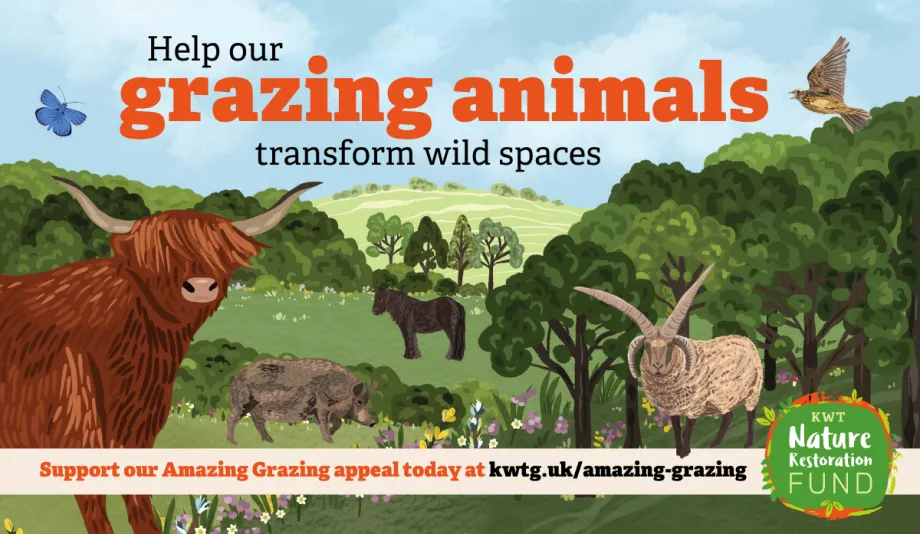
Illustration by Bea Baranowska