

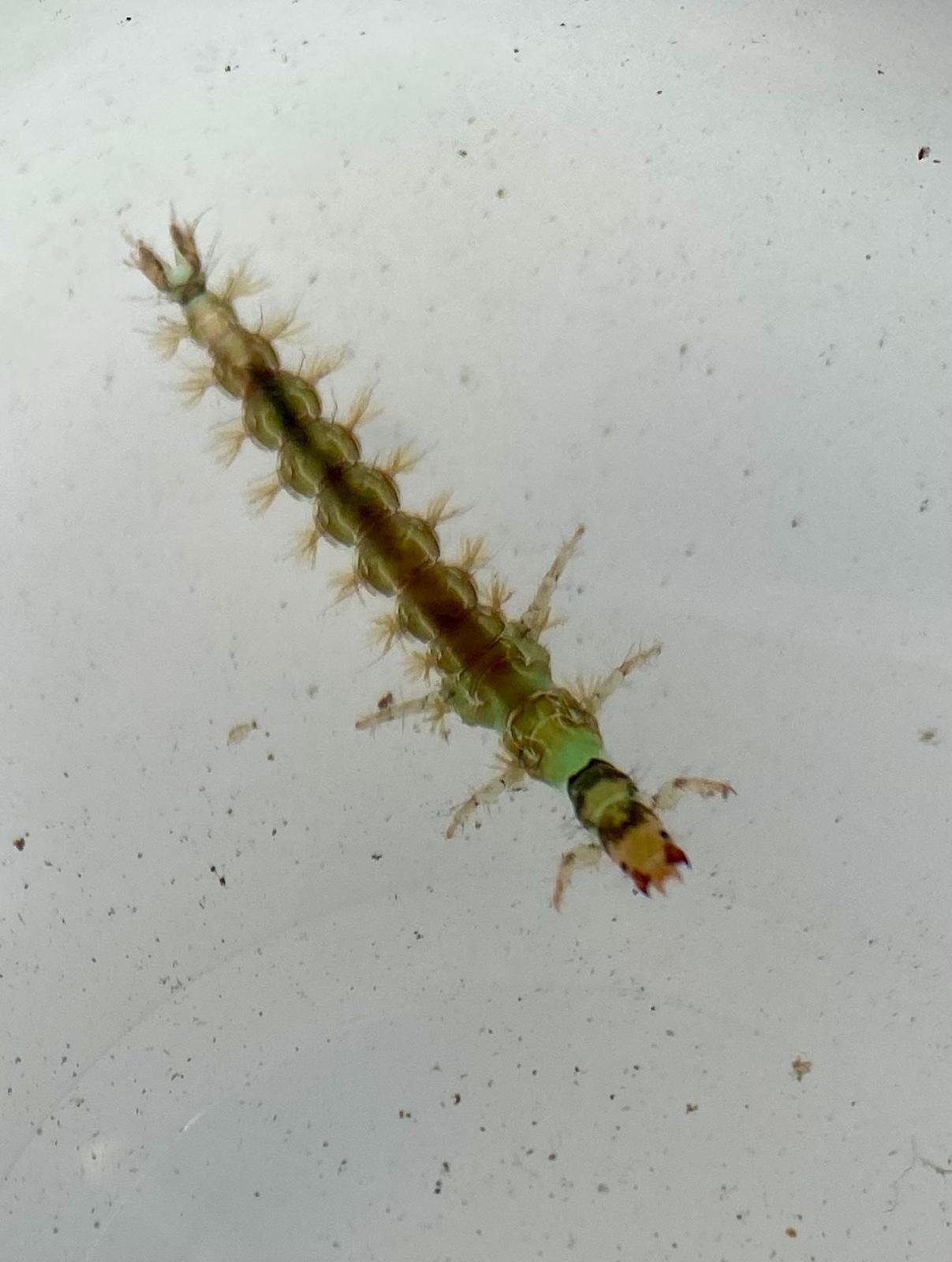
Caseless Caddisly Larvae
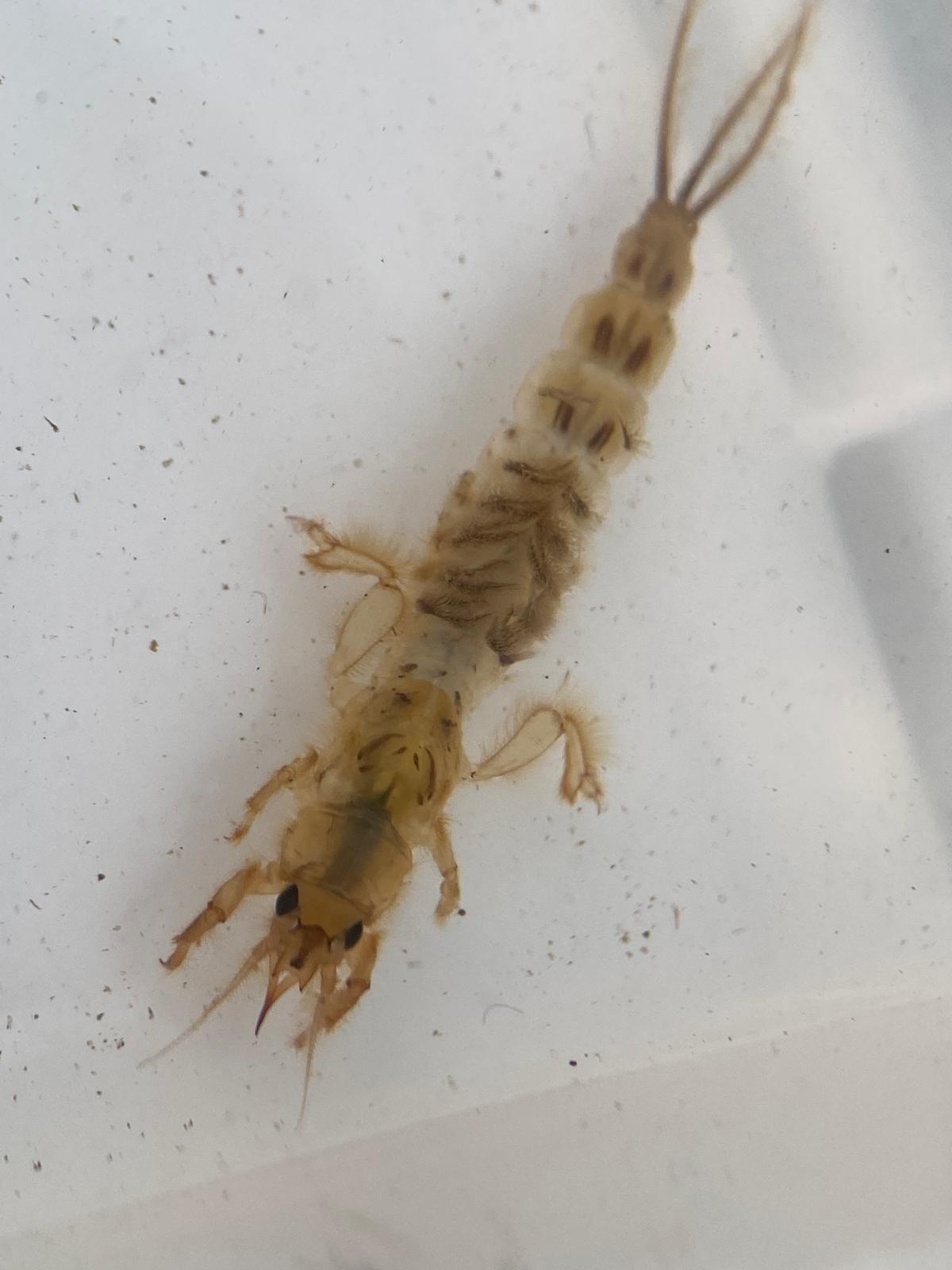
Ephemeridae Mayfly
Here are our thoughts about recent sessions of riverfly monitoring:
January
So much rain! We were wondering if the water level would be low enough for us to get into the river with our net. Interestingly the Darent is a chalk stream and the water level in chalk streams remain pretty consistent (at our end of the river at any rate). The water is pretty clear and just under top of the wellies height. The temperature is mild, slight leak in one wellie but so excited about what we might discover. An abundance of mayfly larvae from the tiniest ones that would sit on a pin head to some that will soon be ready to emerge as adult mayflies.
February
Hmmm more rain this month but still the water level is just about okay (still below the top of the wellies!) and we have glorious sunshine for our survey. Good numbers of Brown Olives and some Blue Winged Olive larvae, lots of flat Bodied Stone Clingers - love these - we lift up larger rocks and swish them into the net. Also, lots of teeny tiny weighted caddis larvae, we have to look carefully at small conglomerations of sand and grit to see whether they start walking, then we know we have a weighted caddis larvae.
March
Buzzards mewling, chiffchaffs “chiff-chaffing”, spring sunshine and warm weather…woohoo! The river bed has changed again, there are now some deeper pockets, more sand than silt and shallow gravel beds forming. We also see pieces of water crowfoot float downstream. There was none when we started but the guys at the South East River Trust have been improving the flow of the river by creating leaky dams, bank re-profiling, adding pebble cattle crossing points and planting water crowfoot, water mint and water forget-me-not. This is already making the river a much more dynamic and biologically diverse habitat. Can’t wait to see what April brings.
Learn more in our blog post about chalk streams...
Chalk streams are an ecologically significant freshwater habitat and are globally rare. England holds approximately 85% of the global total with the majority of those dotted around the south, including in Kent.