

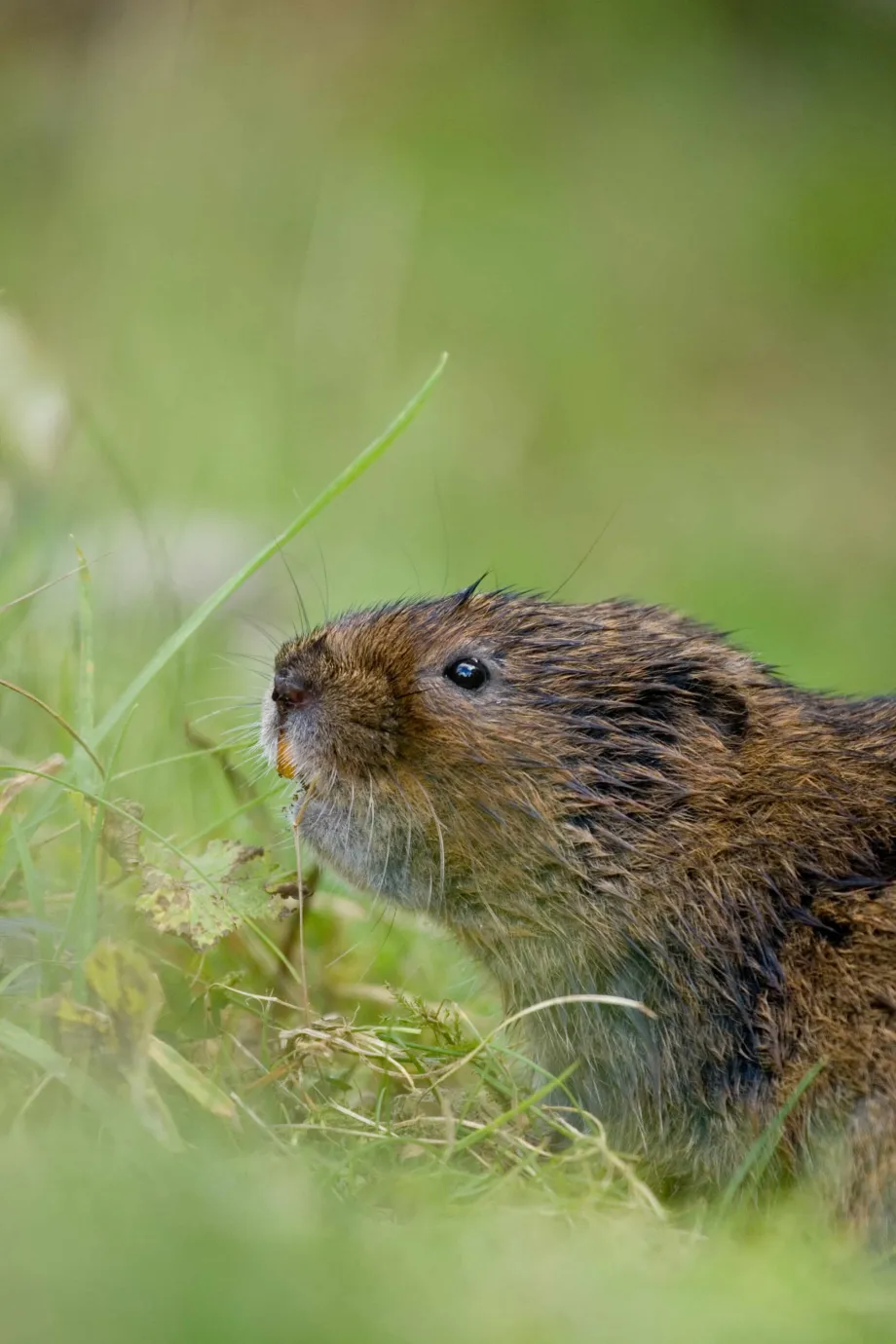
Water vole. Tom Marshall
What are the main threats to chalk streams?
Due to the unique ecosystems they support, their global rarity, and the difficulties with restoration, chalk streams and their riparian habitats should be considered an irreplaceable habitat. The existence of chalk streams in England should be celebrated but most have no legal protection and are at threat, particularly from agricultural runoff, climate change, and built development.
Development
Built development can introduce a range of pressures on our chalk streams including over abstraction of water, urban diffuse pollution, and increased recreational pressure.
Over-abstraction
Over abstraction is the result of water being pumped out from chalk streams and aquifers at a faster rate than it is being naturally replaced. An increased demand for drinking water and the use of fresh water instead of greywater in housing developments, coupled with hotter and dryer summers results in reduced water levels. The knock-on effect of this is lower oxygen levels which can be harmful to plant and animal life, higher concentrations of pollutants because there is not enough water to dilute what is entering the rivers, and a build up of silt which impacts on species which utilise the gravel beds for breeding.
Pollution
Caused primarily by run-off from roads, particularly car parking areas, as well as pavements and roofs, urban diffuse pollution can contain fine sediment and chemicals which are toxic to wildlife. Urban diffuse pollution can flow into chalk streams during heavy rainfall and flooding events as well as by leaching into groundwater. Wetter winters with more frequent heavy rainfall events because of a changing climate will result in an increase in polluted urban run-off. The hydrology of chalk streams means that they are naturally low energy with a limited flushing capacity. The gravels of chalk streams are therefore susceptible to siltation from urban diffuse pollution which can be hugely detrimental to species which rely on this habitat.
Recreational activities
Recreational activity in and around our chalk streams introduces additional pressures which includes negative impacts from dogs. When dogs go into the river their flea and tick protection can wash off causing significant harm to wildlife. The treatments act as an insecticide and can kill species like mayflies, damselflies, and dragonflies which are food sources for fish, birds, and bats. The issue of chemicals from pet medication in UK waterways has been recognised by the government as a major problem.
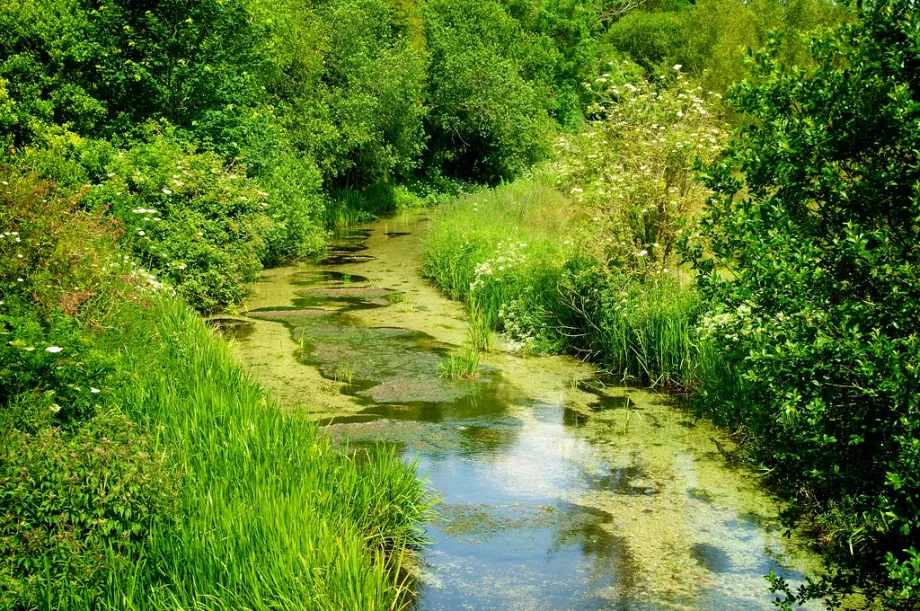
Chalk stream. Ian Freeman
What are Kent Wildlife Trust doing?
Here at Kent Wildlife Trust the Planning and Policy Team have been raising awareness around the irreplaceable nature of chalk streams by feeding into planning applications and local plan consultations where developments threaten the health of this rare freshwater ecosystem. The team have also been part of The Wildlife Trusts movement to push for stronger protections for chalk steams from the government as part of their planning reforms.
What can I do?
Donate to the KWT Nature Restoration Fund
Kent Wildlife Trust has launched the KWT Nature Restoration Fund – our most ambitious fundraising appeal yet. We’re on a mission to raise £3 million to restore habitats and reverse species decline by 2030.
With your help and our know-how, we can achieve truly incredible things. Your donations will turn degraded land into thriving ecosystems. By restoring nature at scale, we’re not just saving species – we’re securing a future where we can flourish alongside wildlife.
With the clock ticking, can you help us answer wildlife’s SOS?
Speak up for nature
Join our mailing list to get involved in our latest campaigns and find out how you can speak up for nature.
Become a RiverSearch volunteer
We are asking volunteers to monitor and collect invaluable information about river health by adopting a stretch of river and collecting data on water quality, habitat conditions and pollution sources. More information on this project can be found here.

Chalk Streams
Cool, crystal-clear waters flow over gravelly beds, streaming through white-flowered water-crowfoot and watercress in serene lowland landscapes.