August on Hothfield Heathlands: Moths and rushes

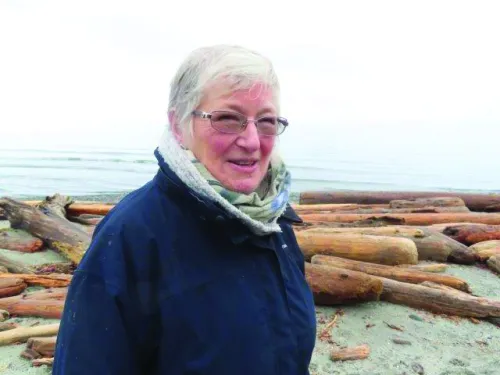
It's been a hot few months on Hothfield Heathlands! Long-time volunteer, Margery Thomas, reflects on recent work and sightings in this guest blog...

Late evening, late June, one of those very hot weeks. A nightingale singing near the A20, silence otherwise...

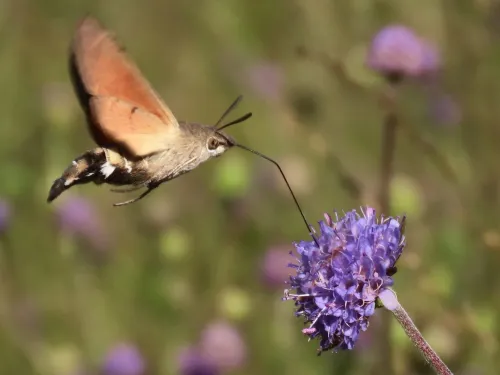
KWT volunteer and moth expert Terry Dunk sets up his moth trapping equipment. As the light faded the insects and moths arrived, small to micro, then after 11pm the big moths. Two of us gently caught moths around one trap in cardboard tubes with a perspex cover, to be transferred to a keep net while the other trap held the moths. In the early hours Terry took everything home to identify and photograph the moths and then release them on the reserve the next evening. He said ‘there were too many moths to pot around the traps to count species, so I concentrated on different species rather than high numbers of individual species.’ Moth of the night was four-dotted footman, a new match for 1976 data, not rare, just local; also micro Argyresthia brockeella, a new match for the 1976 data, not rare but a tiny micro and easily missed; one new moth was Zelotherses paleana (Timothy tortrix), not rare, just not recorded before. Terry reports the findings to KWT and Kent Moth Group which feeds into the national database. 

Terry and colleague David Rayner have been trapping since 2017, their data collated into a master spreadsheet plus some historical data. Terry emphasises ‘no scientific trends can be determined from this due to too many variables, but it gives an idea of what was present on Hothfield today and in the past. I always like to see the same species year after year, it's kind of like seeing old friends. Some moths don't have long adult lives so if you do not trap at the right time they can be easily missed one year.  Also flight times vary from year to year, depending on the weather, difficult to predict due to climate change, variable weather patterns making it difficult to plan future moth trapping sessions.’

On a late June day volunteer Rob Insall counted 406 butterflies and 60 dragonflies/demoiselles on an Extension transect. In July volunteer Anne Rowe ‘came across the first of the wasp spiders, many labyrinth spiders now sitting in their webs in the gorse’ and Rob ‘while cow-searching’ found a purple hairstreak, widespread in Kent but which Rob had never seen on the reserve before. Soon after, Terry trapped 258 moths of 82 species, ‘the surprise - a purple hairstreak butterfly, (the same one Rob saw?) probably settling down for the night in a nearby oak.’ New to their spreadsheet was macro latticed heath, and micros Kent tubic, hawthorn knot-horn, chequered pine knot-horn, tufted oak knot-horn and orange pine tortrix. Reminder: No one wants to catch a tick however, and they are very prevalent at the moment, so check two-legged and four-legged walkers. 

Until the late 19thC high summer was when pithy rushes would have been harvested on Hothfield Common as it was to make rushlights. Rushes were steeped in water to soften the skin for peeling, leaving a narrow strip of skin along the stem to stiffen it, then left to dry in the sun. They were bundled up for sale or dipped at home. Bacon fat or mutton fat was melted in a long grease pan and the rushes soaked in it until saturated. A second dipping made a longer-lasting rushlight, or shorter lengths of pith dipped together made a thicker candle. 

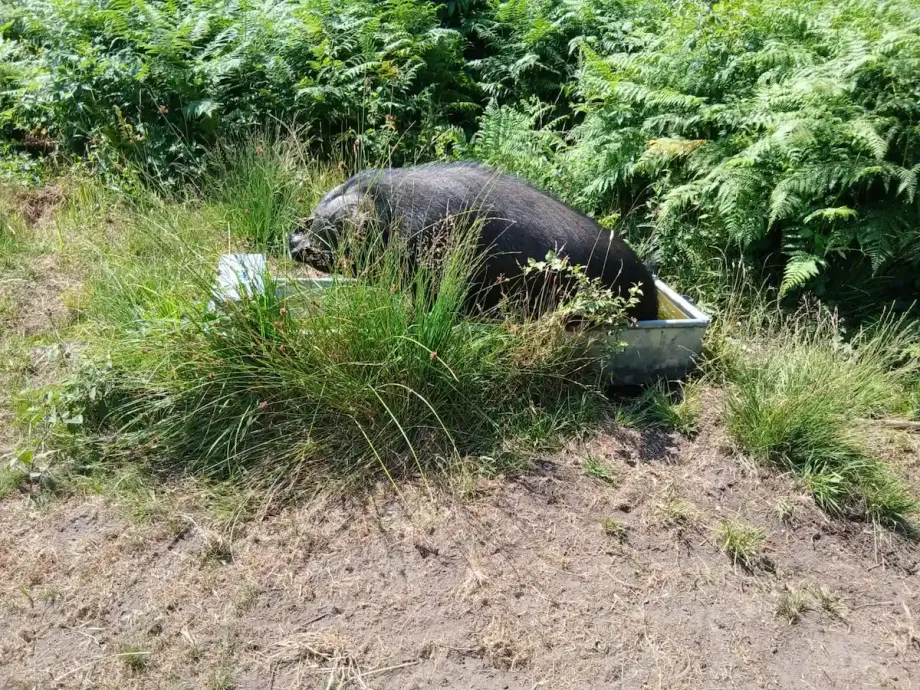
In the here and now, the pigs are back and found the water trough ideal for cooling off in.

Please remember that dogs must be on leads until the end of August across all open spaces. Dogs may be off lead but under control within the woodland sections of the reserve only. Hothfield Heathlands is one of the best spots for wildlife in the county; with your help we can keep it that way. 

Ian Rickards, KWT Area Manager

More blogs about Hothfield Heathlands

Margery Thomas

Volunteer spotlight: Margery Thomas

Blog

This year marks 10 years since Margery Thomas began volunteering at Hothfield Heathlands. Since 2016, she's written monthly articles on the reserve's flora and fauna, bringing readers into the heart of the heathlands through rich, observant writing,…

Southern marsh bog
@Ian Rickards

July on Hothfield Heathlands: Orchids & bats

Blog

Hothfield's evening bat and amphibian walk revealed pipistrelles, newts, and a nightingale's song, while rare heath spotted and Southern marsh orchids bloom in the reserve's acid bogs.