
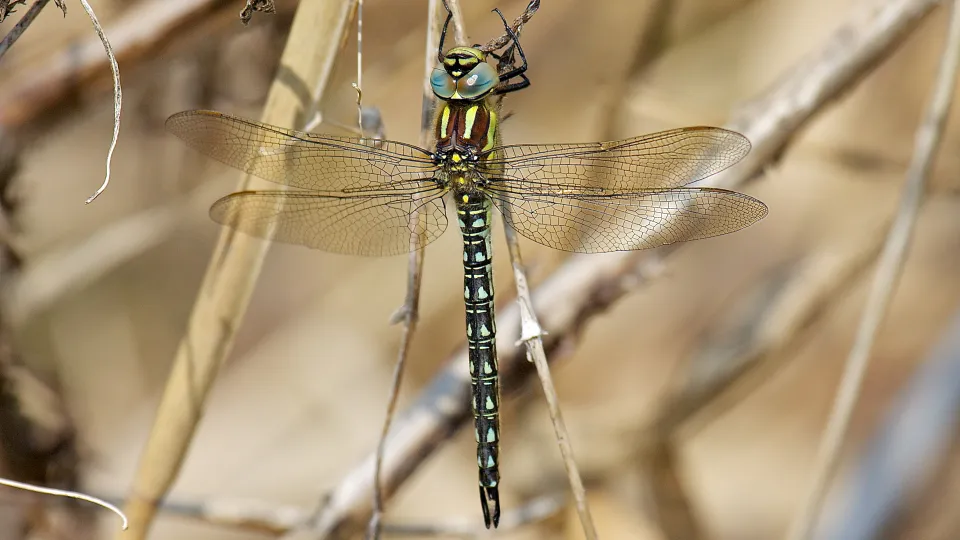
Hairy dragonfly
The UK's smallest hawker, the Hairy dragonfly is mostly black in colour, but has a distinctively hairy thorax. It can be found in grazing marshes and flooded gravel pits, and along canals from spring.
The UK's smallest hawker, the Hairy dragonfly is mostly black in colour, but has a distinctively hairy thorax. It can be found in grazing marshes and flooded gravel pits, and along canals from spring.
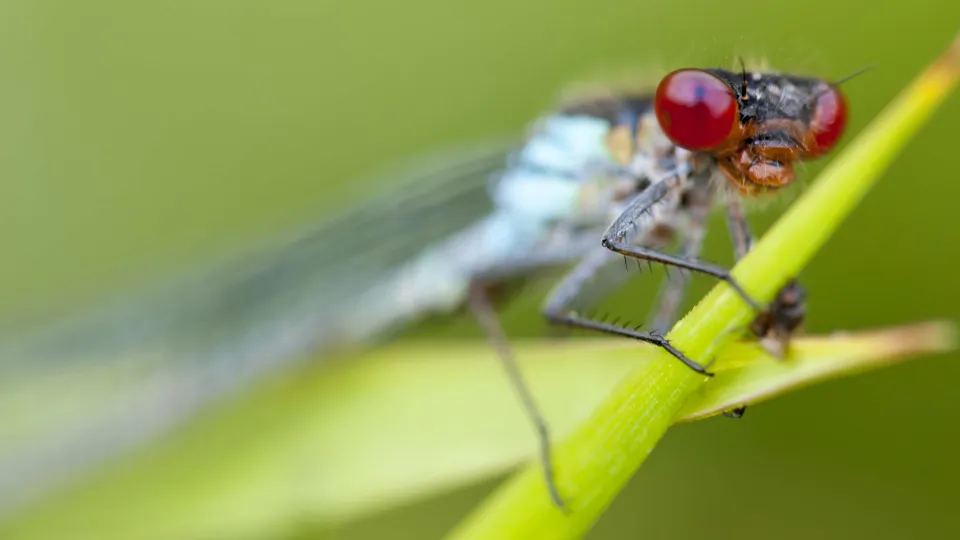
The Red-eyed damselfly is a small, but robust, damselfly of canals, ponds, lakes and slow-flowing rivers. As its name suggests, it has bright blood-red eyes, but a mostly black body.
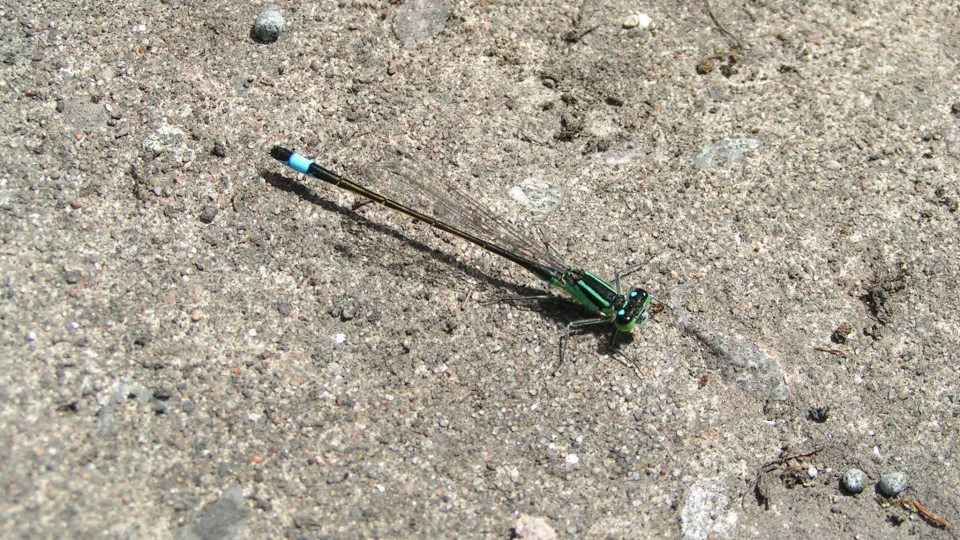
The Blue-tailed damselfly does, indeed, have a blue tail. It is one of our most common species and frequents gardens - try digging a wildlife pond to attract dragonflies and damselflies.
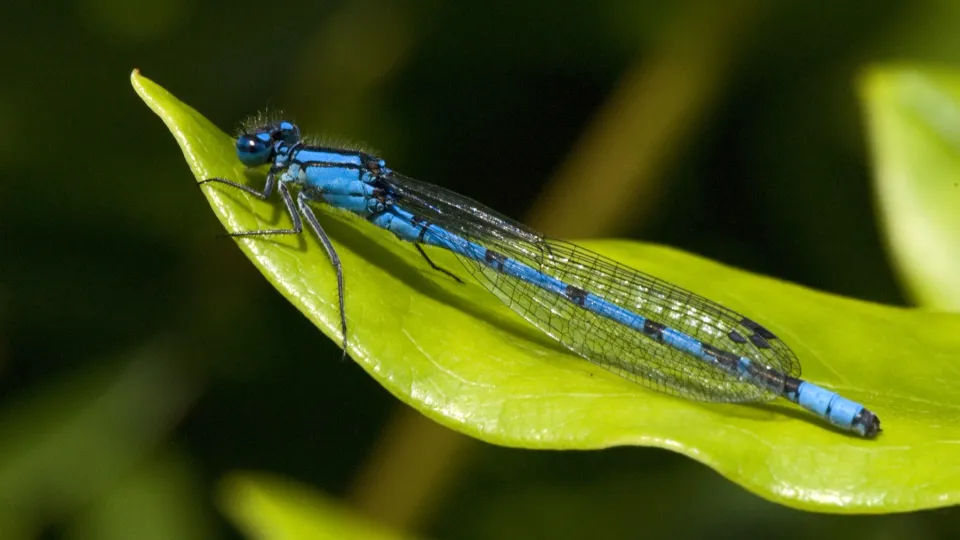
Living up to its name the Common blue damselfly is both very common and very blue. It regularly visits gardens - try digging a wildlife-friendly pond to attract damselflies and dragonflies.
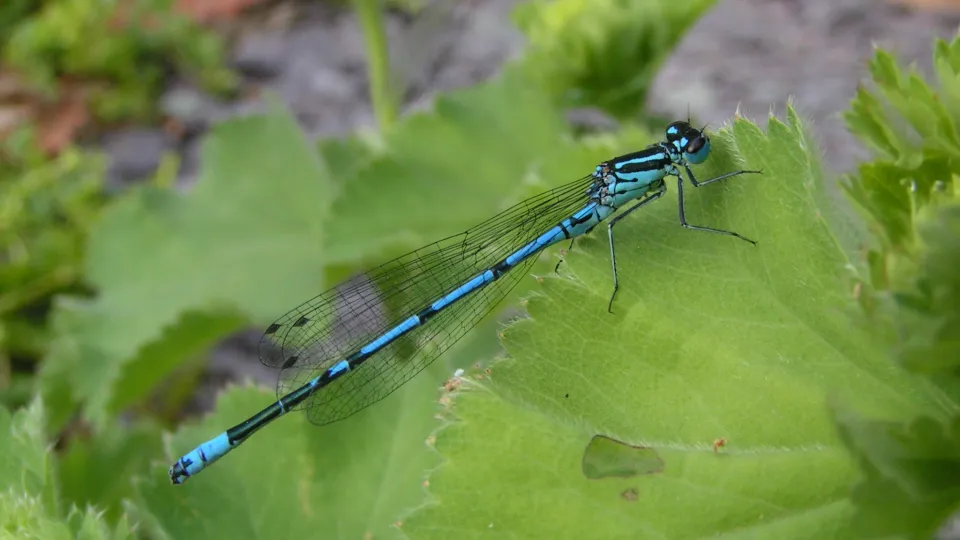
The Azure damselfly is a pale blue, small damselfly that is commonly found around most waterbodies from May to September. Try digging a wildlife pond in your garden to attract damselflies and dragonflies.
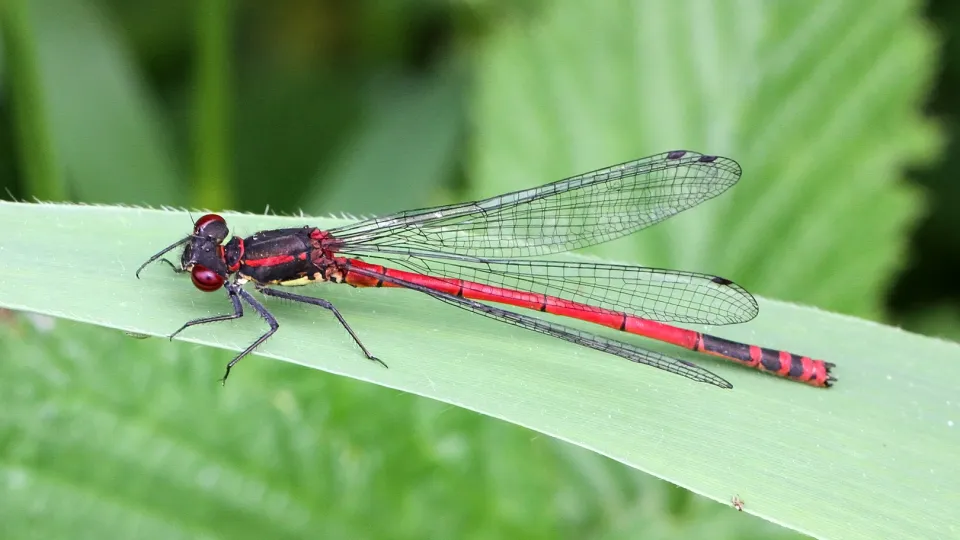
If you have a garden pond, look out for the Large red damselfly resting at the water's edge. As the name suggests, males are bright red with a black thorax, but females may be almost entirely black.
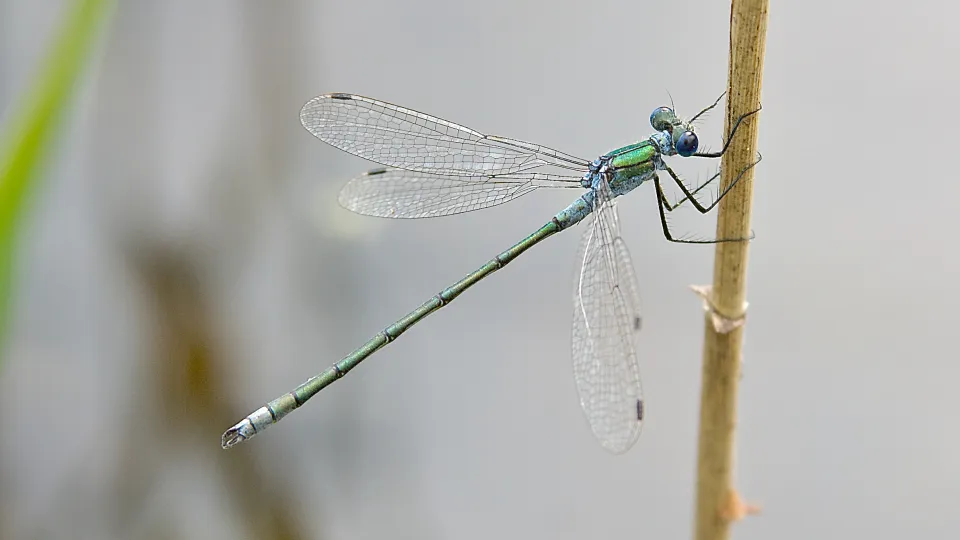
The metallic-green Emerald damselfly can be seen from June to September around ponds, lakes, ditches and canals. Unlike other damselflies, it holds its wings half-open when perched.
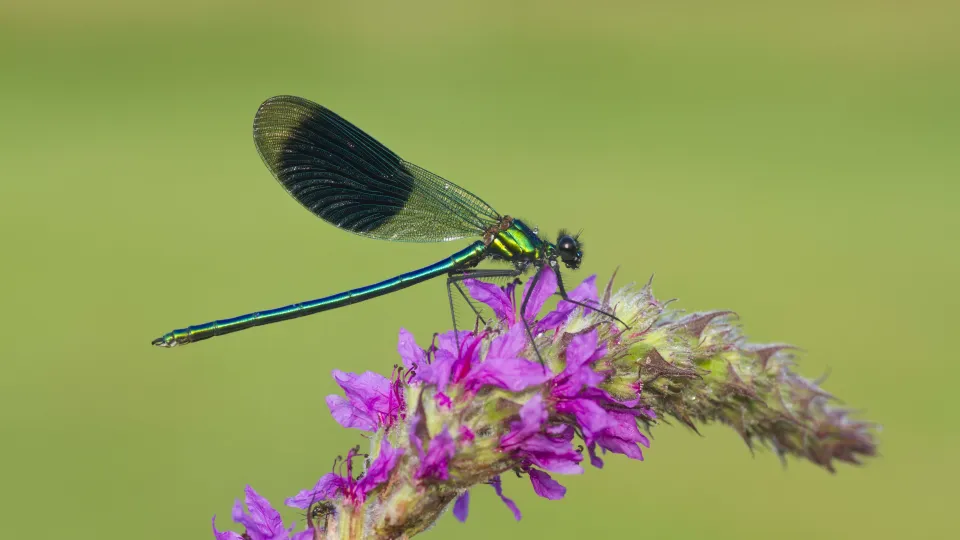
The Banded demoiselle can be seen flitting around slow-moving rivers, ponds and lakes. The males are metallic blue, with a distinctive dark band across their wings, and the females are a shiny green.
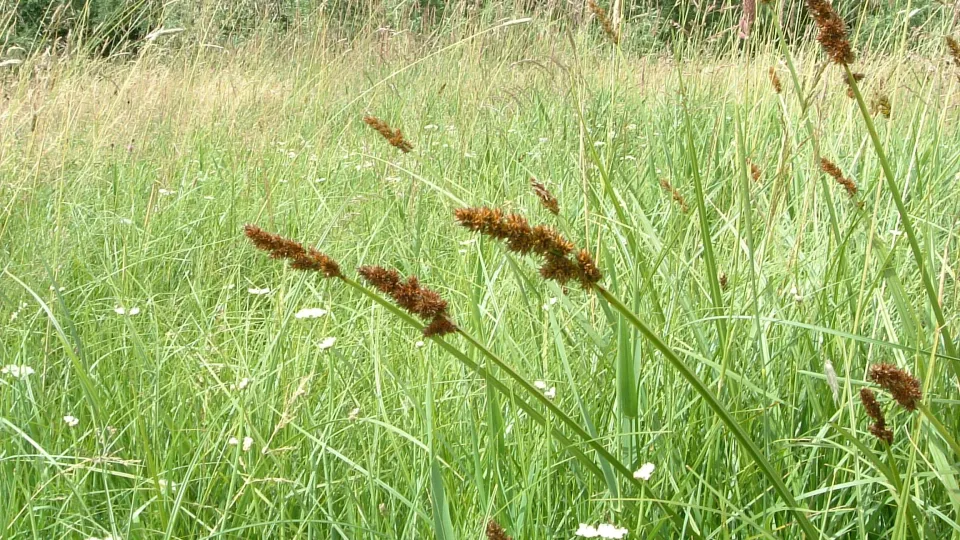
The true fox-sedge is a rare and threatened plant in the UK. It relies on lowland floodplain meadows and damp habitats, which are rapidly disappearing. Look for reddish-brown flowers in summer.
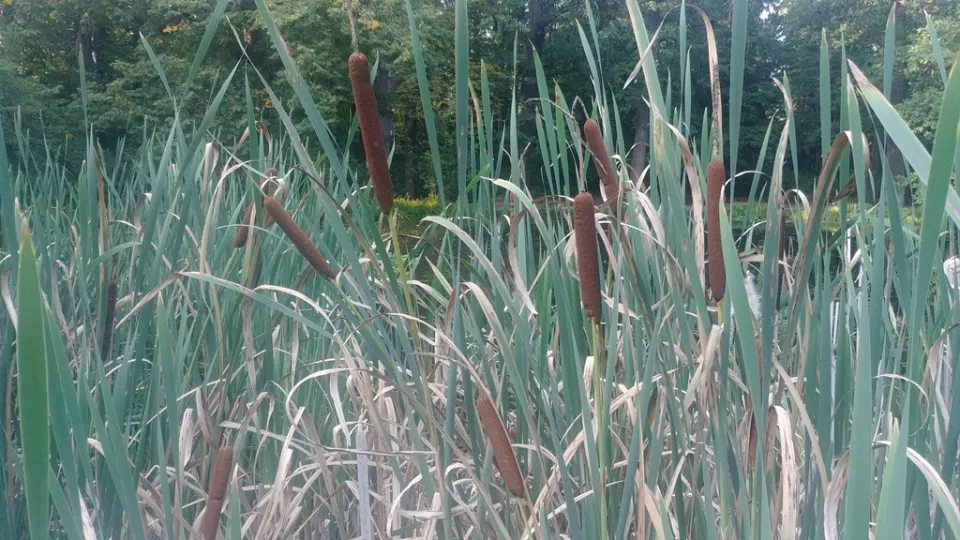
Great reedmace is familiar to many of us as the archetypal 'bulrush'. Look for its tall stems, sausage-like, brown flower heads and green, flat leaves at the water's edge in our wetland habitats.