
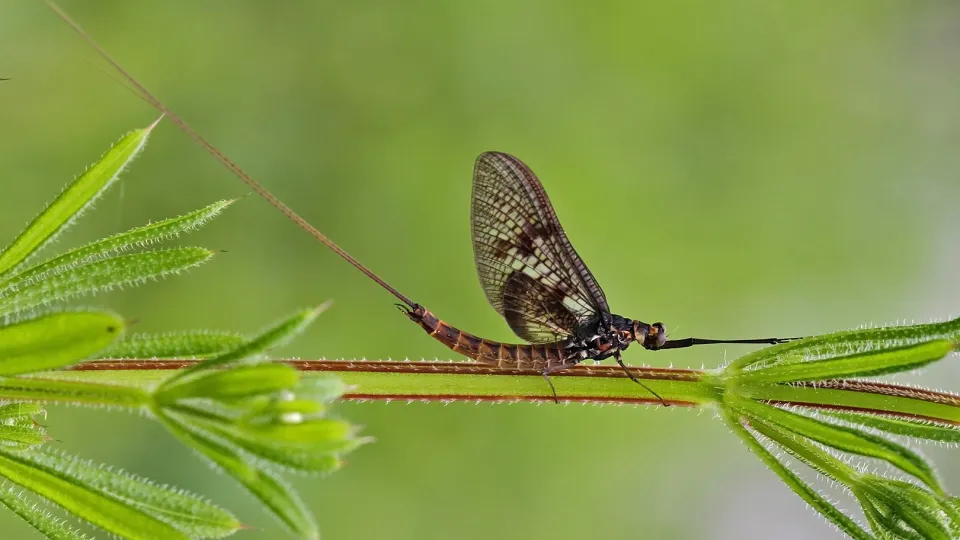
Common mayfly
Also known as the 'green drake mayfly', the common mayfly can be found around unpolluted wetlands, such as lakes and rivers. It has transparent, lacy wings and three long 'tails'.
Also known as the 'green drake mayfly', the common mayfly can be found around unpolluted wetlands, such as lakes and rivers. It has transparent, lacy wings and three long 'tails'.
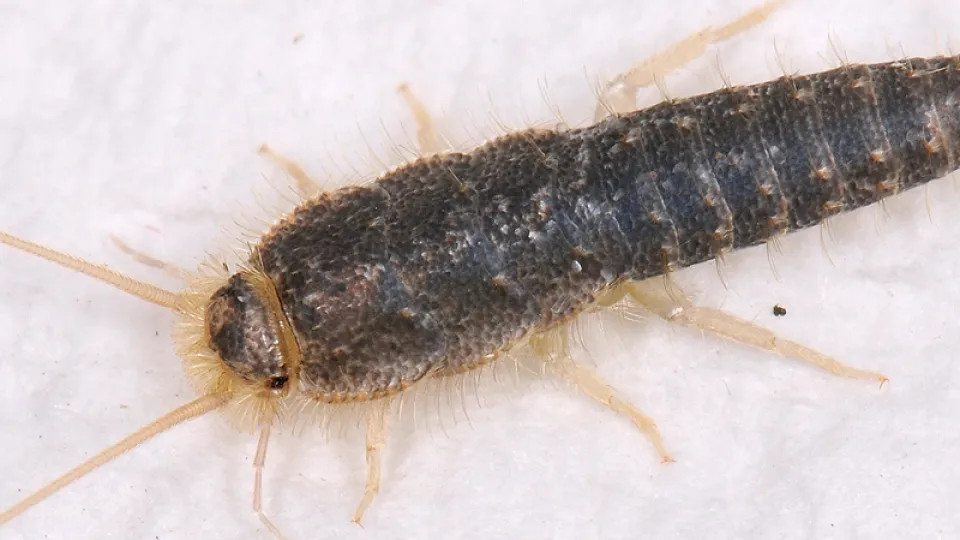
The silverfish is so-named for its fish-like way of moving and its silvery scales. It can be found in the damp corners of the house, such as the kitchen or bathroom. Infestations can cause serious damage.
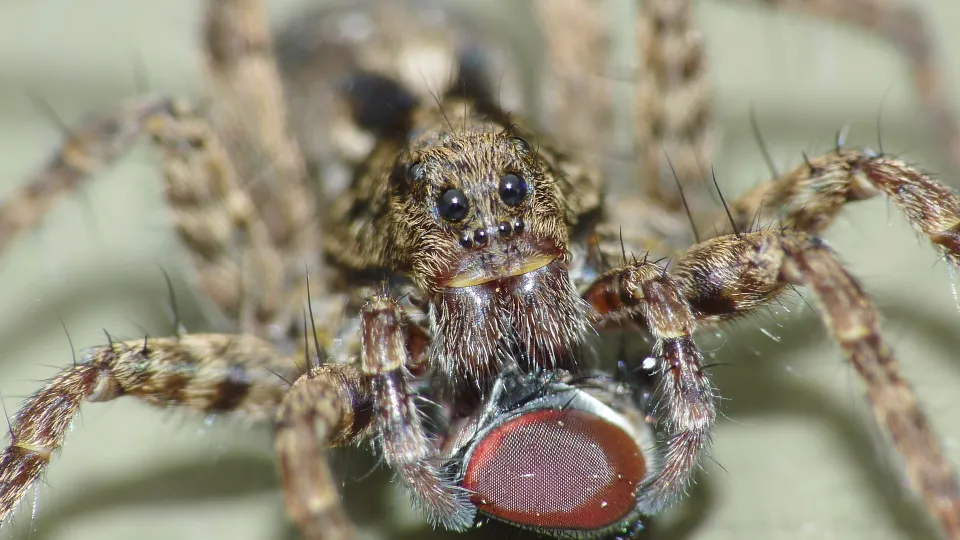
The wolf spider can be found in a wide range of habitats, including the garden. It hunts down its prey, leaping on it just like a wolf. Spiders are beneficial neighbours, helping to manage garden pests.
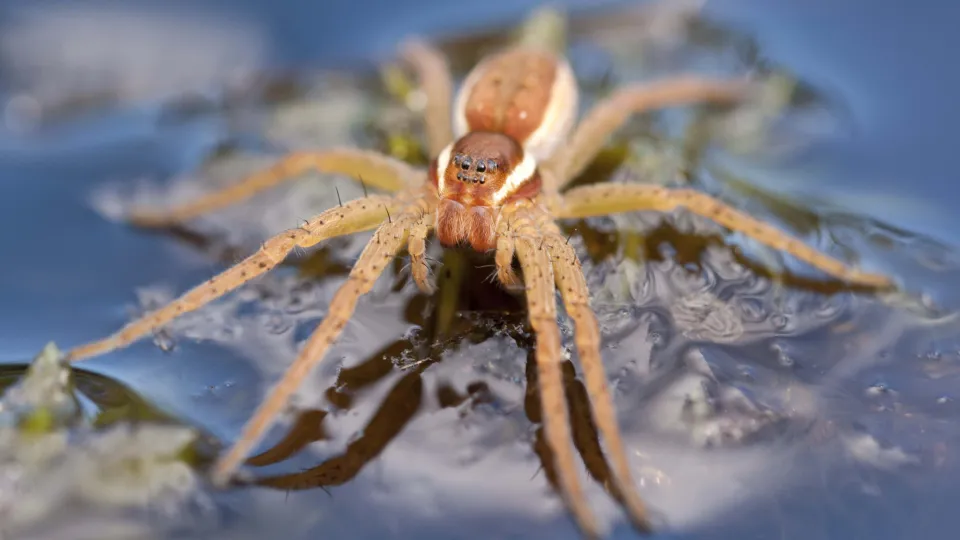
The chocolate-brown raft spider inhabits bogs and ponds. It can be spotted sitting near the water, its legs touching the surface. When it feels the vibrations of potential prey, it rushes out to catch it, floating like a raft.
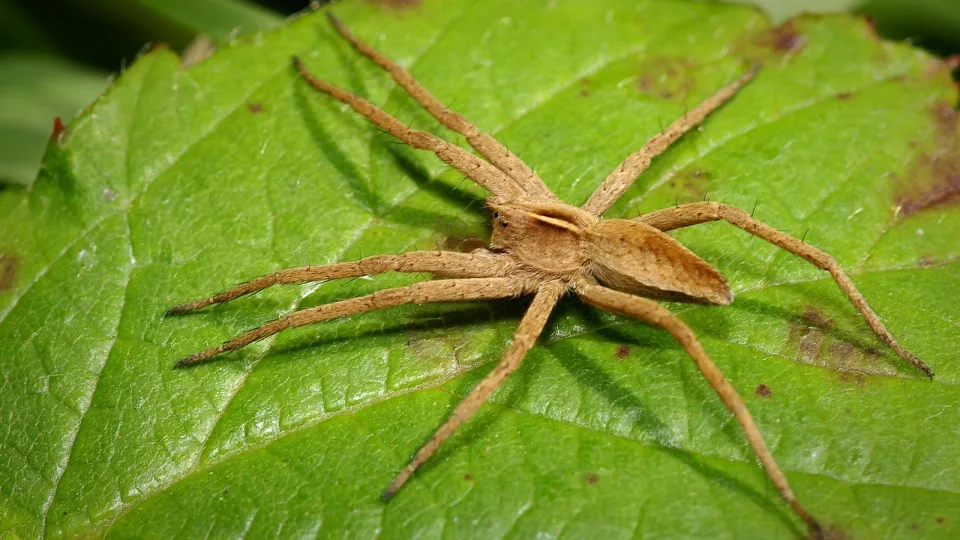
A common spider of heathland and grassland, the Nursery web spider has brown and black stripes running the length of its body. It is an active hunter, only using its silk to create a protective tent for its young.
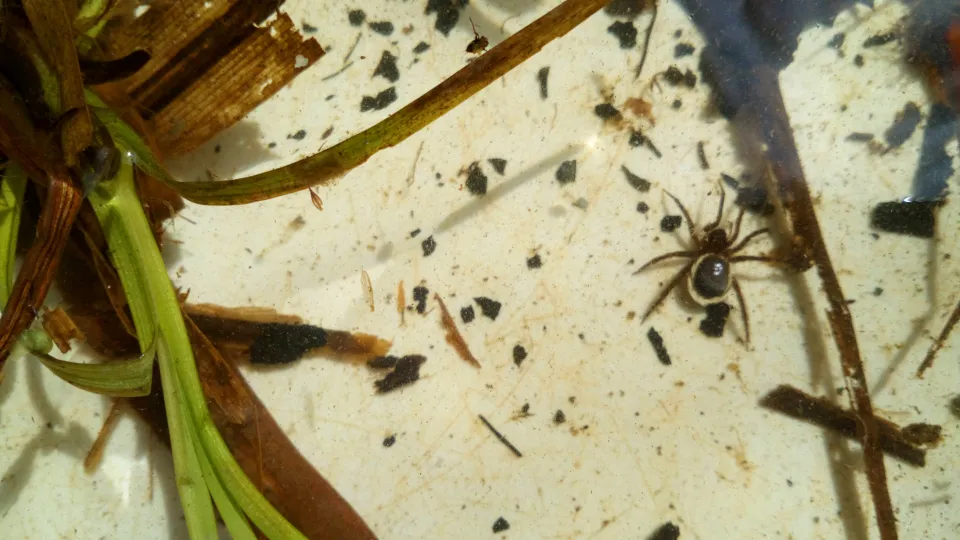
There are several species of spider that live in our wetlands, but the water spider is the only one that spends its life under the water. In its pond habitats, it looks silvery because of the air bubbles it traps in its hairs.
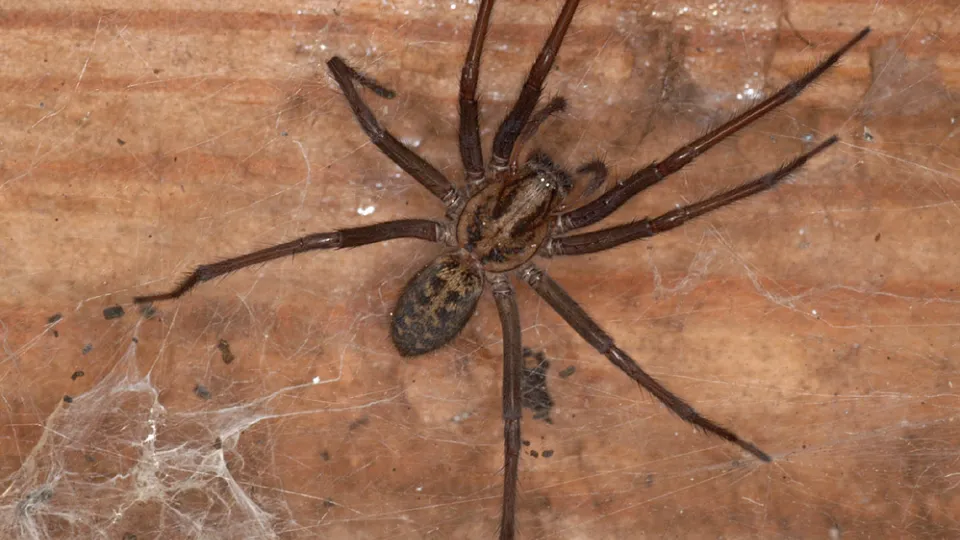
The giant house spider is one of our fastest invertebrates, running up to half a metre per second. This large, brown spider spins sheet-like cobwebs and pops up in the dark corners of houses, particularly in autumn.
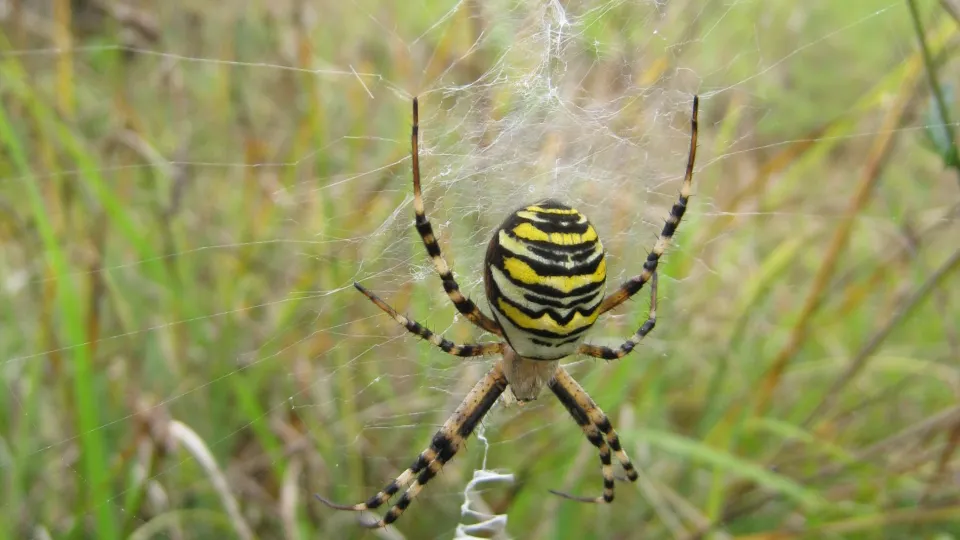
The wasp spider is a great mimic - looking just like a common wasp keeps it safe from predators, even though it is not dangerous itself. It can be found in southern England, but is spreading north.
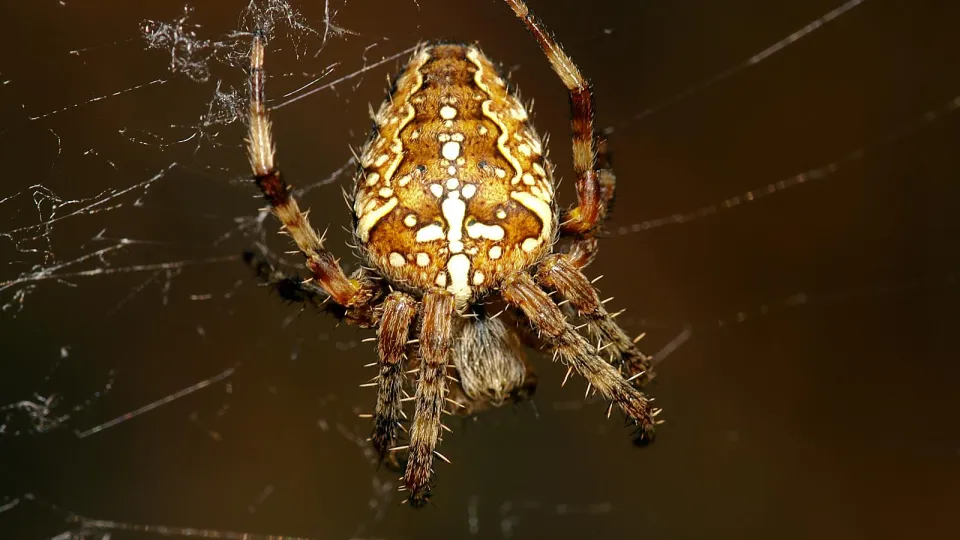
Have you ever stopped to look at the shape of a spider web? Garden spiders spin a spiral shaped web, perfect for catching lots of juicy prey!
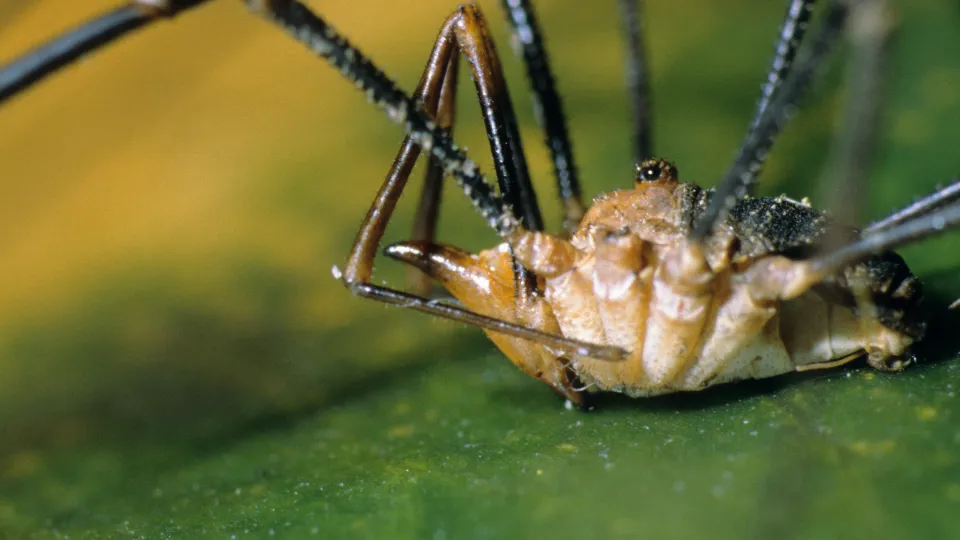
The Common harvestman is familiar to us as the large, spindly spider-like creature that frequents gardens and houses. It predates on smaller invertebrates which it catches using hooks on the ends of its legs.