
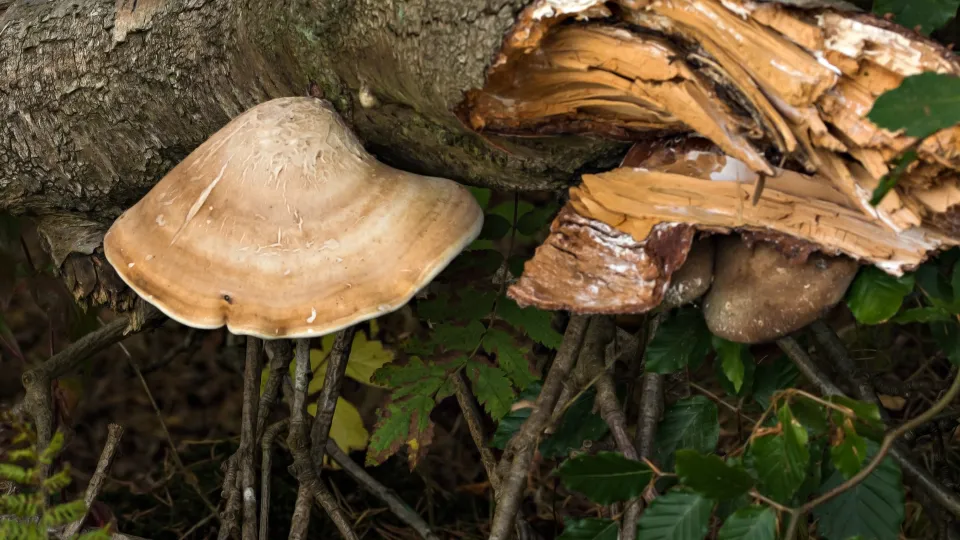
Birch polypore
The birch polypore only grows on Birch trees. This leathery bracket fungus has a rounded, coffee-coloured cap that was once used for sharpening tools, hence its other name: the 'Razorstrop fungus'.
The birch polypore only grows on Birch trees. This leathery bracket fungus has a rounded, coffee-coloured cap that was once used for sharpening tools, hence its other name: the 'Razorstrop fungus'.
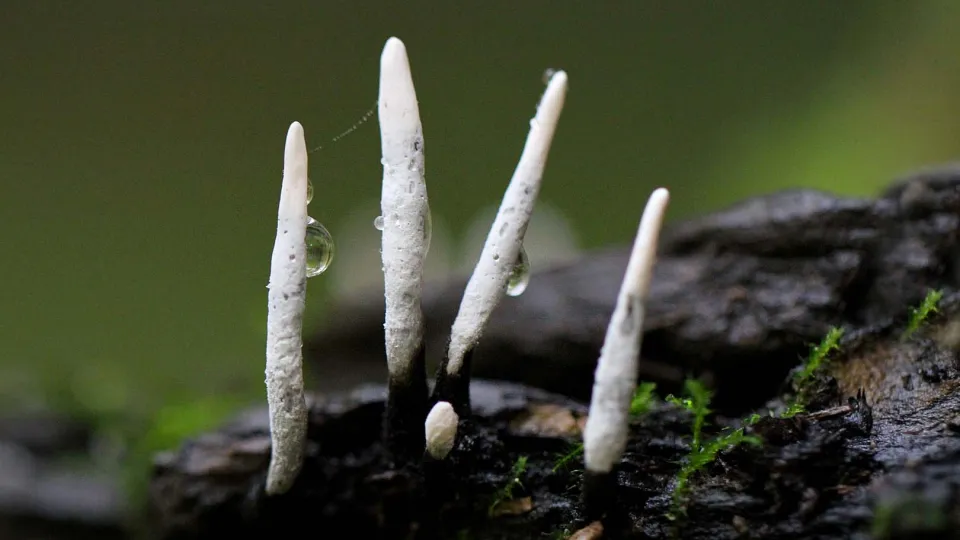
The candlesnuff fungus is very common. It has an erect, stick-like or forked fruiting body with a black base and white, powdery tip. It grows on dead and rotting wood.
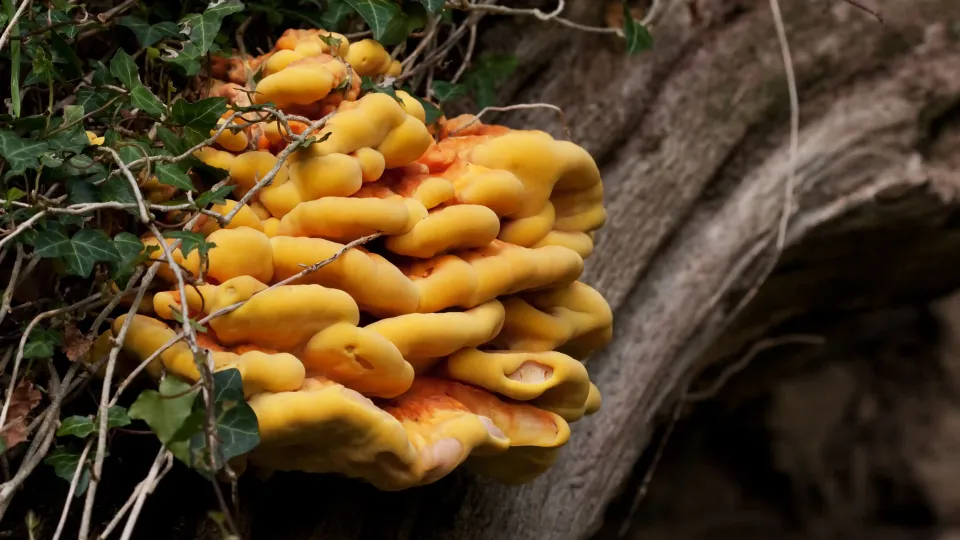
Chicken of the woods is a sulphur-yellow bracket fungus of trees in woods, parks and gardens. It can often be found in tiered clusters on oak, but also likes beech, chestnut, cherry and even yew.
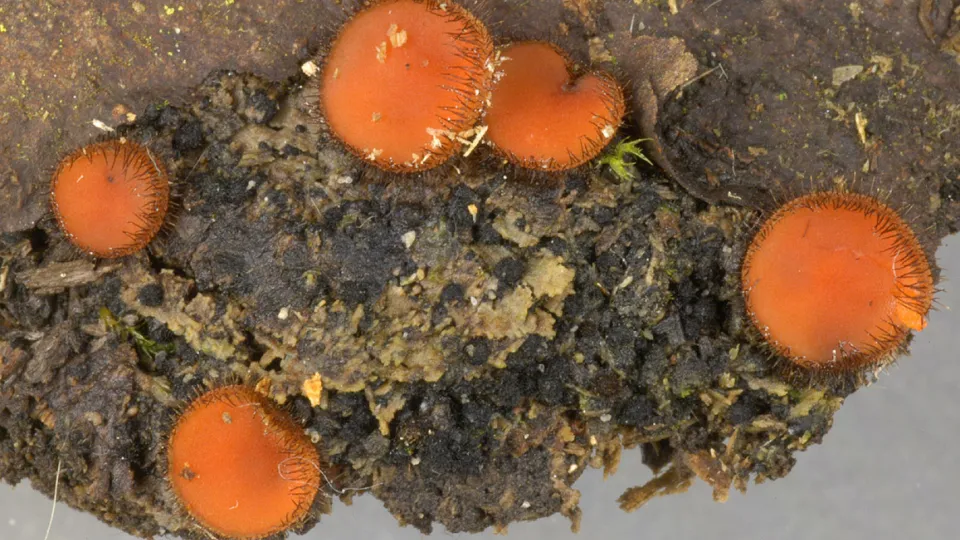
The diminutive common eyelash fungus can be found on wet wood and humous-rich damp soil, often by streams or in wet places. Its orange cup is fringed with tiny, black hairs, providing its common name.
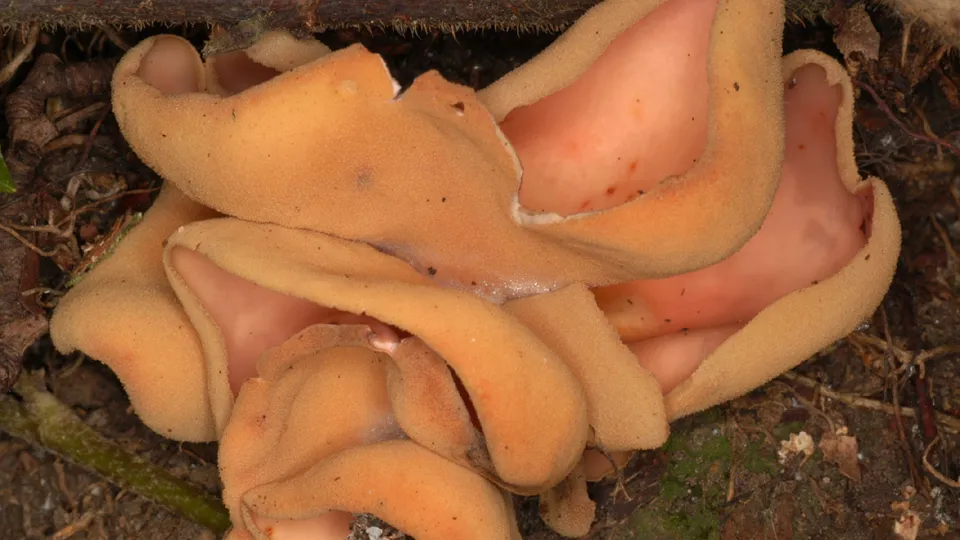
The hare's ear is a cup-like fungus that grows in clusters in broadleaved and mixed woodland, often near to the path. Its orange colour makes it quite conspicuous in the leaf litter.
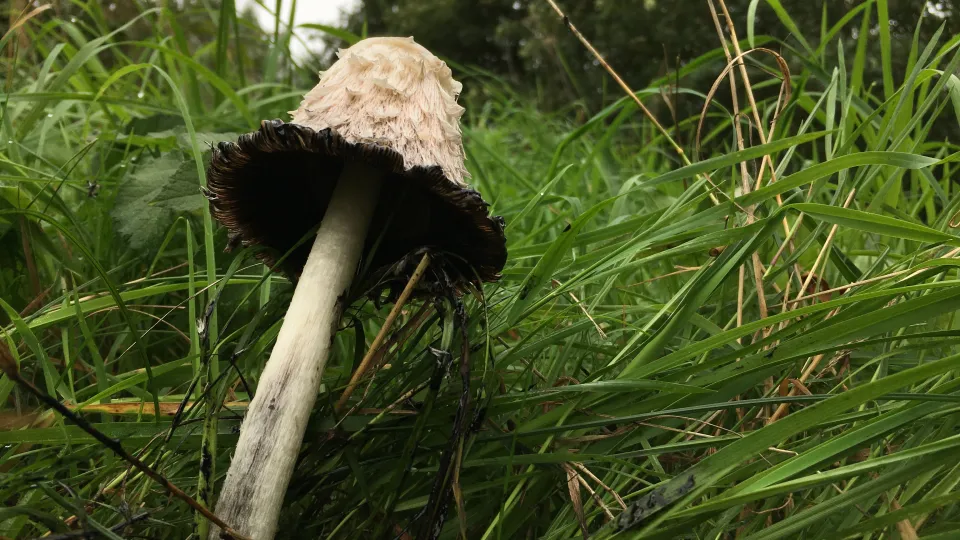
As its name suggests, the shaggy inkcap, or 'lawyer's wig', has a woolly, scaly surface to its bell-shaped toadstools. It is very common and can be seen at the road side, in parklands and even popping up in lawns.
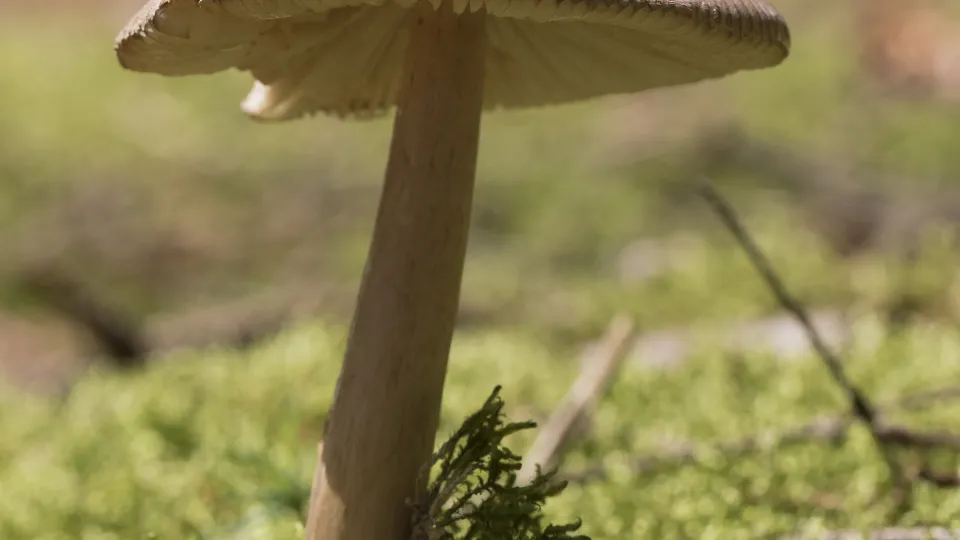
The tawny grisette has an orange-brown cap and a tall, slender stem that arises from a conspicuous cup-like sack. It can be found in woodlands, particularly those with Birch, but also on heaths.
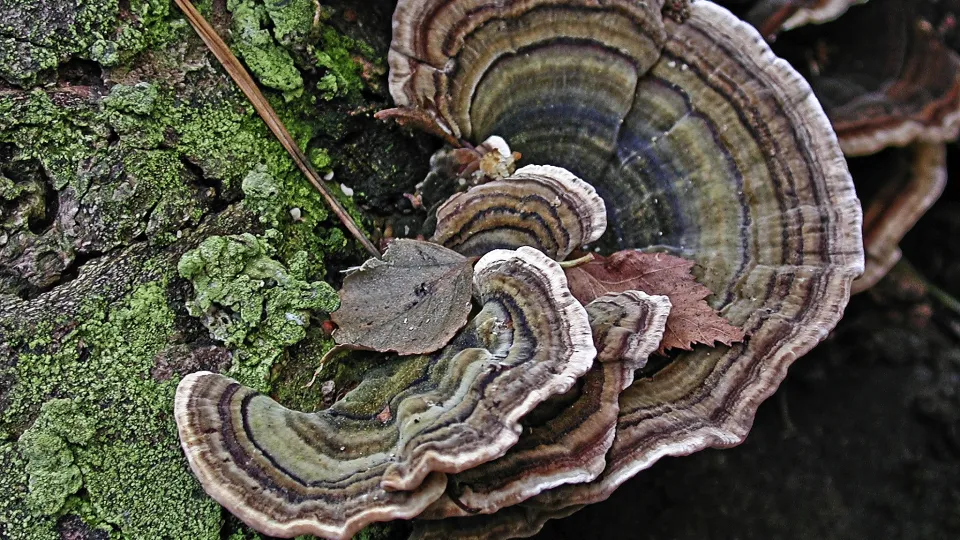
The turkeytail is a very colourful bracket fungus that grows throughout the year, but is at its best in the autumn. Its circular caps can be seen growing in tiers on trees and dead wood.
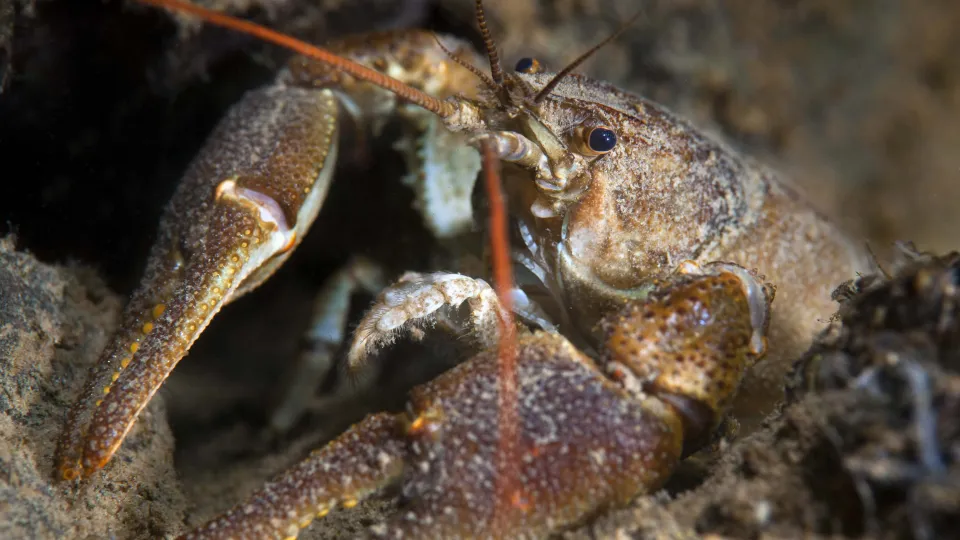
The White-clawed crayfish is a freshwater, bronze-coloured crustacean with pale undersides to its claws - hence the name. It is under threat from an invasive and introduced species of crayfish.

The river lamprey is a primitive, jawless fish, with a round, sucker-mouth which it uses to attach to other fish to feed from them. Adults live in the sea and return to freshwater to spawn.