

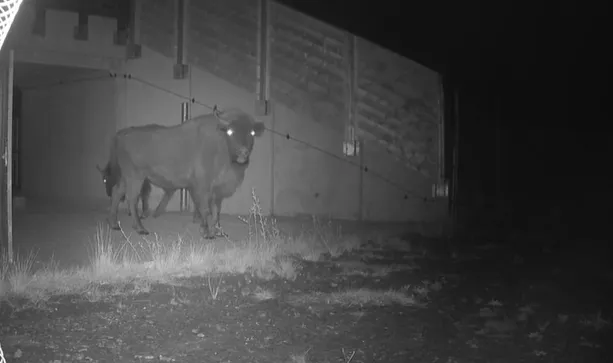
Bison using bridges for first time
Bison begin to reshape a larger landscape
It took the bison time to build confidence using the new bridges, with their first crossing taking place at night. Video footage captured by Kent Wildlife Trust’s Bison and Conservation Ranger Heidi Aguirregoicoa shows the herd using the crossing for the first time, while tracking data and camera traps show how quickly they became more confident. The bison are now regularly moving through and exploring the expanded landscape.
The bison were released into West Blean and Thornden Woods in 2022 as part of the Blean Bison Project, a partnership between Kent Wildlife Trust and Wildwood Trust. They are known as ‘ecosystem engineers’ because their natural behaviours can alter the structure of their surroundings. By browsing, grazing, felling trees, trampling vegetation and creating standing deadwood, bison create a constantly changing mosaic of habitats that can support a wider range of wildlife.
Heidi Aguirregoicoa, Bison and Conservation Ranger at Kent Wildlife Trust, said: “It’s been fascinating to watch the bison gain confidence with the bridges. At first, they were cautious and their first crossing happened under cover of darkness, but they quickly started using them more regularly. The tracking data and camera traps now show them moving throughout the wider landscape.
“We’re already seeing the impact of giving them access to this new area. Fresh paths are appearing through dense vegetation, bark is being stripped from trees and their dung is enriching the soil and supporting insect life. These are all natural processes that happen simply because the bison are being bison, and we’re now seeing them begin to transform a much larger area of habitat and create the conditions for many other species to thrive.”
Bridges for people and bison
The bridges have been designed to allow both people and bison to move through the landscape, with visitors crossing above while the bison can pass beneath. Visitors can stand on the bridges and look through the viewing hide for the chance to see the bison moving freely through the woodland.
The £1 million bridge project has been funded by The National Lottery Heritage Fund, National Highways Environment and Wellbeing Designated Fund, as part of the Network for Nature programme, The Michael Uren Foundation, Veolia Environmental Trust, Garfield Weston Foundation and private donors.
Caroline Schwaller MBE, Chair of the Veolia Environmental Trust, said: “The Veolia Environmental Trust was pleased to support this project because of its biodiversity and social importance. Our grant will help reduce the need for human intervention and management of the woodland, reducing the need for heavy plant or machinery and the associated emissions. The project also uses renewable energy through solar panels and improves public walking routes, providing benefits for both nature and people.”