

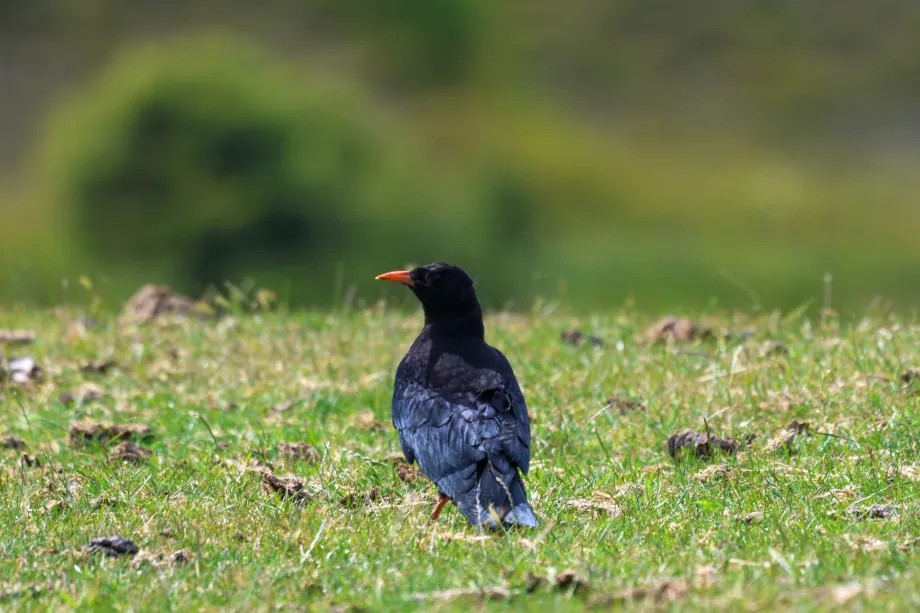
Chough chick. Liz Corry
Wild breeding marks next phase of recovery
In 2023, the first successful release of captive-reared choughs saw eight young birds take to the skies above Dover. The birds came from the conservation breeding programme managed by Paradise Park, Cornwall, with chicks bred at both Paradise Park and Wildwood Trust for releases. Since then, the population has grown through carefully managed releases and breeding in the wild, with this summer's eight wild-born chicks marking another significant step in the recovery of the species. The programme will continue to build on this progress, with a further eight parent-reared birds due to be released in early September. The birds are also beginning to expand their range. Once largely centred around Dover, choughs are now regularly being spotted across Thanet and Folkestone, showing they are exploring and establishing themselves across the county.
Paul Hadaway, Director of Conservation and Engagement at Kent Wildlife Trust, said: “Just a few years ago, the return of these iconic birds to Kent was an ambitious vision. Today, we’re seeing them breeding in the wild, with eight chicks fledging this summer and the population beginning to establish itself naturally. That's a hugely significant moment and shows the years of work invested in restoring this species are delivering real results." "This recovery reflects decades of habitat restoration, conservation grazing and partnership working to create landscapes where wildlife can thrive once again. Seeing the birds now spreading beyond Dover gives us real confidence they can continue to expand their range, strengthen the population and once again become an established part of Kent's landscape."
Supporting long term recovery The project has received a significant boost through funding from Natural England's Species Recovery Programme (SRP), backed by Defra as part of the Government's Wild Again: Restoring England's Wildlife campaign. The funding will support research led by Wildwood Trust using DNA analysis to uncover the diet of Kent's reintroduced choughs, alongside surveys of key foraging habitats to identify the best places for the birds to expand. This will help to guide the next phase of the programme and support the long-term establishment of a thriving wild population.
Liz Corry, Chough Release Supervisor at Wildwood Trust, said: "To see so many Kentish-born choughs fledge in the wild at such an early stage in the project fills me with immense pride. With my father and his family coming from Dover, seeing these birds return to these skies and venture further is deeply personal. It is a true testament to the hard work and dedication of our staff, the partnership, and volunteers, not to mention the resilience of the birds themselves. “We're now thrilled to dive into the next phase: discovering exactly what Kentish choughs eat in the wild. This research will help us shape effective habitat management to support insect populations and enrich biodiversity across Kent."
Creating the conditions for choughs to return The return of the red-billed chough to Kent has been made possible by more than 40 years of habitat restoration. Kent Wildlife Trust has worked alongside partners including the National Trust, English Heritage and White Cliffs Countryside Partnership to restore Kent's internationally important chalk grasslands and reintroduce conservation grazing across East Kent. This long-term work continues, ensuring the landscape can support a growing chough population for years to come.
Read more about the Red-billed Chough Reintroduction Project