I have been a BeeWalk volunteer with the Bumblebee Conservation Trust (BBCT) since 2024. I have also been a Kent Wildlife Trust volunteer joining the Pine Marten project at Bedgebury in 2025. I live near Queendown Warren and the South East Area Manager (BBCT) was interested in how a chalk cliff area traditionally managed for butterflies supported bumblebees in this rare habitat.
So, when I set up my BeeWalks it seemed a good idea to include Queendown Warren. The BeeWalk season is March to October and the survey is monthly over a distance between 1km and 3km depending on the site.
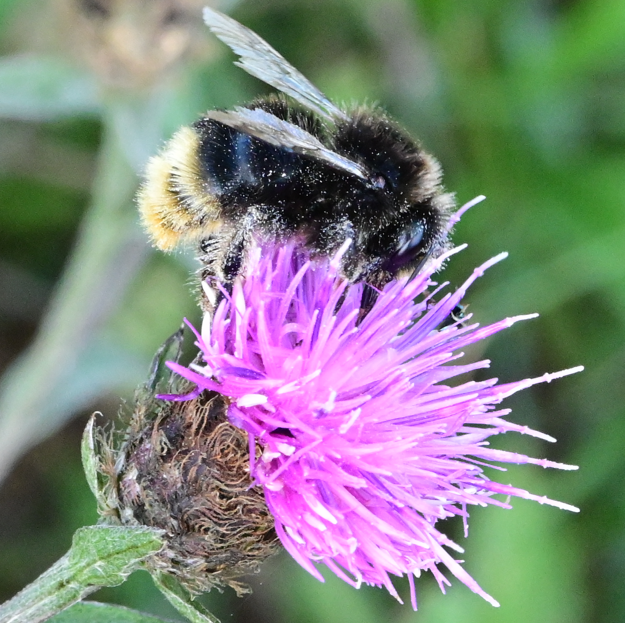
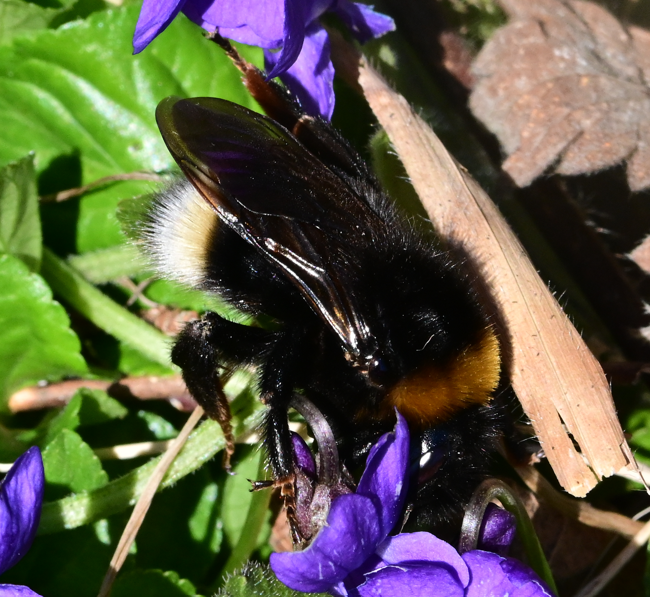
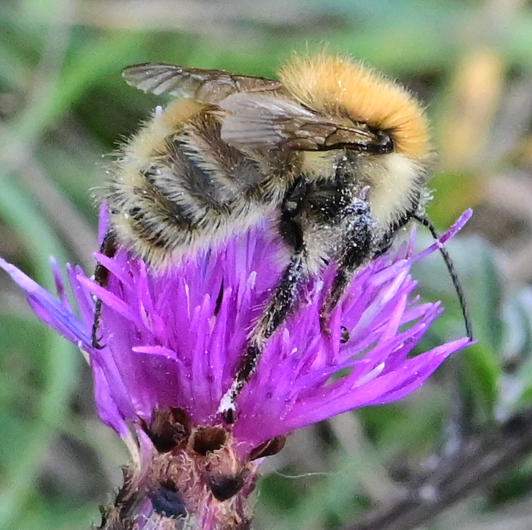
I had no idea what I would find or in which months, so every survey was interesting and in 2025 a few surprises turned up. It was a sanctuary to the red-tailed bumblebees, which nationally dropped over 70% in the 2024, and the brown-banded carder bee, heath bumblebee and field cuckoo bee made an appearance in 2025.
Although I see relatively few buff-tailed bumblebees their population is very strong - they have hosted a high density of southern cuckoo bees, which take over the nests of their buff-tailed hosts making their workers collect pollen and nectar for their own offspring. I once watched one trailing a red-tailed queen bumblebee, much to her annoyance.
The best time of year is May to August when the knapweed, and marjoram/oregano is in flower. Understanding which flowers the bumblebees use and whether they are nesting in the reserve helps to inform how the reserve could help rare species like the brown-banded carder bee.
Surveying for bumblebees also means that I have seen a common lizard who was sharing a hole in the ground, ichnemon wasps, and several species of butterflies. Butterflies can often aggressively chase off bumblebees, particularly peacock butterflies.
I take a camera and use iRecord if I spot species that I have not seen before to help identify what I see. Some bumblebees also need a bit of specialised knowledge, but BBCT gives identification training resources to all BeeWalkers.
Getting into bumblebee surveying has opened my eyes to many other species families, and going for a walk involves a bit more equipment than in the past but is far more interesting.
I’d thoroughly recommend getting started by learning the ‘big seven’ bumblebee species found in Kent, from there, a whole world of cuckoo bees and rarer species opens up. We’re very lucky to have such a variety here.