
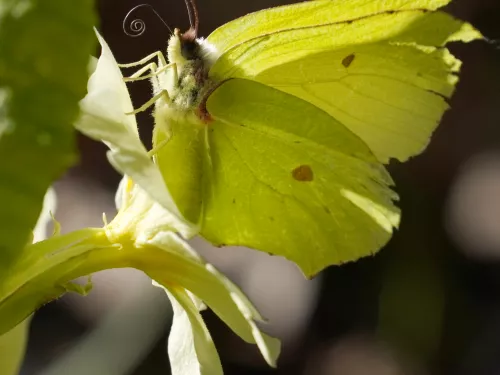
1. How did the butterfly get its name?
It is commonly believed that the word "butterfly" is a derived from "butter-coloured fly" which is attributed to the yellow of the male Brimstone butterfly.

It is commonly believed that the word "butterfly" is a derived from "butter-coloured fly" which is attributed to the yellow of the male Brimstone butterfly.
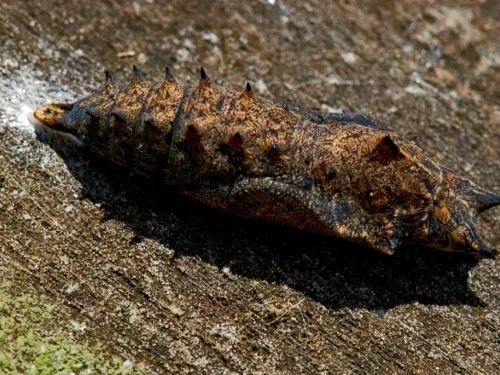
Egg, larva (caterpillars), pupa (chrysalis) and adult.
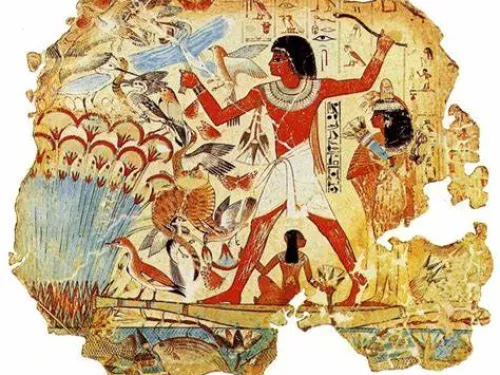
Buterflies can be seen in Egyptian frescoes at Thebes.

Antarctica is the only continent on which no Lepidoptera (an order of insects that comprises the butterflies and moths) have been found.
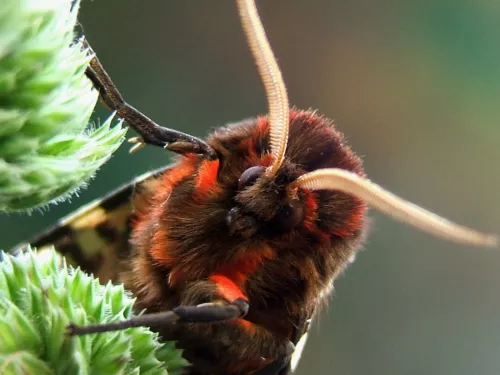
There are about 18,500 named species of butterflies. Moths are even more numerous - about 140,000 species of them were counted all over the world. The photo above shows a garden tiger moth.
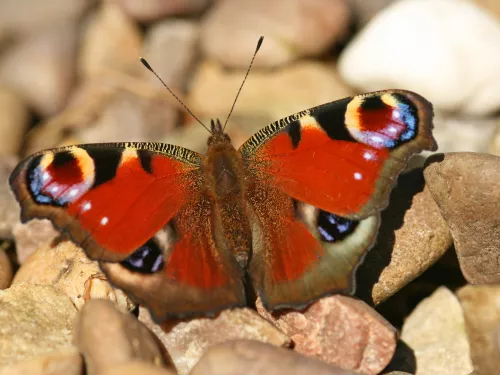
They will not fly if the temperature is below 10 degrees Celcius.
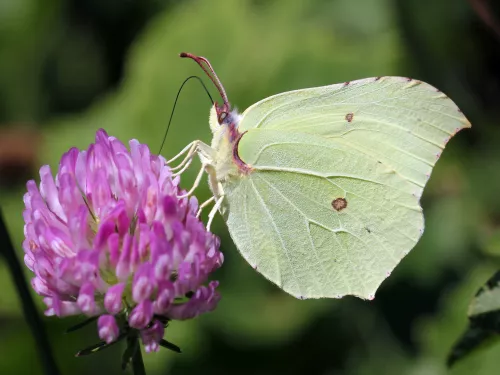
It's about 9 - 10 months - the longest of any adult butterfly!
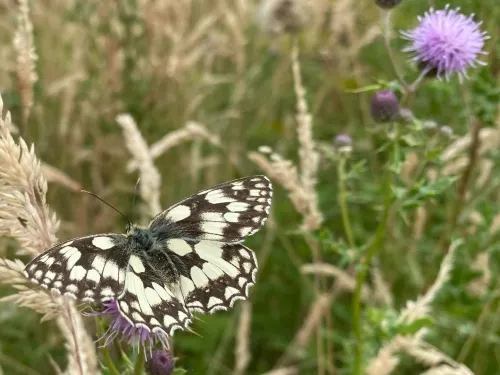
This protects the insect and keeps water inside their bodies so they don’t dry out.
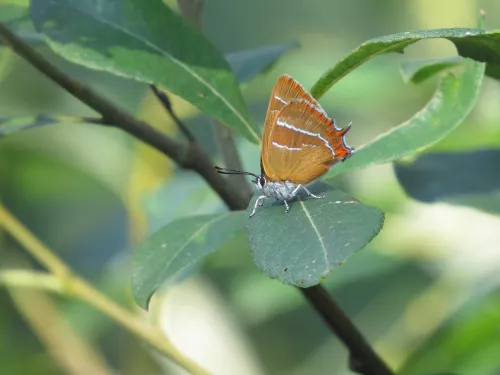
They do this to find out whether the leaf they sit on is good to lay eggs on to be their caterpillars' food or not.
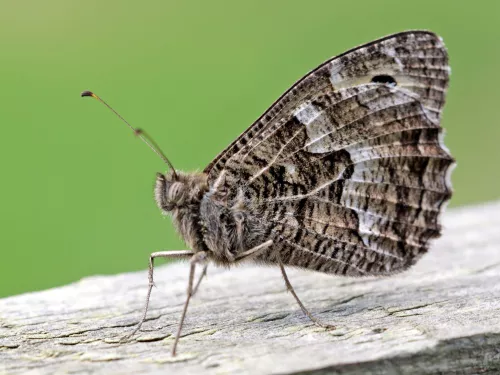
This is so its wings can full with blood and it can dry before flying for the first time.
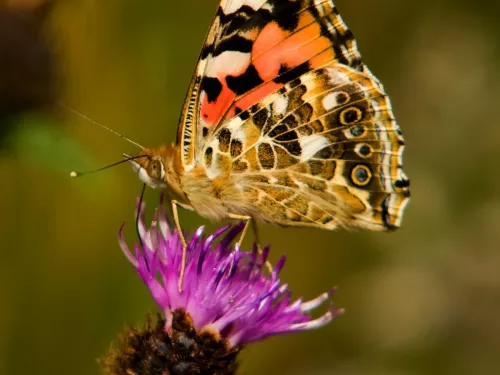
There are half a dozen or more that visit us regularly from abroad, like the painted lady seen above, and which breed here in warm weather.
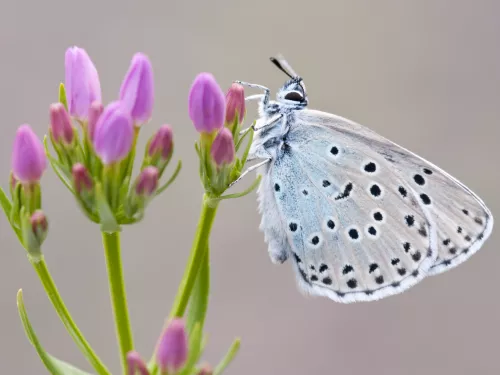
These are the large copper, mazarine blue, black-veined white, large blue and large tortoiseshell. The chequered skipper became extinct in England in 1976, but still survives in Scotland. The large blue has been successfully reintroduced using butterflies from Sweden.
Many of the butterflies we love depend on healthy grasslands, woodland edges, and wildflower-rich habitats that have declined dramatically over recent decades. Through our Nature Restoration Fund: Back from the Brink Appeal, Kent Wildlife Trust is restoring these vital landscapes, giving butterflies and countless other species the chance to recover. Every donation helps create bigger, better and more connected habitats where wildlife can flourish.
Most adult butterflies feed on nectar from flowers, using their long, straw-like tongue, called a proboscis, to sip sugary nectar. Different butterfly species are attracted to different flowers, but native wildflowers such as knapweed, scabious, and bird's-foot trefoil are particularly valuable. Some butterflies also feed on tree sap, overripe fruit, or minerals found in damp soil.
Butterflies play an important role in healthy ecosystems. As they move from flower to flower, they help pollinate plants, while their caterpillars and adults provide food for birds, bats, and other wildlife. Because butterflies are sensitive to changes in their environment, scientists also use them as indicators of the health of habitats such as wildflower meadows, woodlands, and chalk grasslands.
A butterfly's lifespan depends on the species. Some live for only a few weeks as adults, while others survive for several months. The brimstone butterfly has one of the longest adult lifespans of any UK butterfly, living for up to 10 months by hibernating through the winter before emerging in spring.
Although butterflies and moths both belong to the order Lepidoptera, there are some key differences. Butterflies are usually active during the day and rest with their wings folded together above their backs. Most moths are active at night and rest with their wings held flat or roof-like over their bodies. Moths also tend to have feathery or comb-like antennae, while butterflies usually have smooth antennae with club-shaped tips.
Creating a butterfly-friendly garden is one of the best ways to support local wildlife. Plant a variety of nectar-rich flowers that bloom from spring to autumn, avoid using pesticides, leave a patch of long grass and, if possible, include native wildflowers. Sunny, sheltered areas are especially attractive to butterflies looking for food and places to bask.
Many butterfly species have declined because of habitat loss, changes in land management, climate change and pollution. Wildflower meadows, ancient woodlands, and other important habitats have become smaller and more fragmented, making it harder for butterflies to find food, breed, and move between suitable places.
There are lots of ways you can make a difference. Plant native wildflowers, let parts of your garden grow naturally, avoid pesticides, and take part in citizen science projects such as butterfly counts. You can also support organisations working to restore habitats. Every donation to Kent Wildlife Trust's Back from the Brink Appeal helps create and protect the wild places that butterflies need to survive and thrive.