
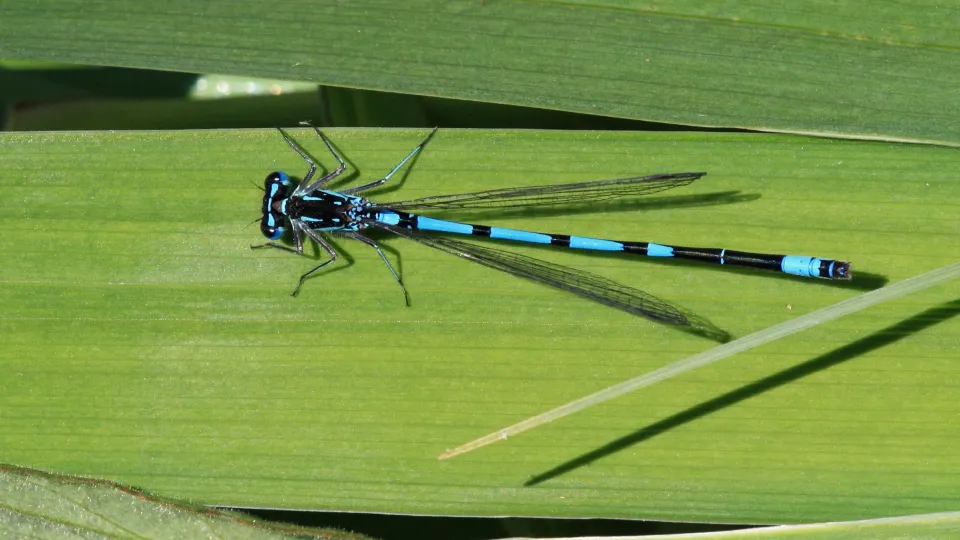
Variable damselfly
The variable damselfly looks a lot like the azure damselfly, but is much less common throughout most of the UK.
The variable damselfly looks a lot like the azure damselfly, but is much less common throughout most of the UK.
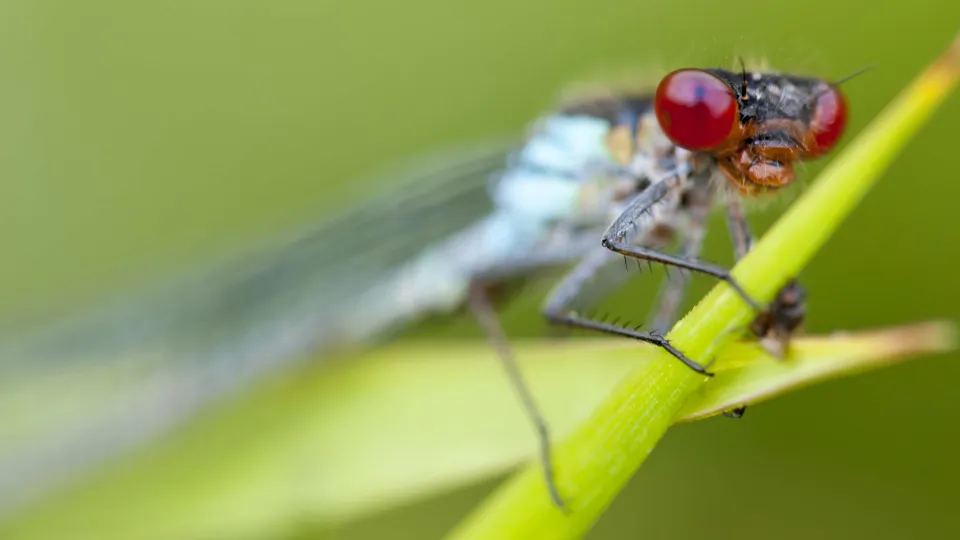
The Red-eyed damselfly is a small, but robust, damselfly of canals, ponds, lakes and slow-flowing rivers. As its name suggests, it has bright blood-red eyes, but a mostly black body.
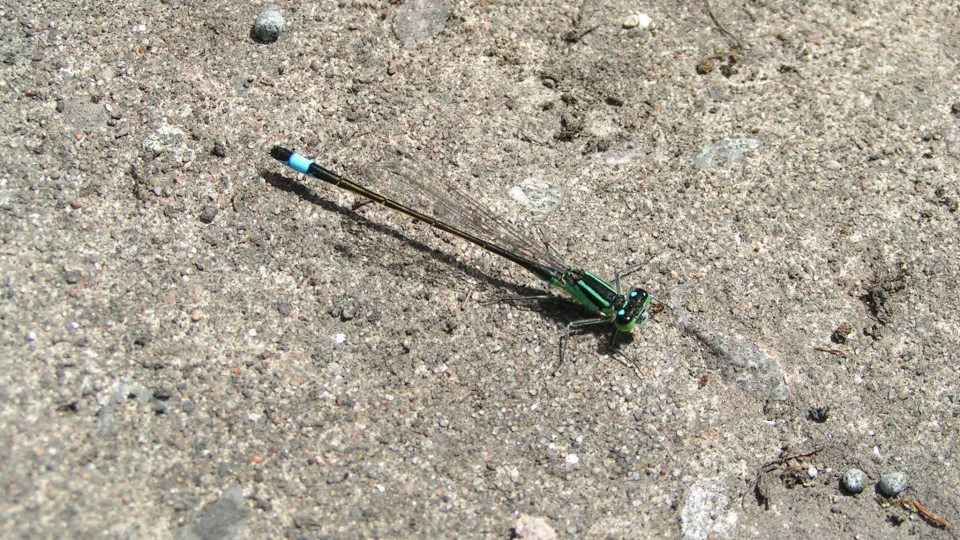
The Blue-tailed damselfly does, indeed, have a blue tail. It is one of our most common species and frequents gardens - try digging a wildlife pond to attract dragonflies and damselflies.
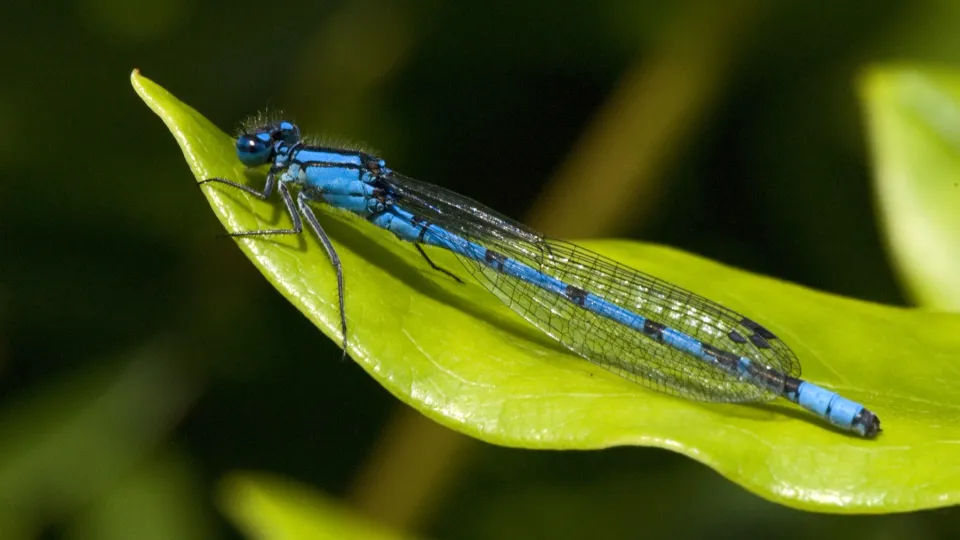
Living up to its name the Common blue damselfly is both very common and very blue. It regularly visits gardens - try digging a wildlife-friendly pond to attract damselflies and dragonflies.
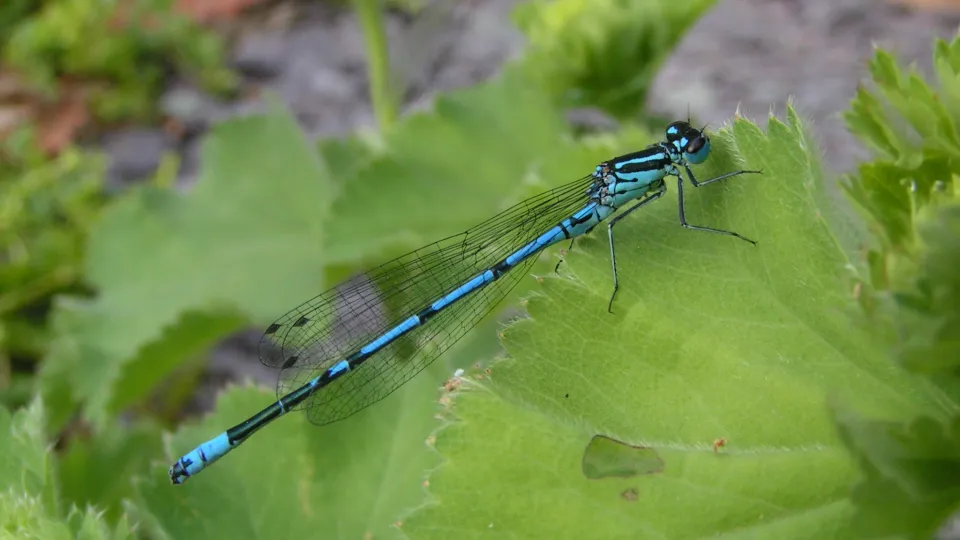
The Azure damselfly is a pale blue, small damselfly that is commonly found around most waterbodies from May to September. Try digging a wildlife pond in your garden to attract damselflies and dragonflies.
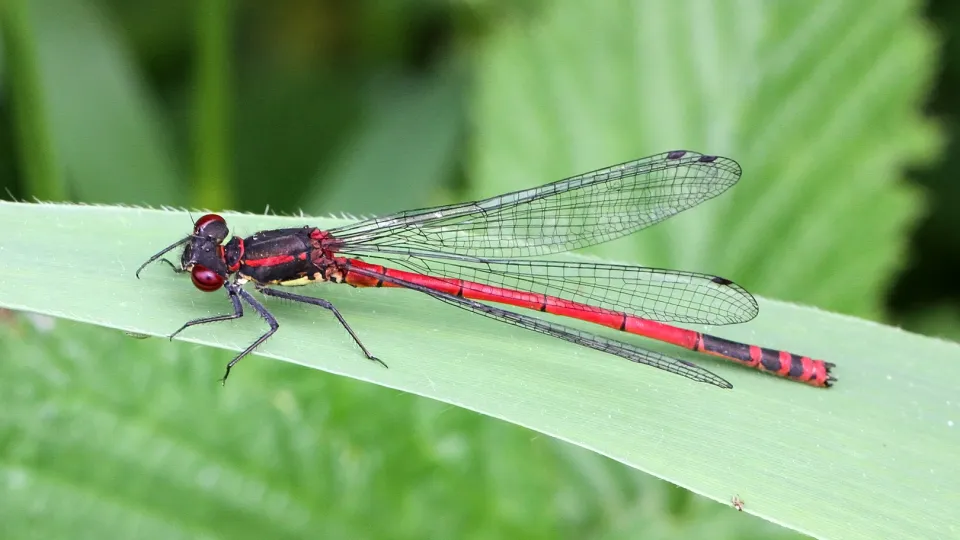
If you have a garden pond, look out for the Large red damselfly resting at the water's edge. As the name suggests, males are bright red with a black thorax, but females may be almost entirely black.
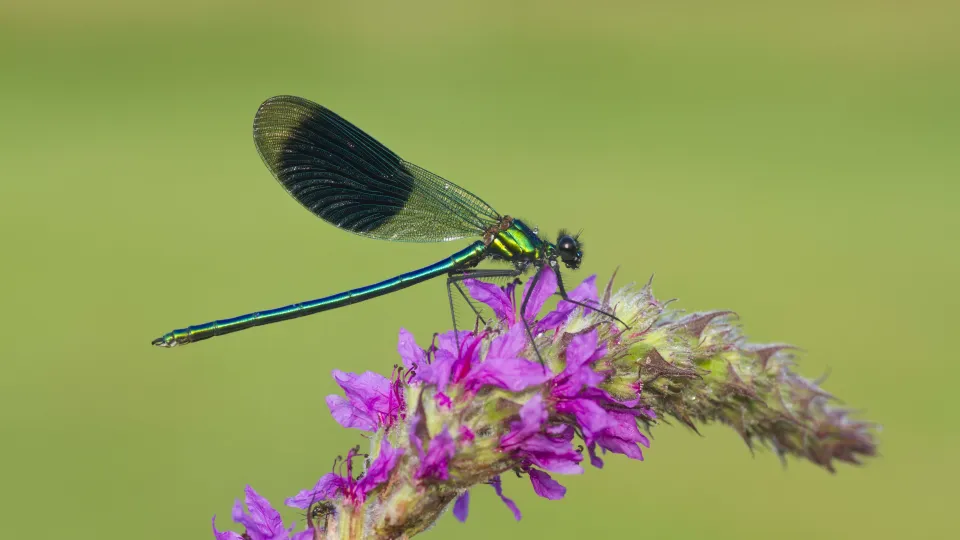
The Banded demoiselle can be seen flitting around slow-moving rivers, ponds and lakes. The males are metallic blue, with a distinctive dark band across their wings, and the females are a shiny green.