
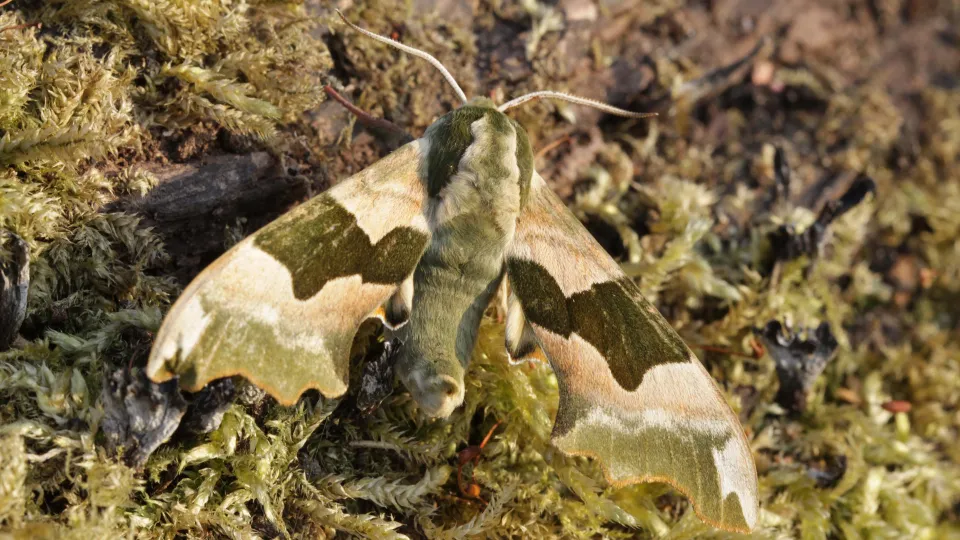
Lime hawk-moth
The lime hawk-moth is a large, night-flying moth that can be seen from May to July in gardens, parks and woods. It is buff-coloured, with green patches on its scalloped-edged wings.
The lime hawk-moth is a large, night-flying moth that can be seen from May to July in gardens, parks and woods. It is buff-coloured, with green patches on its scalloped-edged wings.
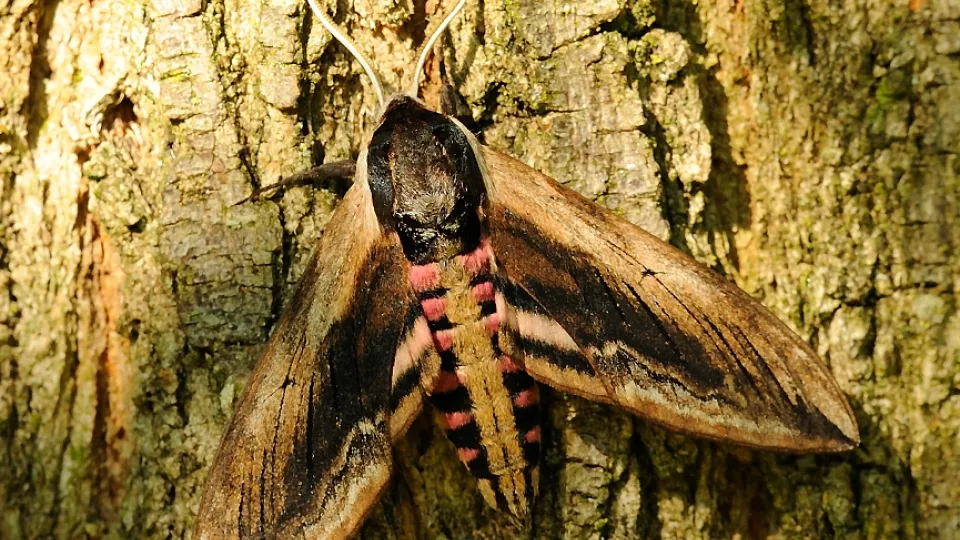
With a torpedo-shaped body and long, narrow wings, the privet hawk-moth is a striking garden visitor. But the caterpillars really stand out: lime-green, with purple streaks and a black hook at the tail end.
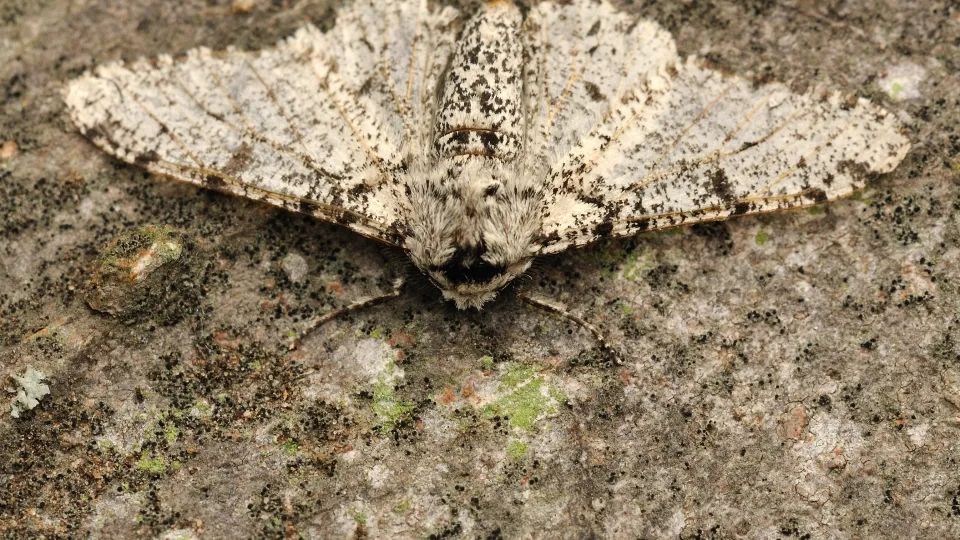
The peppered moth is renowned for its markings that have evolved to camouflage it against lichen in the countryside and soot in the city. It can be seen in gardens, woods and parks, and along hedgerows.
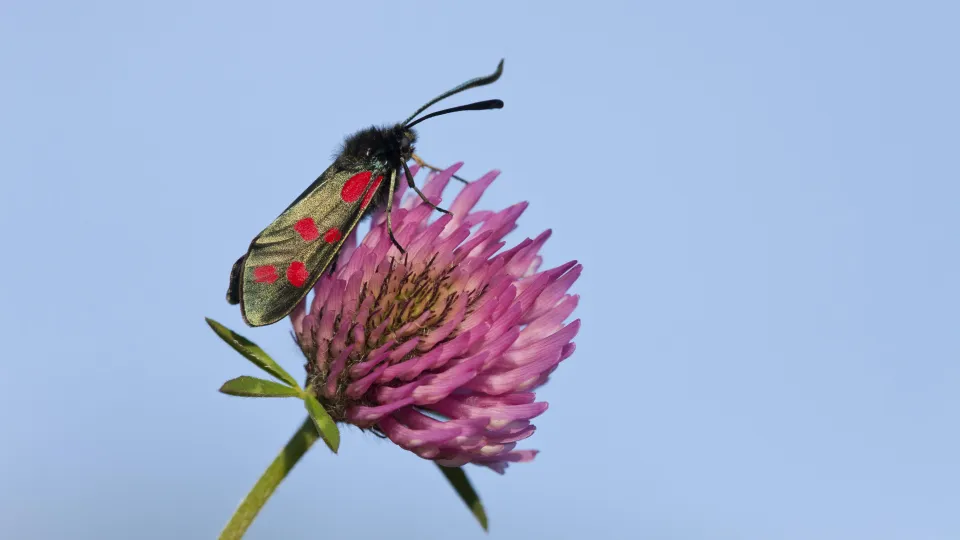
The six-spot burnet moth is a day-flying moth that flies with a slow, fluttering pattern. Look for it alighting on knapweeds and thistles in grassy places. It is glossy black, with six red spots on each forewing.

The dazzling silver-studded blue is a rare butterfly of heathland habitats, mainly in southern England. It has undergone severe population declines in recent years.
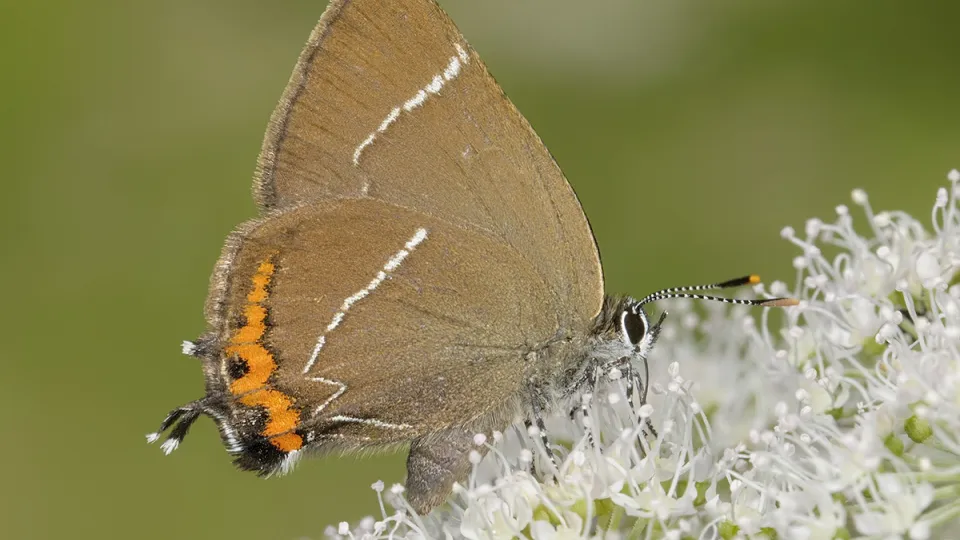
The white-letter hairstreak gets its name from the white lines that form a 'W' shape on its underside. It is an elusive butterfly, spending much of its time in the treetops.
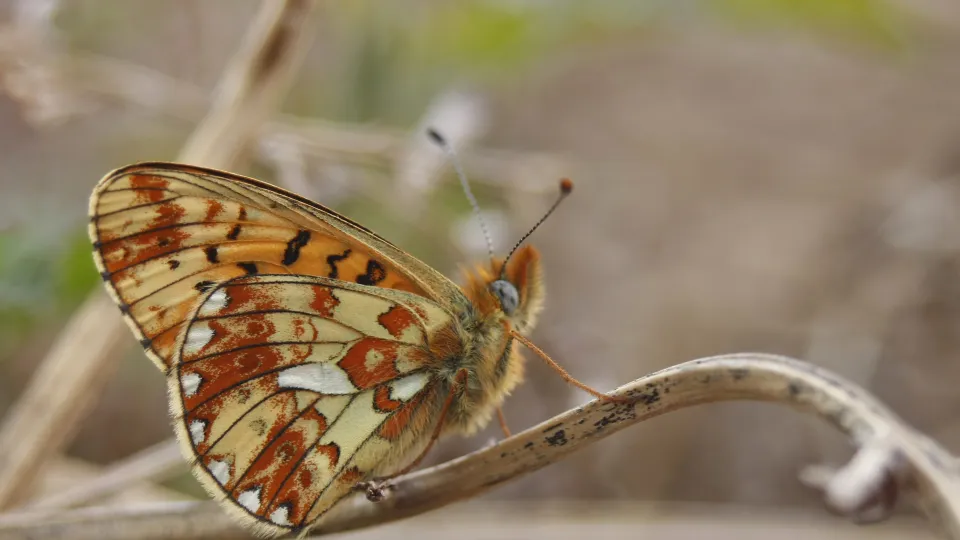
The pearl-bordered fritillary is a striking orange-and-black butterfly of sunny woodland rides and clearings. It gets its name from the row of 'pearls' on the underside of its hindwings.
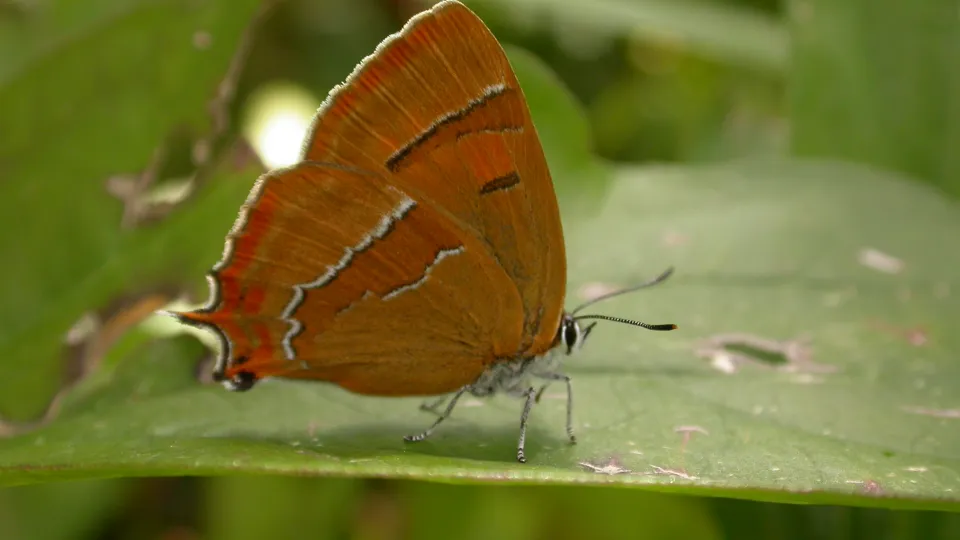
The brown hairstreak is an elusive butterfly that spends much of its time in the treetops feeding on aphid honeydew.
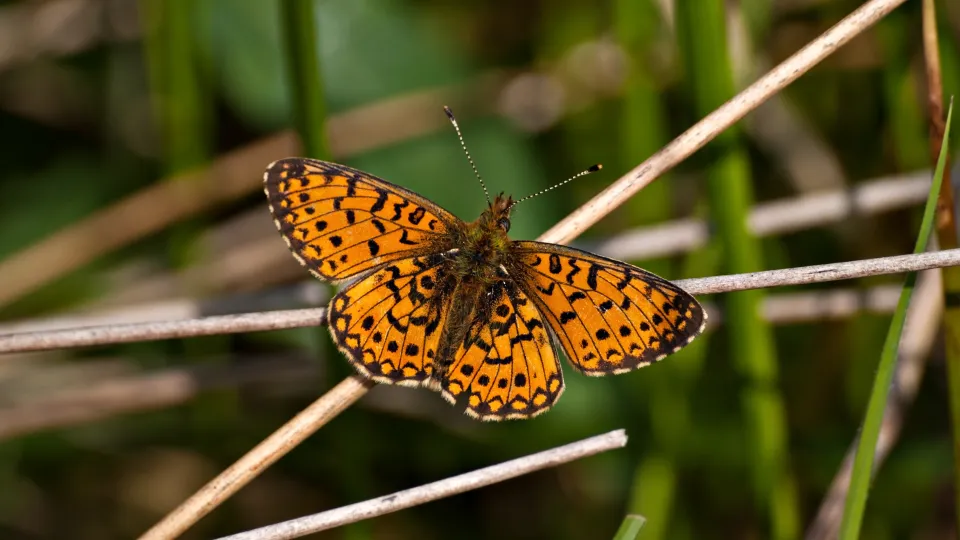
The small pearl-bordered fritillary is a pretty orange-and-brown butterfly of damp grassland, moorland, and open woodland. It gets its name from the row of 'pearls' on the underside of its hindwings.
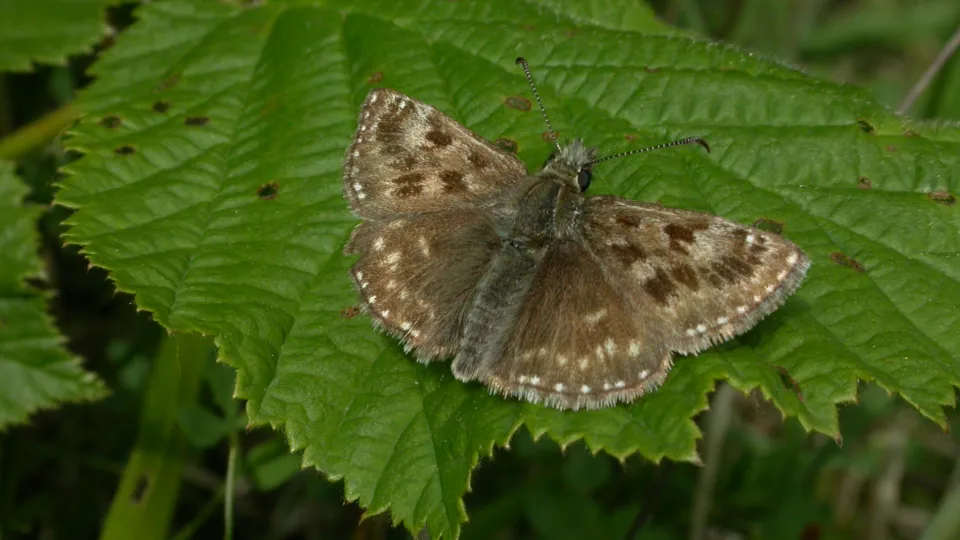
The moth-like dingy skipper is a small, grey-brown butterfly of open, sunny habitats like chalk grassland, sand dunes, heathland and waste ground.