About the project
The Kentish Stour Catchment Resilience Plan is a partnership project that brings together farmers, landowners, local communities, water companies, local authorities and environmental organisations to develop a joined-up catchment approach for the Kentish Stour in East Kent. By working together across the whole catchment, we'll identify where nature-based solutions can deliver the greatest benefits for wildlife, water and people, and develop a pipeline of investment-ready projects to help realise that vision.
The Kentish Stour is a rare chalk stream catchment facing increasing pressures from poor water quality, habitat degradation, climate change, flooding, drought and development. While significant conservation work is already underway, there is a need for a more joined-up, catchment-wide approach that aligns existing initiatives, coordinates investment and supports long-term nature recovery.
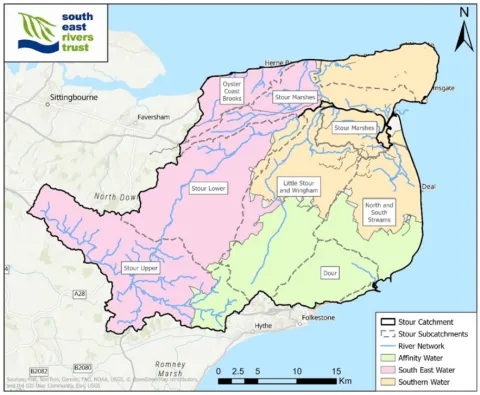
The project covers the Kentish Stour catchment in East Kent, spanning rivers, floodplains and surrounding landscapes from the river's headwaters to the internationally important Stodmarsh National Nature Reserve (SSSI).
Led by Kent Wildlife Trust and South East Rivers Trust and funded by Southern Water, the project will run from April 2026 to September 2028. Working with a wide range of partners, it will produce a long-term Catchment Resilience Plan and a costed pipeline of nature-based solutions to secure future investment for the benefit of both people and wildlife.
Why this work matters
Conservation in the Kentish Stour
The Kentish Stour is one of England's rare chalk-stream catchments and supports a wide variety of wildlife, including the internationally important wetlands at Stodmarsh National Nature Reserve. Chalk streams are globally rare, with only around 200 worldwide, of which around 85% are found in England. The Stodmarsh wetlands are protected as a Site of Special Scientific Interest (SSSI), Special Area of Conservation (SAC), Special Protection Area (SPA) and Ramsar site because of their internationally important wildlife.
However, the catchment faces growing pressures from poor water quality, habitat fragmentation and degradation, climate change, invasive species, and increasing demands on water resources. These pressures threaten wildlife, reduce the resilience of rivers and wetlands, and impact the communities and businesses that rely on them.
Habitat is being lost
Habitats across the Kentish Stour catchment have become fragmented and degraded over time. Rivers have been modified, floodplains disconnected, and wetlands, riparian habitats and wildlife corridors have deteriorated in condition. Combined with poor water quality, climate change and changes in land use, these pressures reduce the catchment's resilience and make it harder for wildlife to thrive.
Species are in decline
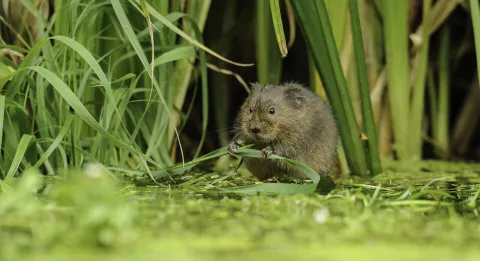
The catchment supports a rich variety of wildlife, including brown trout, bullhead, water vole, white-clawed crayfish, stream water-crowfoot and the internationally important wetland birds of Stodmarsh. Many of these species and the habitats they depend on are under increasing pressure from declining water quality, habitat fragmentation and changing river flows.
Water quality
Water quality in the Kentish Stour is affected by excess nutrients (phosphorus and nitrogen), sediment and pollution entering the river from a range of sources across the catchment. Parts of the catchment fall within the Stodmarsh Nutrient Neutrality area, where elevated nutrient levels are affecting protected habitats and constraining new development. At the same time, extreme weather events, including more frequent flooding, prolonged dry periods and rising temperatures, are placing additional pressure on the river system.
How are we engaging with the community?
Many organisations, communities and landowners are already working hard to improve the Kentish Stour, but addressing these challenges requires a joined-up, catchment-wide approach that integrates national policy, strategic planning, farm management and local community action.
We will work with strategic organisations responsible for planning, regulation and investment to ensure the Catchment Resilience Plan aligns with existing strategies and maximises opportunities for collaboration. Working together will help coordinate investment, reduce duplication and ensure that future projects deliver the greatest benefit to nature, water and local communities.

Farmers, landowners and land managers are central to the project.
Through individual discussions, farmer clusters and collaborative workshops, we'll work together to identify practical, locally appropriate nature-based solutions that benefit both farming businesses and the wider environment.

Katrina Martin
Local people and communities bring a wealth of knowledge about the places where they live and work.
We will work with community groups across the catchment to understand what matters to them, share knowledge and evidence, and co-create a shared vision for a healthier, more resilient Kentish Stour that delivers lasting benefits for wildlife and people.
By bringing together evidence, local knowledge and shared priorities, we can identify where nature-based solutions will have the greatest impact and create a coordinated pipeline of projects that attracts long-term investment for nature, water and people.
Our objectives
-

Develop a pipeline of investment-ready projects.
Using mapping, surveys, stakeholder knowledge, and natural capital evidence (the catchment's habitats, rivers, soils, and other natural assets), we will create a prioritised portfolio of costed, investment-ready nature-based projects that can attract future funding and be delivered where they'll have the greatest impact.
-

Work with people across the catchment.
We will bring together farmers, landowners, local communities and strategic partners to share knowledge, identify opportunities and co-design practical solutions that benefit both people and nature.
-

Restore habitats for wildlife.
We will identify opportunities to reconnect rivers with their floodplains, restore wetlands, improve habitats, and strengthen wildlife corridors, creating a pipeline of projects that supports the important species found in this catchment.
-

Improve water quality.
We will identify nature-based solutions to reduce nutrient pollution, improve river health, and support healthier, more resilient waterways across the Kentish Stour catchment.
-

Create a long-term plan for the Kentish Stour.
We will produce a Catchment Resilience and Investment Plan that sets out a shared vision and a coordinated roadmap to improve water quality, restore nature and build resilience to climate change.
Project area
The project covers the Kentish Stour catchment in East Kent, from the river's headwaters near Ashford through the Great Stour and its tributaries to the internationally important wetlands at Stodmarsh National Nature Reserve, before the river reaches the sea at Pegwell Bay. The catchment includes rivers, streams, floodplains, farmland, woodland and wetlands that provide important habitats for species including brown trout, water vole, beaver, white-clawed crayfish and a rich diversity of wetland birds, as well as supporting pollinators and other wildlife across the wider landscape.