Family Activity: Story Time at Sevenoaks Wildlife Reserve
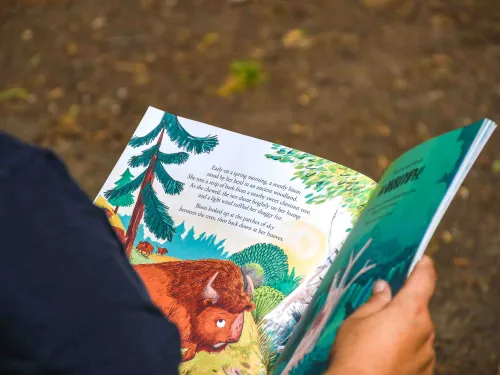
Enjoy a change of scenery as we entertain your toddlers with a seasonal story or two at Sevenoaks Wildlife Reserve.
Please note disruption to car park from 12-16 October - see full update further down this page.
The Visitor Centre reopened after refurbishment on 2 March 2026. The nature reserve is open daily dawn-dusk. Volunteer work parties take place each Tuesday. If you are concerned about disturbance, please consider coming on another day.
Weekday Visitor Centre hours: 10-4pm
Weekend Visitor Centre hours: 9-5pm
Best time to visit: All year round.
RingGo: 32509 | Phone: 02030 460010
The Harrison Visitor Centre reopened after extensive refurbishment works on 2 March 2026 - find out more about the works and how to support here.
We’ve been delighted to welcome back our members and supporters! The £2.1m project has seen some much-needed improvements to the Visitor Centre, car parking area, and the wider reserve.
From 12-16 October we will be felling the cricket bat willow trees between the car park and the sensory garden at Sevenoaks Wildlife Reserve as well as some additional trees further in the reserve close to the pathway between the East Lake and the North Lake & Snipe Bog Lake. This is a project some 40 years in the making as they were originally planted by Gray-Nicolls in order to be harvested for cricket bat production. The plan is to then replace these trees elsewhere on the reserve to make future harvesting less disruptive.
As a result of the felling and then the tidying of the timber, the car park will not be accessible via the main entrance barrier. Additionally the spaces normally available in the first section of the car park will also not be available. Visitors to the reserve will need to proceed through the exit barrier and then either utilise the overflow parking area or, if required, continue down to the disabled parking bays and the electric vehicle charging point.
The Visitor Centre will remain open throughout the duration of the works and any disruption to bookable activities will be communicated well in advance. We thank our visitors for their patience and understanding during these works. See the FAQs below for more info.
When the trees were planted, it was always with the intention that they would be harvested when they reach maturity. Cricket bat willow is a fast growing species and despite their large size they have a naturally short life expectancy unlike old growth species such as oak or beech. If left the trees would start to decline as several have begun to do already. Given their locations in the car park and next to the paths, they would present a hazard to the general public and we would have to carry out tree safety work at a cost to us. The trees are being harvested under a Forestry Commission felling license, which has been reviewed and consented by Natural England.
The Visitor Centre will be open as usual, and the plan is to still have pedestrian access to the reserve for the duration of the work, although it will be necessary to close paths on occasions for safety reasons. Diversions will be put in place wherever possible, but for your own safety please respect all path closures when they are in place.
As a result of the felling and then the tidying of the timber, the car park will not be accessible via the main entrance barrier. Additionally, the spaces normally available in the first section of the car park will also not be available. Visitors to the reserve will need to proceed through the exit barrier and then either utilise the overflow parking area or, if required, continue down to the disabled parking bays and the electric vehicle charging point.
We'd ask that all visitors arriving by car observe the directional signage on site and drive very carefully. Where possible it might be advisable for visitors to either arrive on foot or to utilise the on street parking near by. However, we'd ask that visitors be mindful of our neighbours and observe the parking restrictions. Thank you in advance and we apologise for any inconvenience.
The trees are being harvested by specialist contractors on behalf of Gray-Nicolls. The trunks and larger limbs will be extracted, dried, and made into cricket bats, the smaller branches will be chipped and the wood chipping will be used onsite to surface paths and mulch around saplings.
The trees have been providing wildlife habitat while they have been reaching maturity, but they are a short lived species. There is value in the timber and the proceeds from this will be invested into Kent Wildlife Trust nature reserve; when cricket bat willow trees were last harvested on the site, the money raised went to purchase the aptly named Willow Hide.
Some of the areas where the trees are being felled will be left to naturally regenerate with the additional light allowing trees such as silver birch, alder, and native species of willow to grow. The plan is to enter into another cricket bat willow planting scheme with Gray Nicolls; the planting areas for these will be carefully selected for ease of management and harvesting when they reach maturity.
For more information on the harvesting process please visit: Gray-Nicolls Willow - Tree Lifecycle
Sevenoaks Wildlife Reserve lies immediately to the north of Sevenoaks. The reserve was the first example of a gravel pit site being developed for the purpose of nature conservation. This restored former quarry is owned by Tarmac and leased to Kent Wildlife Trust under a long term agreement for the benefit of wildlife and enjoyment of all. It is a spectacular site for birds, as well as dragonflies and damselflies there is also a diverse community of plants, fungi and other wildlife, including creatures of the night such as bats and glow-worms. So far well over two thousand species have been identified and more are regularly being added to the list. This pioneering nature reserve covers 73 hectares and comprises five lakes surrounded by woodland, there are a few ponds, seasonally flooded pools as well as grassland and small areas of reedbed, the clear water of river Darent flows through the northern part of the reserve and supports a reasonable population of invertebrates and fish.
The deeper lakes attract all the common wildfowl which are especially abundant in the winter. Surface feeding duck such as teal and shovelers tend to frequent the shallower areas. Waders such as green and common sandpiper, greenshank, lapwing and little-ringed plover can be seen around the muddy edges of the shallow water. The last two species nest on the reserve. Grey herons are resident and other birds like kingfisher, grey wagtail can often be located. Birds such as reed bunting and reed warbler can easily be seen in the reedbed in the summertime.
The trees and scrub support of breeding perching birds, including the common garden birds, warblers such as chiffchaffs and blackcaps, woodpeckers (all 3 species including the lesser-spotted are found here), treecreepers and bullfinch. In the winter the alder trees attract flocks of siskins and redpolls.
The Harrison Visitor Centre has been the starting point for thousands of visitors to the reserve since 1987. The centre houses displays illustrating the prehistory and history of the site, the creation of the reserve, its habitats and the wildlife that they support. In addition, the Visitor Centre can advise you on how best to enjoy your day at the Reserve, highlighting recent wildlife sightings, walks and trails and forthcoming events. The Visitor Centre has an indoor seating area and a café serving hot and cold drinks, toasties and sweet snacks. There is also a small shop area selling local produce, bird food and accessories and a great range of Hawke Optics binocular and scopes which we are happy for you to test onsite so that you get the right optic for you.
Adjacent to the Centre there is a fully accessible bird hide looking over the West Lake, as well as a picnic area with two accessible picnic tables a sensory elemental garden and wild space to explore.
BBQs and fires are not permitted on the reserve.
Set in over 73 hectares, the Sevenoaks Wildlife Reserve was a pioneering project when Jeffery Harrison created a haven for wildlife from the remains of an industrial site.
With this investment Jeffery’s vision will have the visitor centre it deserves. The installation of full height glazed doors and a stunning deck area overlooking the often missed West Lake connect the visitor centre to the reserve like never before.
The improved café space provides an upgraded food offering with barista quality coffee, delicious cakes and a space that’s available for corporate hires and community events.
Add to that the improvement in accessible features, interactive interpretation within the visitor centre, and a bespoke play park unlike anything we’ve ever seen before and Sevenoaks will have a wonderful new gateway to inspiring young and old alike to see the true value in defending our wildlife and wild spaces.
• Site of Special Scientific Interest (SSSI)
Enjoy a change of scenery as we entertain your toddlers with a seasonal story or two at Sevenoaks Wildlife Reserve.
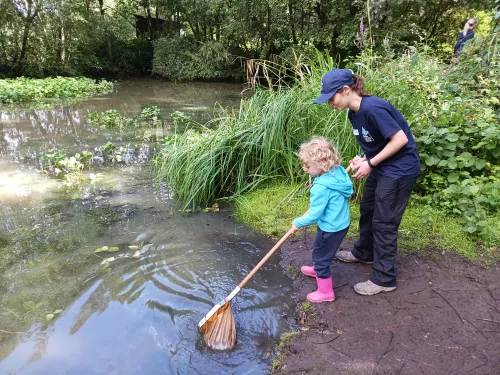
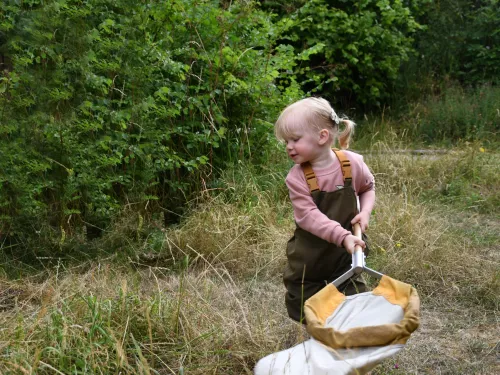
Nature Tots is Forest School tailored specifically for little ones, and can inspire a love of nature that lasts a lifetime.
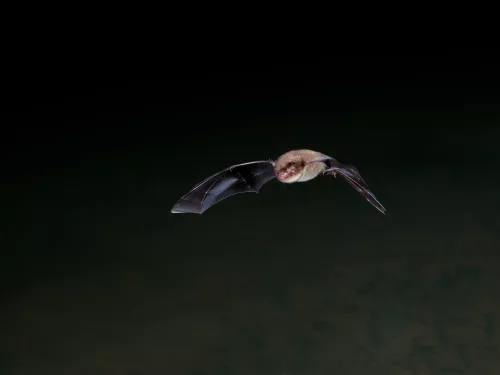
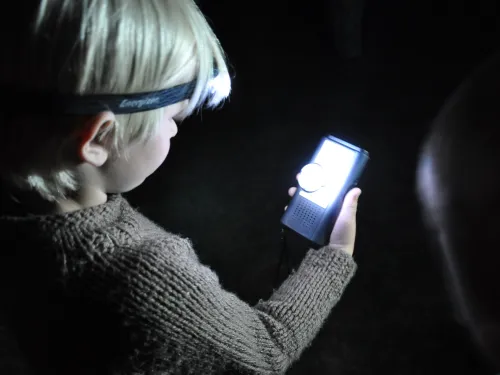
Did you know that there are 18 species of bat in the UK? Learn all about our local species on this seasonal family trail at Sevenoaks Wildlife Reserve!
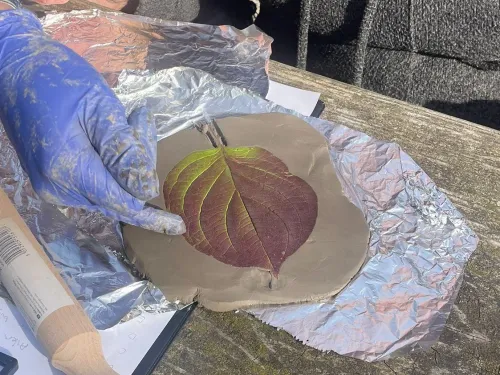
Take time to slow down and walk mindfully on the beautiful Sevenoaks nature reserve soaking up the colours of the season. Then get creative by making your own nature mandala using natural materials. During this relaxed session, you’ll gather leaves,…
Learn more about fungi and how to identify these fascinating organisms.
Bats are often associated with Halloween, so why not see if you can find any flying around the reserve during ‘spooky season’?
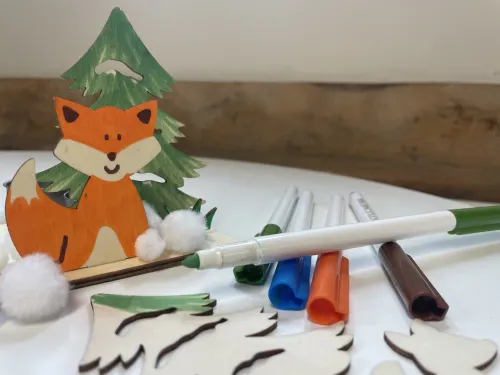
Bring the family along to make and decorate your own bat box to take home with you and hang outside for your local bats!
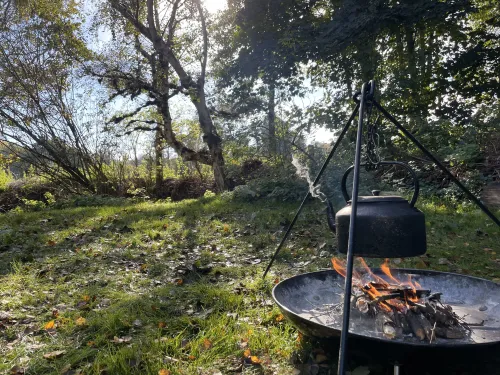
Celebrate Halloween with us, with an autumnal natural craft, seasonal guided walk and hot chocolate around the campfire!
Join us this October half term for our bespoke Holiday Club designed specifically for the next generation of nature lovers!