
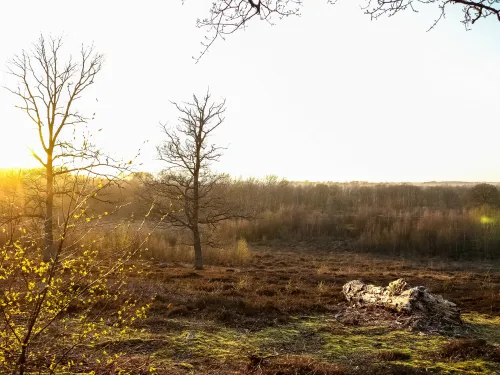
Changing seasons at Hothfield Heathlands
Blog
Ashford Area Warden, Will Glasson, explores autumn conservation and wildlife at Hothfield Heathlands - and how you can get involved.

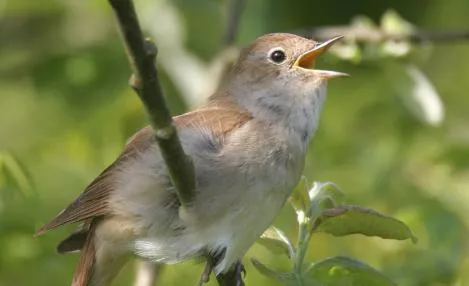
Nightingale in song. ©️ Bill Baston
They winter in West Africa and seem to migrate across land and narrow sea crossings to Europe and only the southeast corner of England. By 2018 numbers had plummeted by 92% due to loss of habitat, placing them among the ‘Red Sixty-Seven’ birds on the UK Red List of endangered birds. At Knepp in 1999, just 7 nightingale territories were identified; post re-wilding, there were 40 singing males in 2021.
In June the heathland will be a flowery delight. Despite May roses in gardens, the orchids and cross-leaved heath are late so will be best in June. Sorrel already casts a bronze haze over rabbit-cropped turf, cotton grass nods across the main bog, with very dense communities of species in the tussocks and along the edge of the boardwalk; lousewort, tormentil and milkwort and various grasses and sedges in flower, sundew now visible.
Major tree clearance around the bog will help these specialised plants spread and flourish. Fresh scrapes down grass slopes still look raw and bare but older ones have a thin patina of diminutive plants including mosses with fruiting capsules, buck’s horn plantain, and bird's-foot Ornithopus perpusillus with tiny white pea flowers. The black peaty mud dug up by the pigs is now coated in fresh green growth. The tiniest of the buttercup family and Hothfield’s rarest plant, the three lobed water crowfoot appears to be spreading and the sphagnum moss translocation experiment of 2023 seems to have worked.
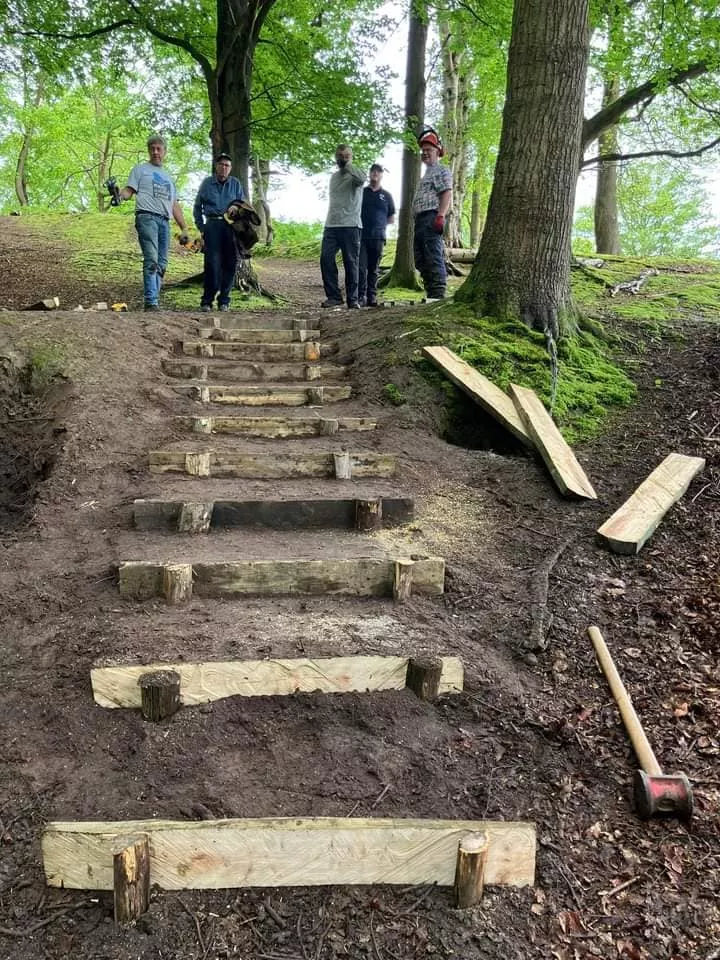
The brilliant volunteers, have been improving access across the site, building steps down a steep woodland slope, using sand to build up muddy paths, put in new wider gates, suitable for wheelchairs and already appreciated by the moth trapping team with their barrows of equipment, alongside regular tree-popping and myriad other tasks.
Ashford Area Warden, Will Glasson, explores autumn conservation and wildlife at Hothfield Heathlands - and how you can get involved.
This guest blog is written by Rachel Rodwell, councillor and campaigner. She explores the respite that woodlands like Oaken Wood can provide through troubling times.
You may have heard about the unusually strong El Niño developing in the Pacific Ocean. But what exactly is it? And what could it mean for wildlife and wild places in Kent?