

The history of the heath fritillary
The heath fritillary was on the brink of extinction in the 1970s, but conservation action turned its fortunes around. However, it’s still restricted to a few key habitats: primarily, coppiced woodland, or sheltered heathland where it can be seen flying close to the ground in a distinctive flutter-and-glide pattern.
How to spot the heath fritillary
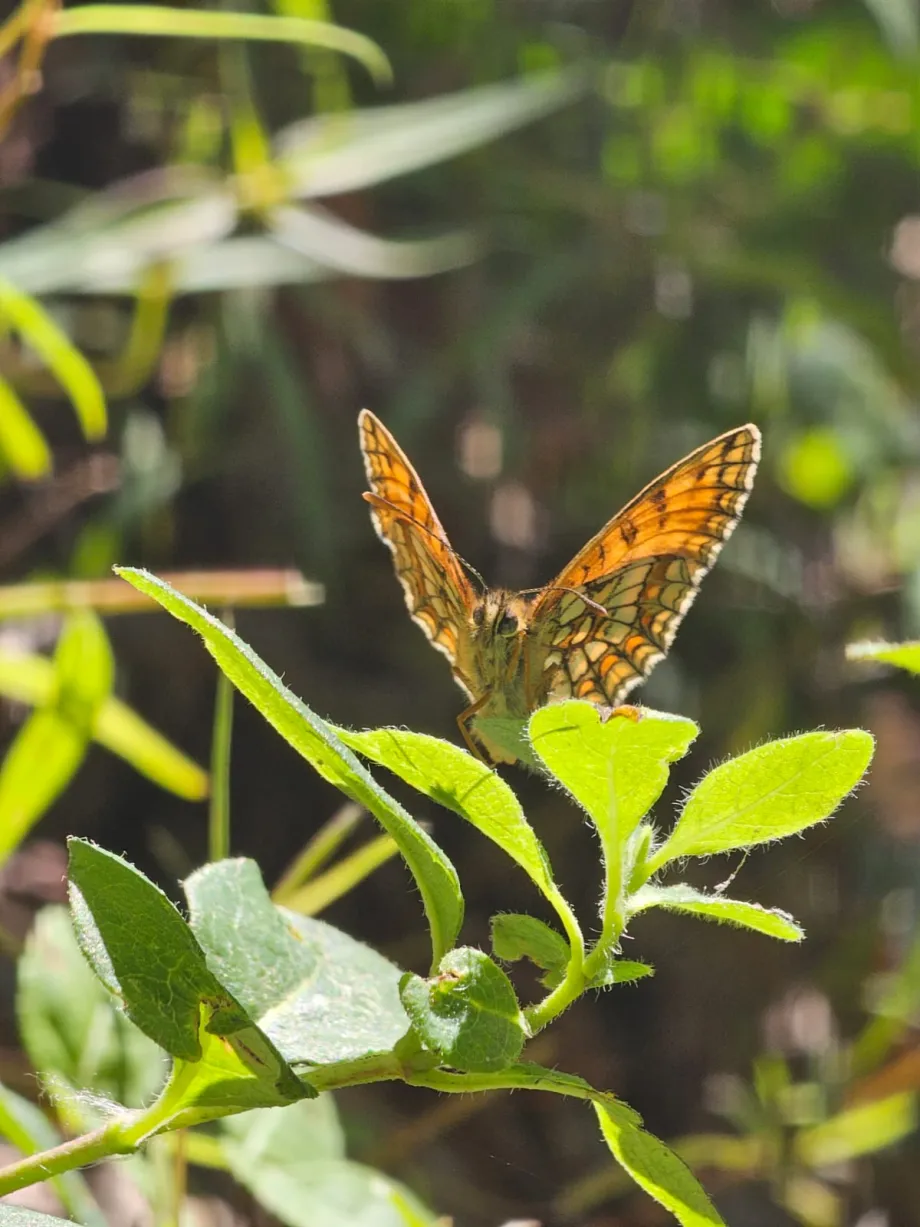
Ranger Hannah
Above: A heath fritillary perched on a leaf at the Blean, photographed by Bison & Conservation Grazing Ranger, Hannah.
The heath fritillary is variable in terms of both the colour and the pattern of the wings, but it mostly displays a dusky, orange-and-brown chequered pattern. You’ll typically spot them between May and August depending on where you are.
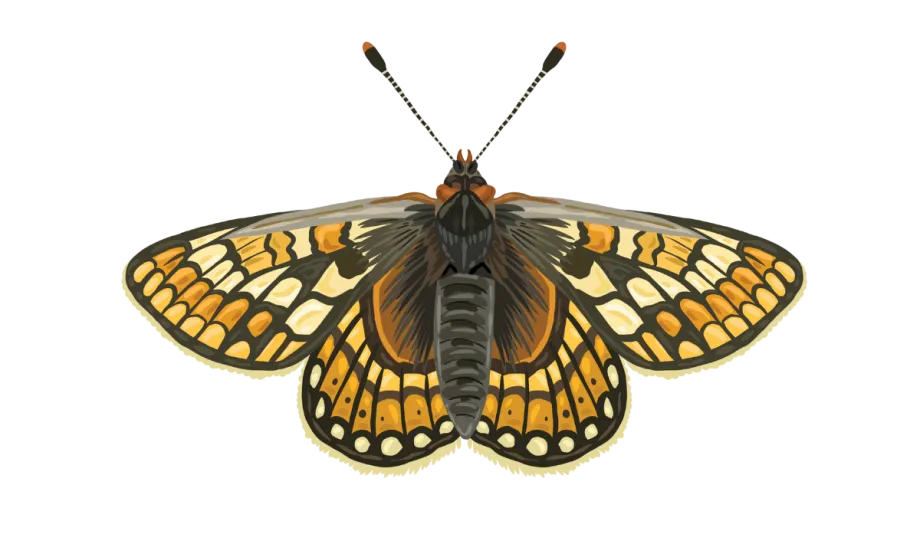
Colonies in South East England are found in woodlands where the larval foodplant, common cow-wheat, grows - like in the Wilder Blean!
Working to protect it
At the Blean, we work to create the perfect habitat for the heath fritillary - in fact, our warden, rangers, and volunteers are undertaking some of this work right now.
This butterfly’s larval food source, cow-wheat, likes newly opened-up woodlands, hence its close association with coppiced land. Cow-wheat gets parched if left in direct sunlight for too long so our area wardens make sure to leave some dappled shade.
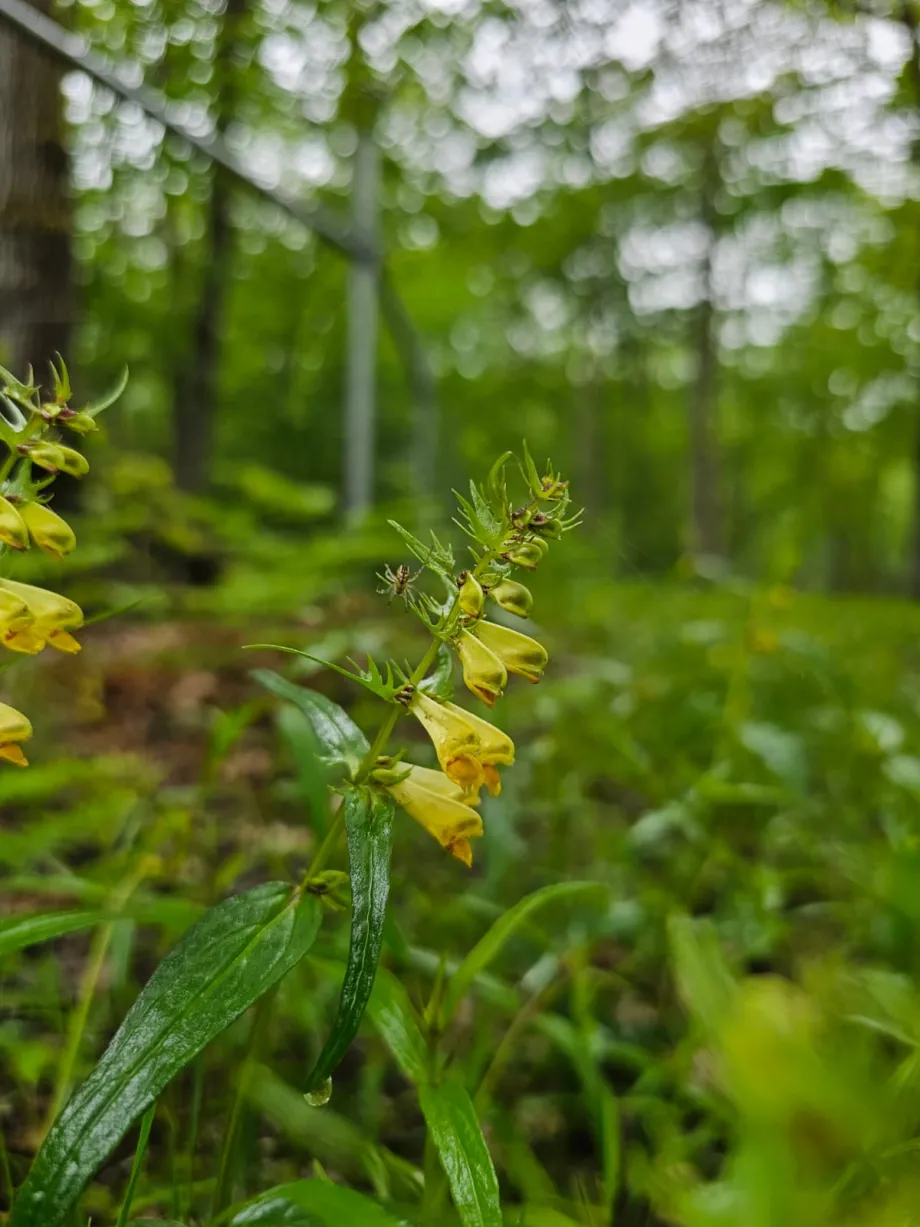
Ranger Heidi
The heath fritillary butterfly itself needs sunlight, warmth, and lots of nectar. As well as cow-wheat, our Blean Area Warden says it also seems to like bramble flowers. So, we create areas of interconnected coppice and rides with interspersed standard slow-growing, older trees to try to keep them all happy!
And it seems to be working – approximately 60% of UK heath fritillary colonies are found in the Blean.
Learn more about our heath fritillary monitoring work here.
Help us help the heath fritillary & other threatened species
We’re on a mission to raise £3 million to restore habitats and reverse species decline by 2030. A once-in-a-generation opportunity to fund nature’s recovery in Kent. Will you be part of it?