

Sandwich Bay: A summer treasure trove
One of the standout days of 2025 was a single June visit to Sandwich Bay, a site renowned for its rare bee and wasp fauna. Its loose sandy soils create perfect nesting conditions for specialist species that dig burrows to rear their young. Add in its proximity to the continent and Kent’s warming climate, and you have a hotspot for fascinating insects.
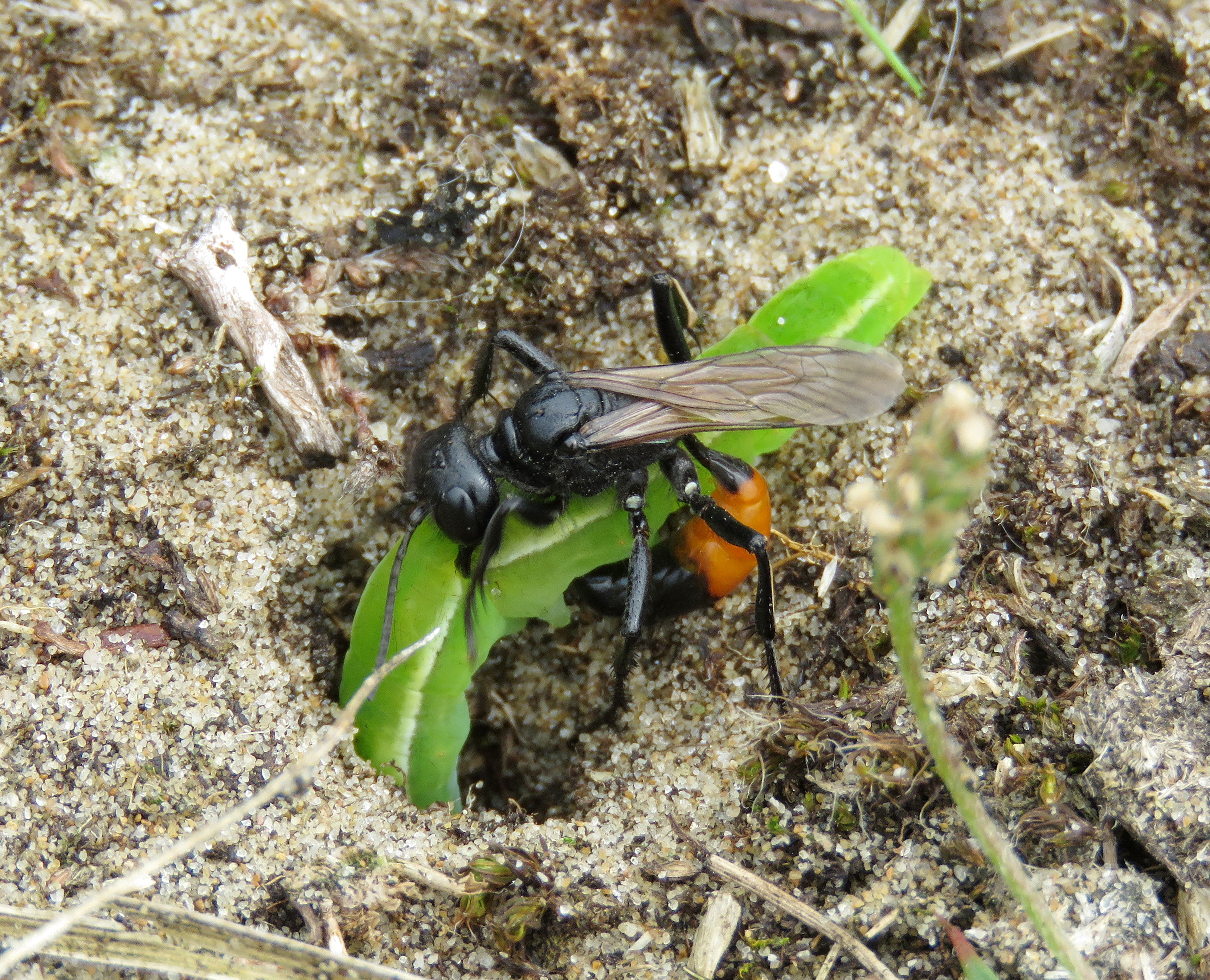
Among the species recorded was the impressive Podalonia affinis, one of Britain’s largest solitary wasps. Imagine a bulkier, more powerful version of the familiar red-banded sand wasp (Ammophila sabulosa), hauling large caterpillars across the sand to provision its nest — a remarkable sight.
Sandwich Bay also delivered encounters with the Margined Colletes (Colletes marginatus), a close relative of the widespread Ivy bee, and the wonderfully odd Coelioxys mandibularis. This rare parasitic bee has a sharply pointed abdomen, perfectly evolved for slicing into the leaf-lined nests of its hosts.

Podalonia affinis
Red-banded sand wasp
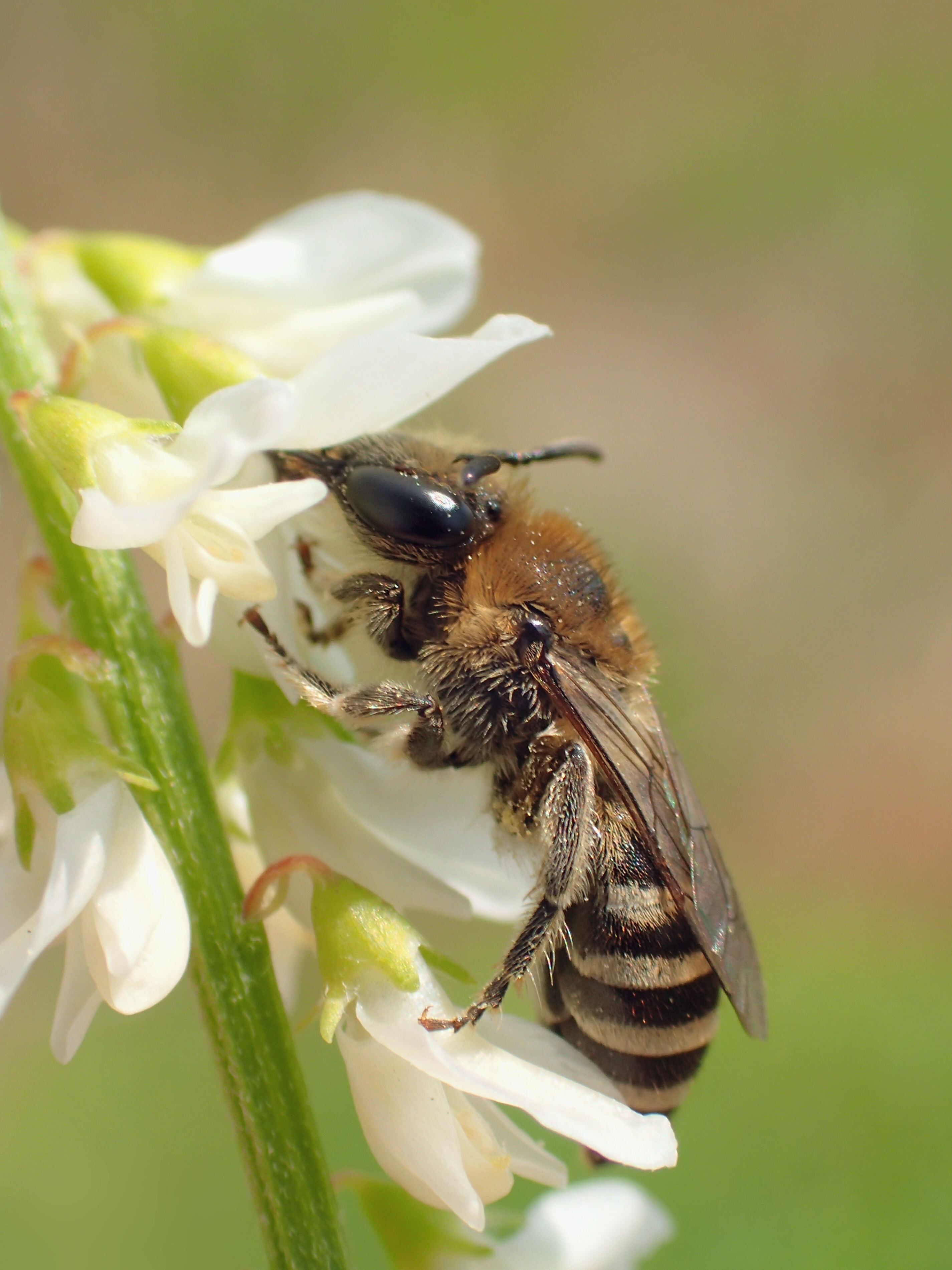
Margined Colletes

Ivy bee
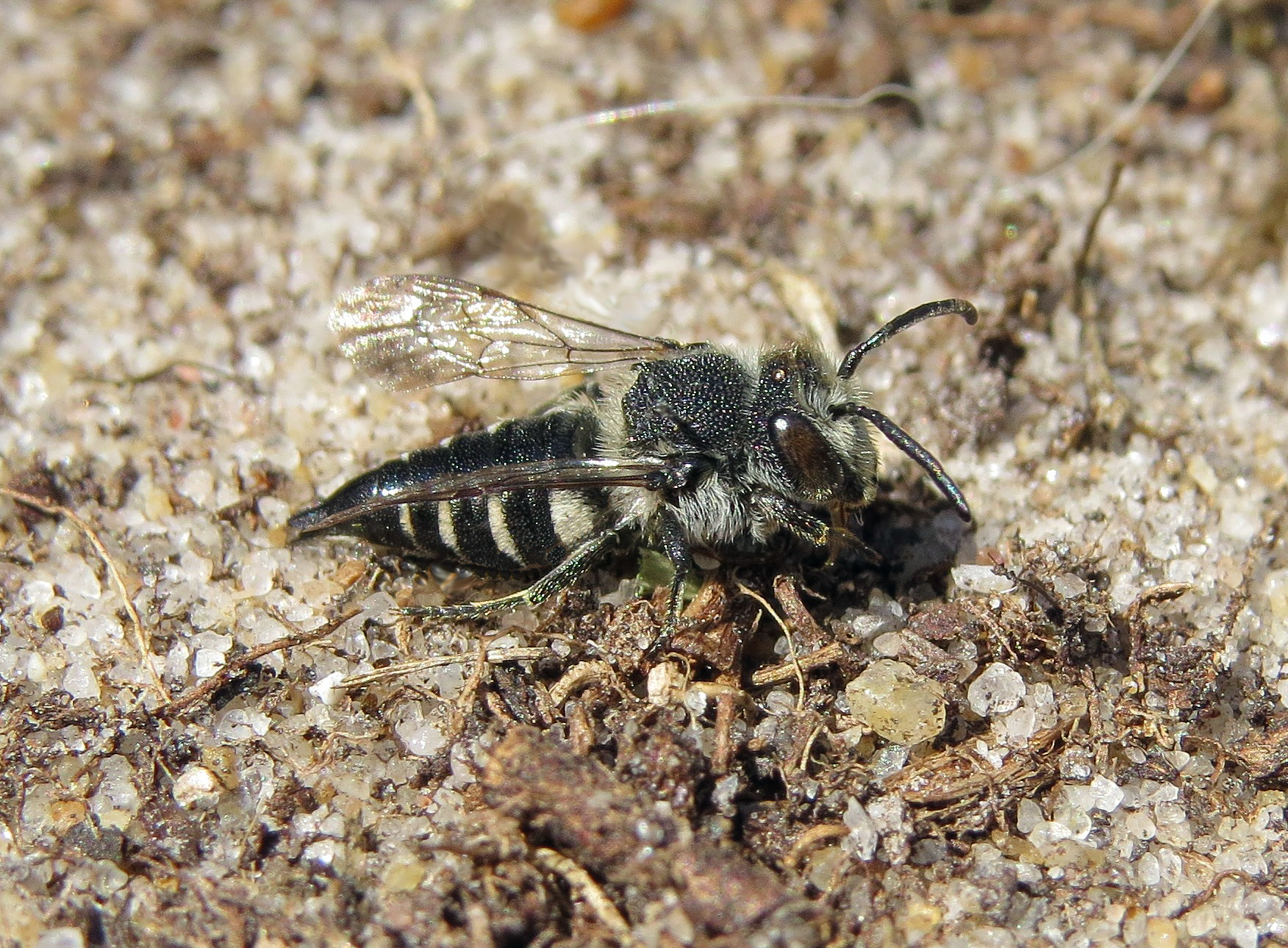
Coelioxys mandibularis
Bull Heath: Small reserve, big diversity
Bull Heath remains one of my favourite KWT reserves. Once a sand quarry, it now supports a thriving community of sandnesting bees and wasps. This year I added six new bee species to the site list, bringing the total to an impressive 85.
The highlight was the rare cuckoo bee (Nomada hirtipes), a specialist parasite of Andrena bucephala. Discoveries like this show just how valuable even the smaller reserves can be for biodiversity.
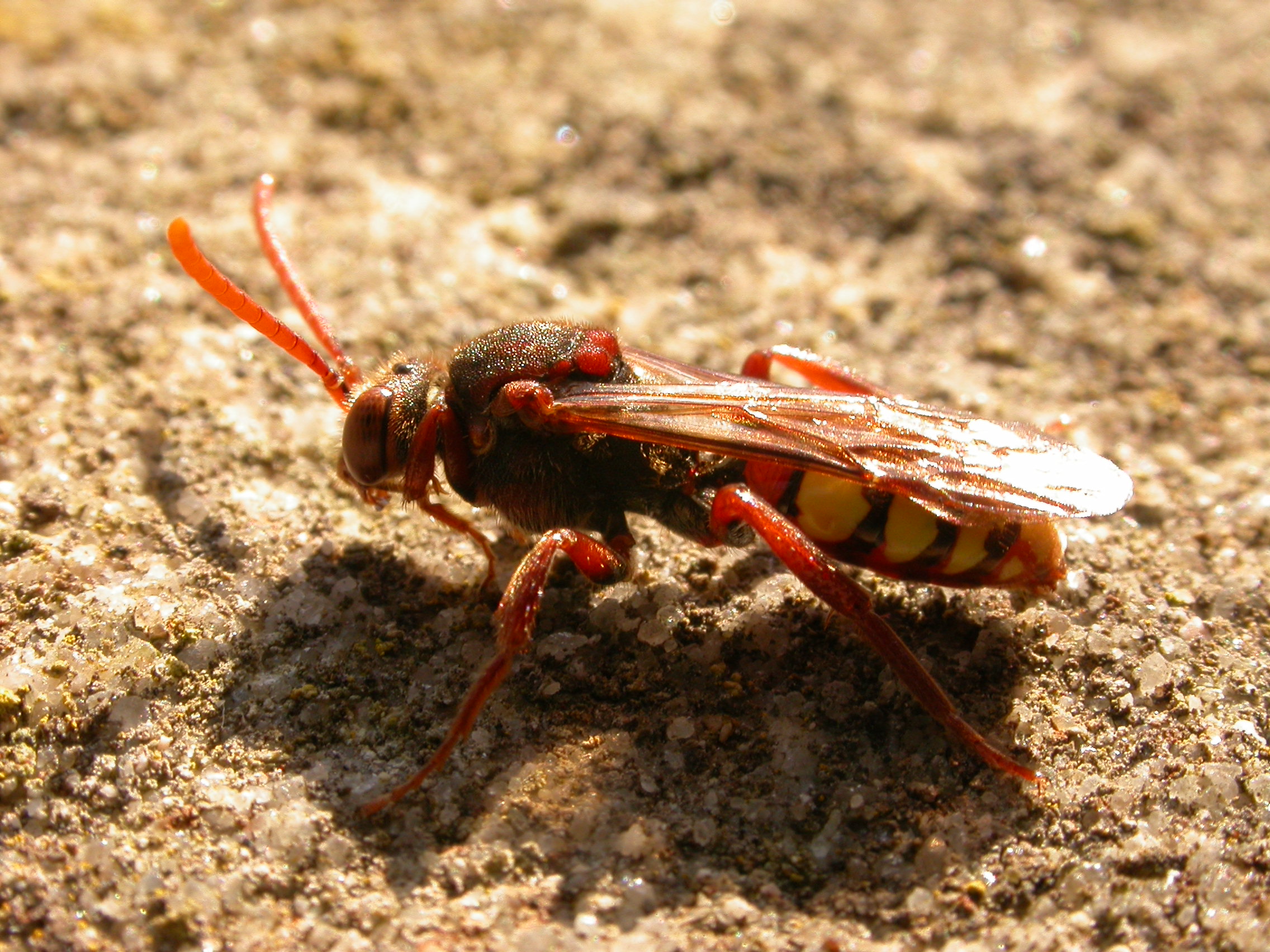
Cuckoo bee
A jewel in Dover’s crown
Another unexpected delight came from two sites near Dover — Lydden and Coombe Down — where I encountered the rare jewel wasp (Omalus puncticollis). Unlike its more colourful green-and-red relatives, this species is a shimmering metallic blue. It may be tiny, but it is breathtakingly beautiful. I’ve rarely seen it before, so perhaps the Dover area is a stronghold. I’ll certainly be keeping an eye out in 2026.
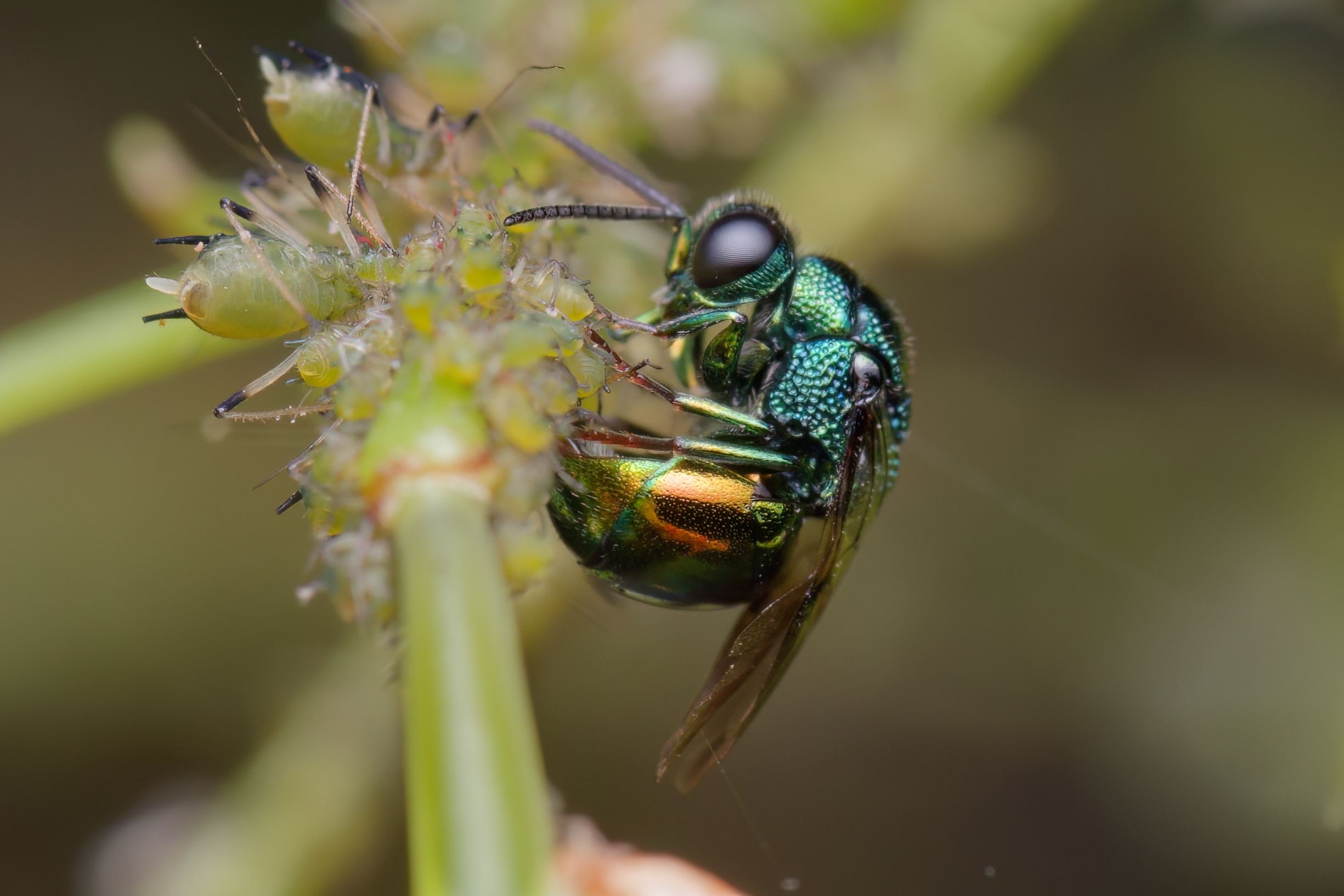
Jewel wasp
A first encounter at Polhill Bank
August brought a personal first: the hornet robberfly (Asilus crabroniformis) at Polhill Bank. One of the UK’s largest flies, it’s strikingly yellow and thought to mimic a hornet. It often perches on bare ground, scanning for large insects to ambush — a behaviour that makes it surprisingly easy to spot.
Sadly, this species is now endangered in the UK. Its larvae develop in cow dung, but cannot survive in dung from livestock treated with antiinvertebrate chemicals such as avermectins. Encounters like this are a reminder of how delicate these ecological relationships can be.
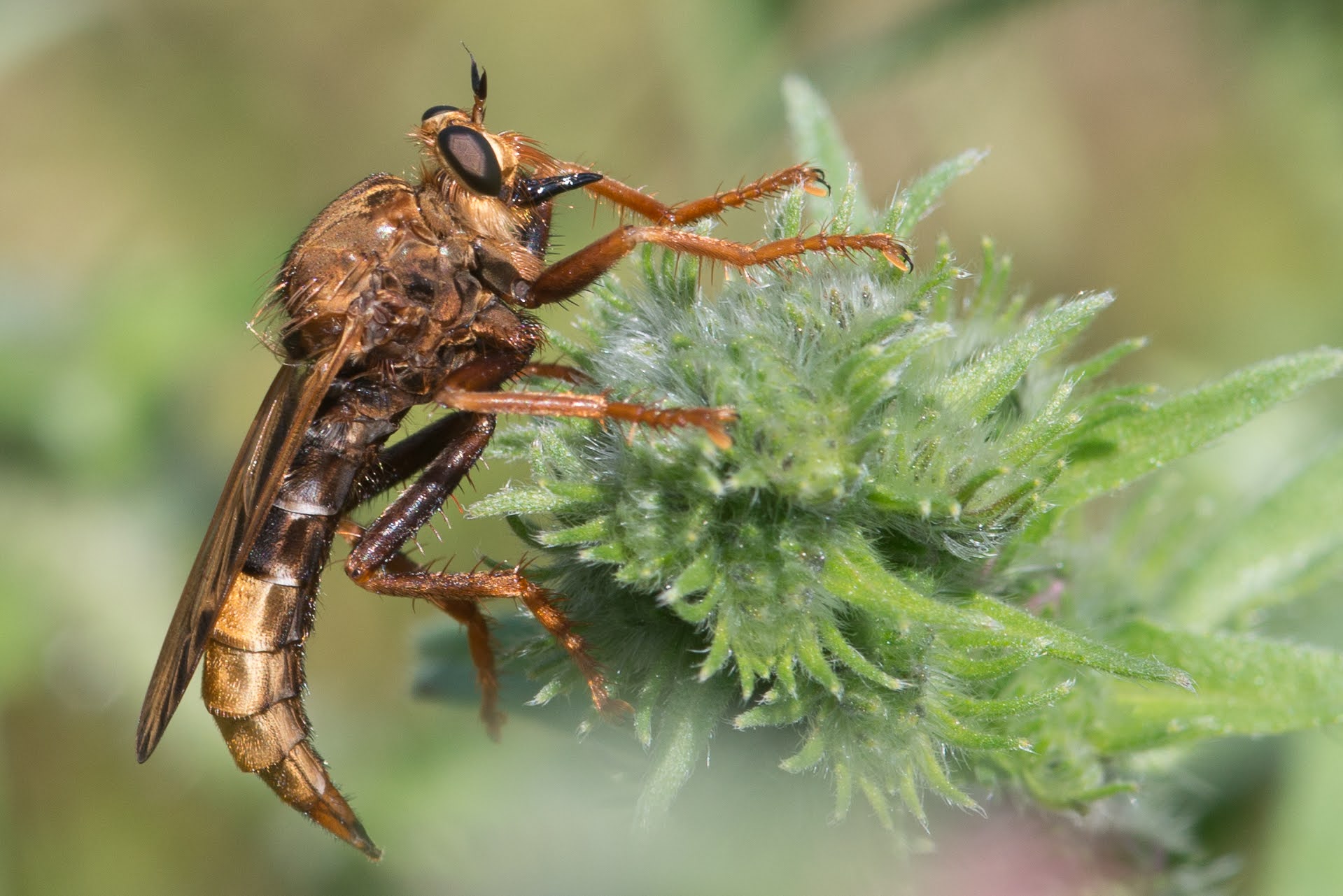
Hornet Robberfly
Get out and explore in 2026
I hope these highlights inspire you to visit Kent Wildlife Trust reserves in the coming year. Whether you’re an experienced naturalist or simply curious, there is always something extraordinary waiting to be discovered — often right under your feet.

Our flagship reserves
Kent Wildlife Trust manages over 90 nature reserves across the county, boasting a diverse range of habitats and species. To help you know where to start, we've assembled some of our top recommended reserves to visit.