
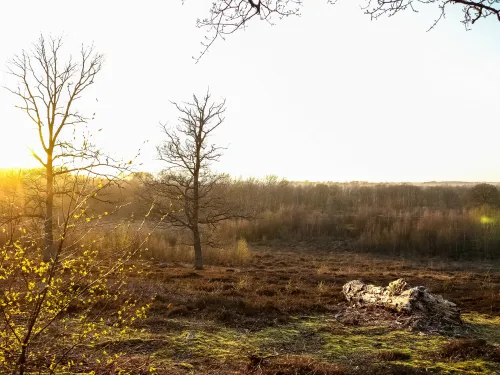
Changing seasons at Hothfield Heathlands
Blog
Ashford Area Warden, Will Glasson, explores autumn conservation and wildlife at Hothfield Heathlands - and how you can get involved.

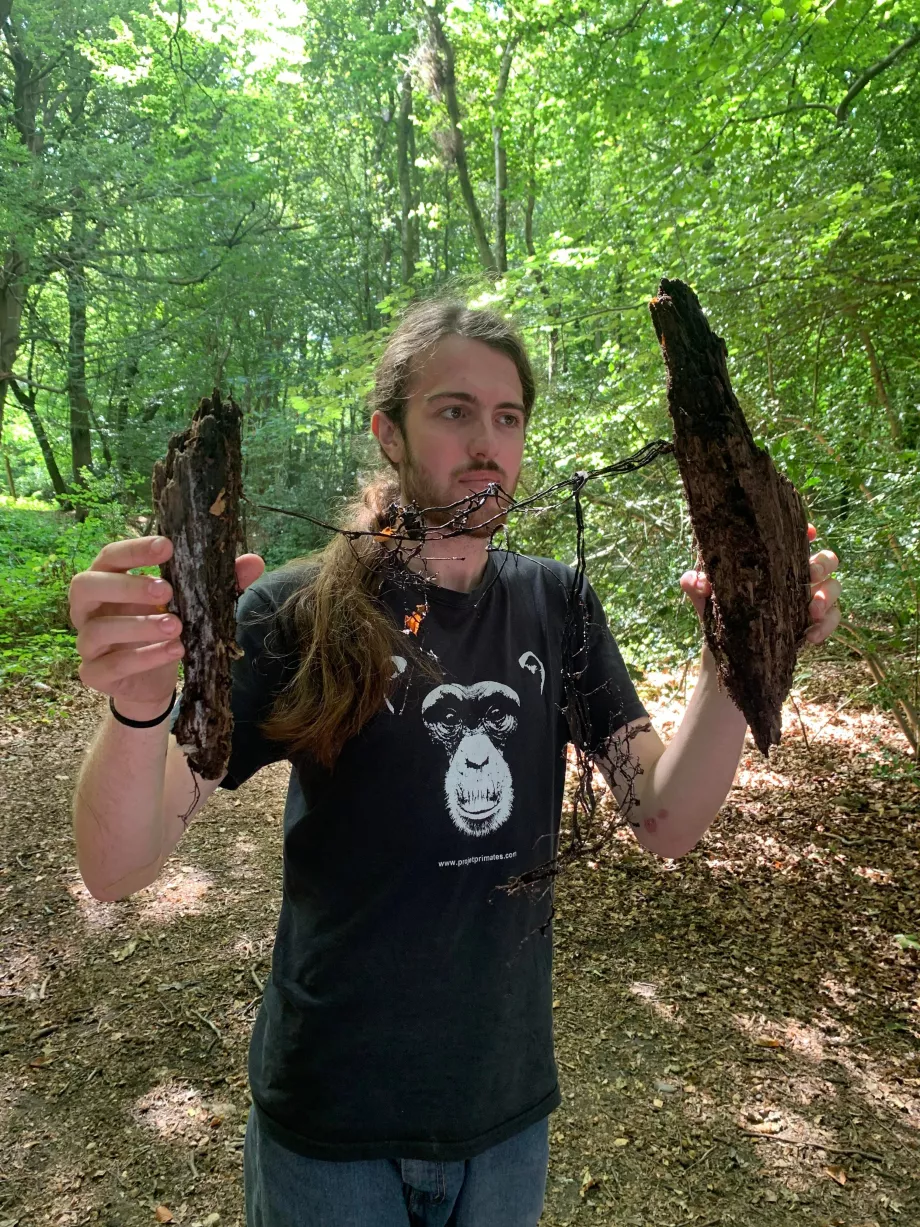
A project volunteer discovers honey fungus mycelium during the Sevenoaks Common bioblitz.
At Bitchet Common, a variety of techniques have been used to manage invasive bracken. The community have completed bracken surveys, which seek to estimate the density of the bracken and monitor the success of different removal strategies. volunteers have helped to monitor the regrowth of the bracken, allowing the project to identify the most efficient method of control.
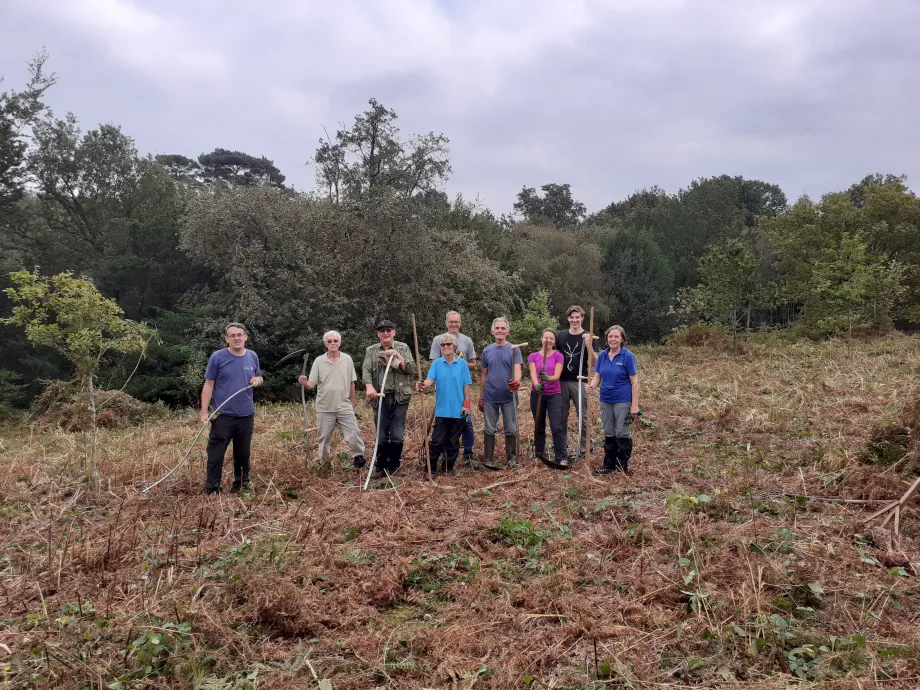
Volunteers using scythes to tackle the bracken at Bitchet Common
Following the discovery of the white admiral – a high priority butterfly species – at Crockham Hill Common, we set out to record butterfly populations at eight sites across the commons. After reaching out to the local community, a team of volunteers was created. Volunteers received training on identification and walked routes through the commons every week from July to September. Their records are creating a more accurate understanding of the butterflies of the commons which will inform the management of the land. With over 50% of Britain’s butterfly species now featuring on the IUCN Red List, this work comes at a crucial time when we need to build the resilience of our landscapes in the face of the climate and nature crises.
The project also recently hosted its first bioblitz, an event which brings experts and newcomers together to identify as many species as possible in an area. The project is proud to have identified 75 species at Sevenoaks Common! This achievement was made possible by local families, who joined staff in searching for insects and spying for birds.
The Sevenoaks Greensand Commons event has now come to a close but we are pursuing funding for further practical work. In the meantime, if you'd like to take part in citizen science volunteering in other areas of Kent, please contact us here.
Ashford Area Warden, Will Glasson, explores autumn conservation and wildlife at Hothfield Heathlands - and how you can get involved.
This guest blog is written by Rachel Rodwell, councillor and campaigner. She explores the respite that woodlands like Oaken Wood can provide through troubling times.
You may have heard about the unusually strong El Niño developing in the Pacific Ocean. But what exactly is it? And what could it mean for wildlife and wild places in Kent?