
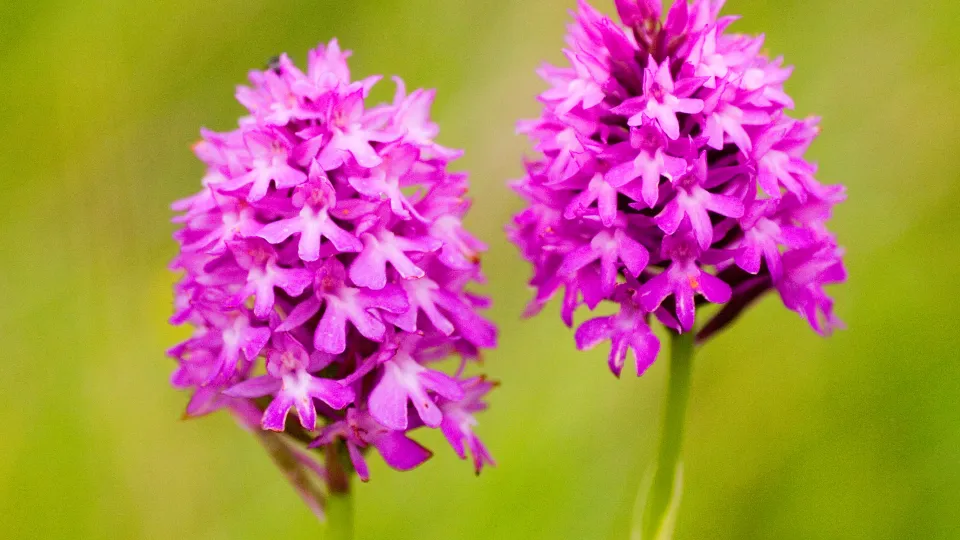
Pyramidal orchid
The Pyramidal orchid lives up to its name - look for a bright pinky-purple, densely packed pyramid of flowers atop a green stem. It likes chalk grassland, sand dunes, roadside verges and quarries.
The Pyramidal orchid lives up to its name - look for a bright pinky-purple, densely packed pyramid of flowers atop a green stem. It likes chalk grassland, sand dunes, roadside verges and quarries.
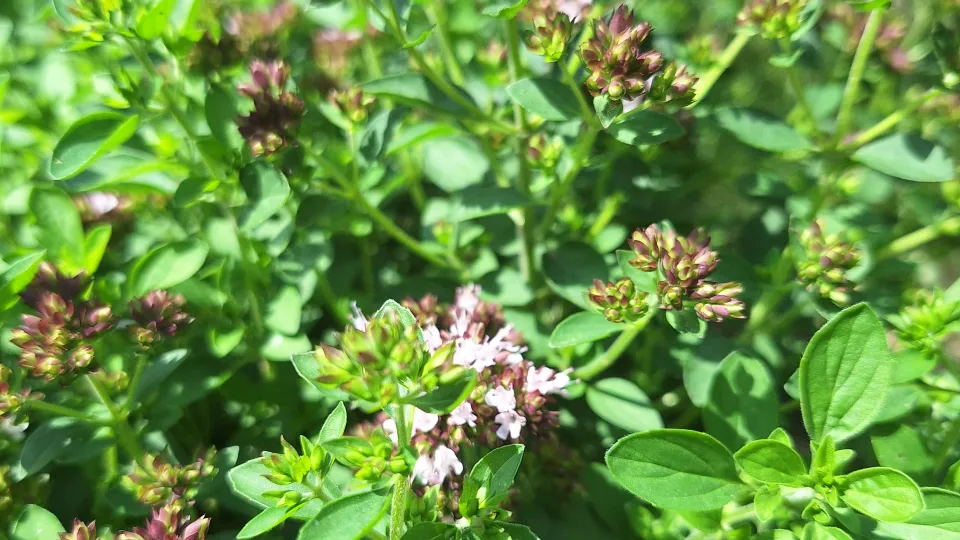
Wild marjoram is actually the same aromatic herb as oregano which is used in Mediterranean cooking. Its small, pink flower clusters can be seen on chalk and limestone grasslands in summer.
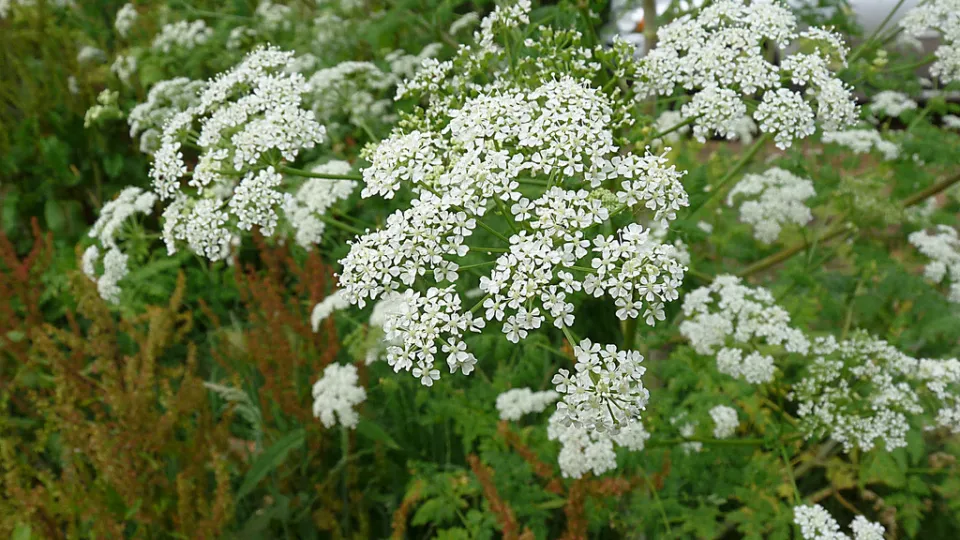
A notoriously poisonous plant, hemlock produces umbrella-like clusters of white flowers in summer. It can be found in damp places, such as ditches, riverbanks and waste ground.
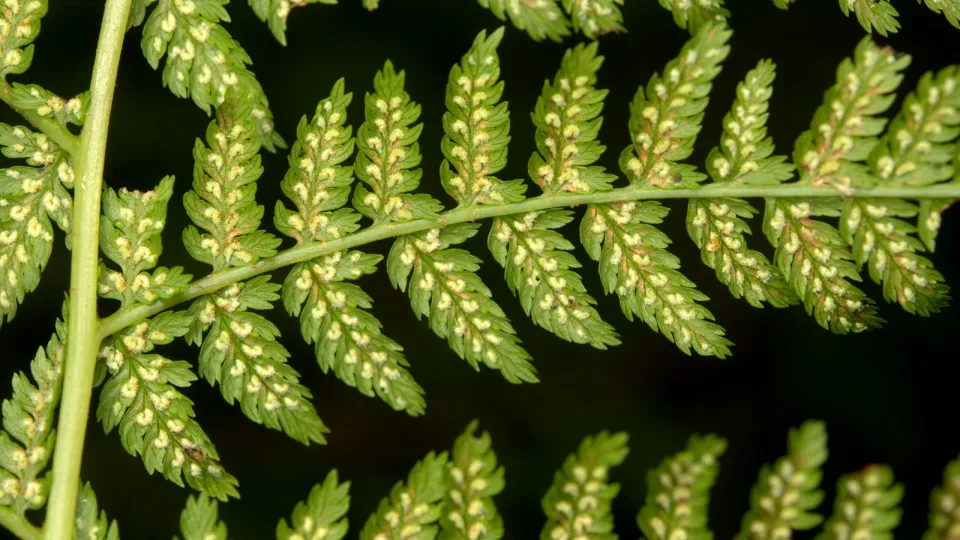
One of the prettiest hardy ferns, the lady fern is delicate and lacy, with ladder-like foliage. It makes a good garden fern, providing attractive cover for wildlife.
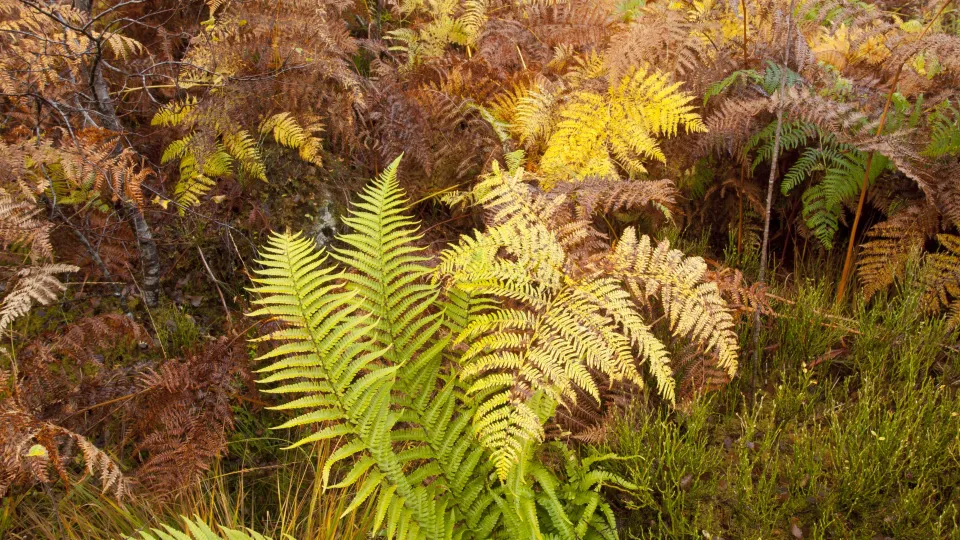
A classic fern of woodlands across the UK, the male-fern is also a great addition to any garden. It grows impressive stands from underground rhizomes, dying back in autumn.
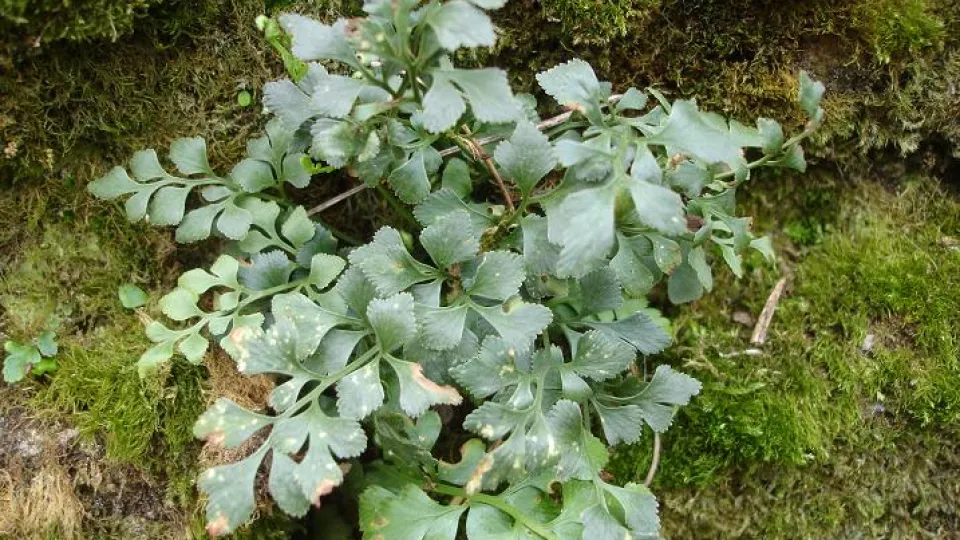
With club-shaped leaflets on its fronds, wall-rue is easy to spot as it grows out of crevices in walls. Plant it in your garden rockery to provide cover for insects.
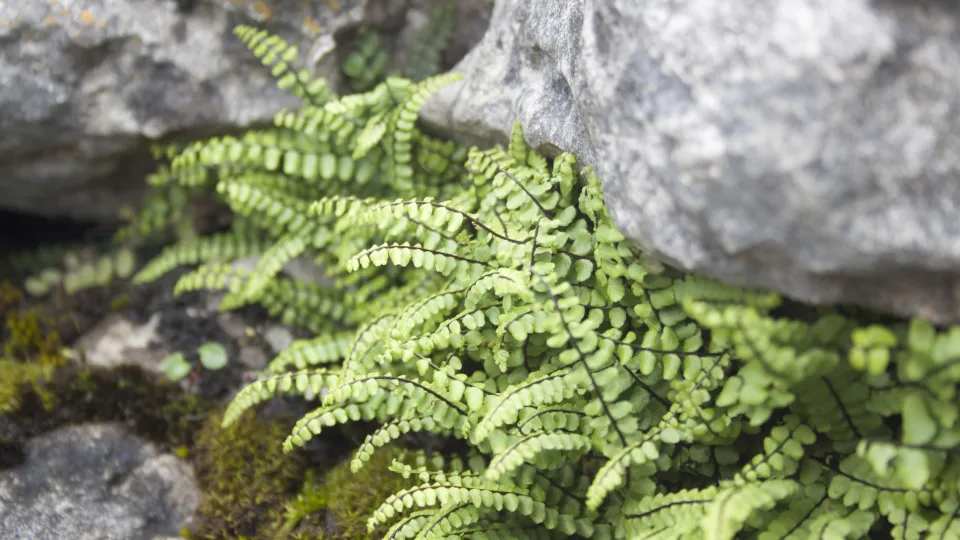
A small, tufted fern, maidenhair spleenwort can be found growing out of crevices between rocks, in walls and on mossy branches across the UK.
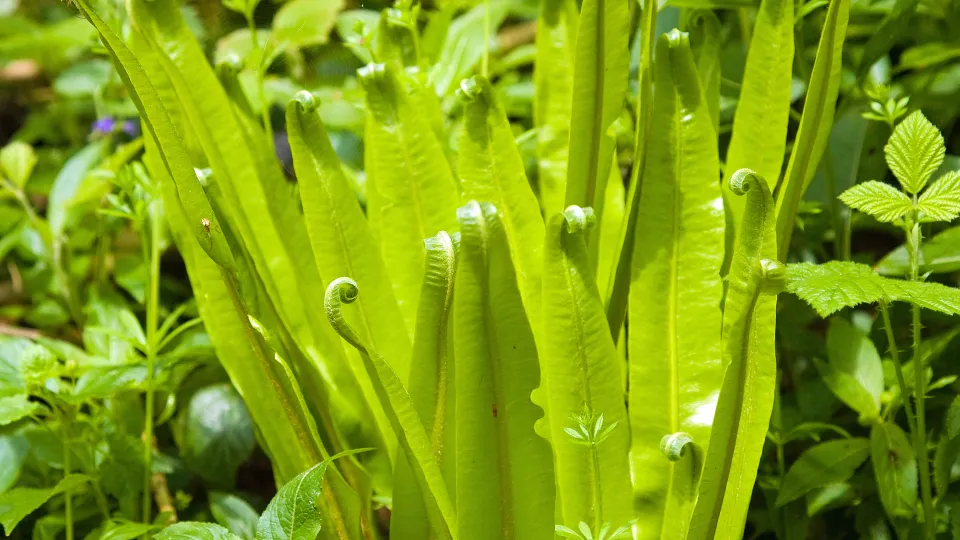
The hart's-tongue fern is a hardy fern of damp, shady places in woodlands. It also makes a good garden fern. It has simple, tongue-shaped, glossy, green leaves that have orange spores on their undersides.
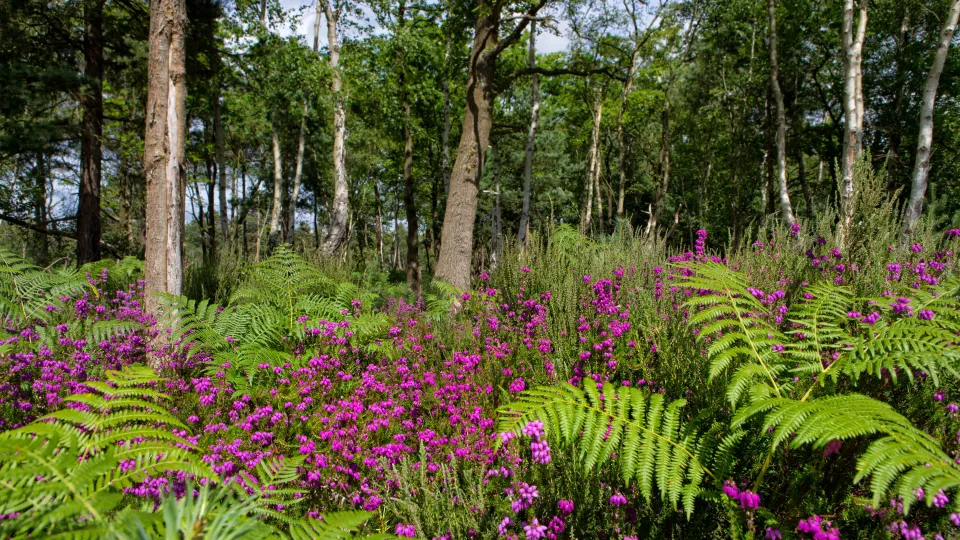
Our most familiar fern, bracken can be found growing in dense stands on hillsides, moorland, heathland and in woodlands. It is very large and dies back in winter, turning the landscape orangey-brown.
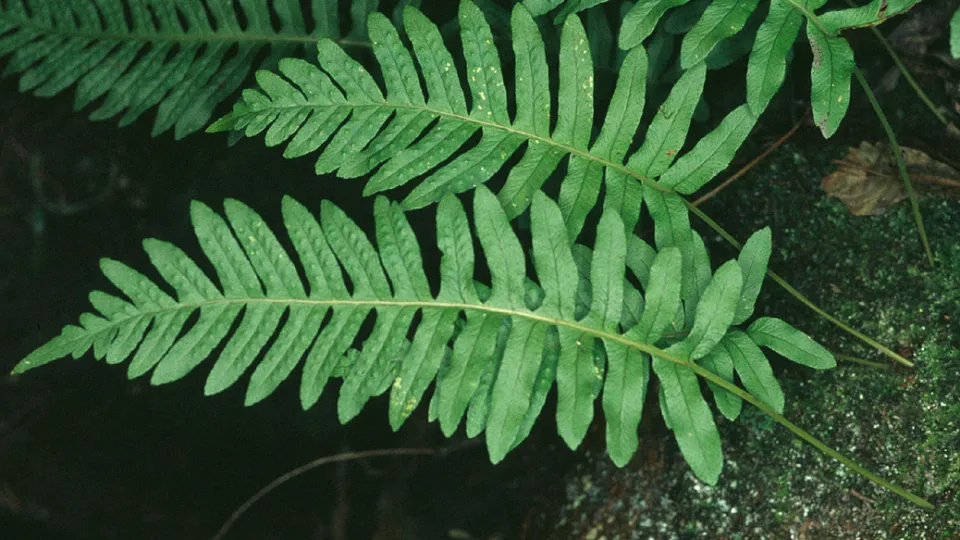
The common polypody is a hardy fern of damp, shady places in woodlands. It also makes a good garden fern. It has ladder-like, leathery foliage with pimply undersides - these spots are the spores.