
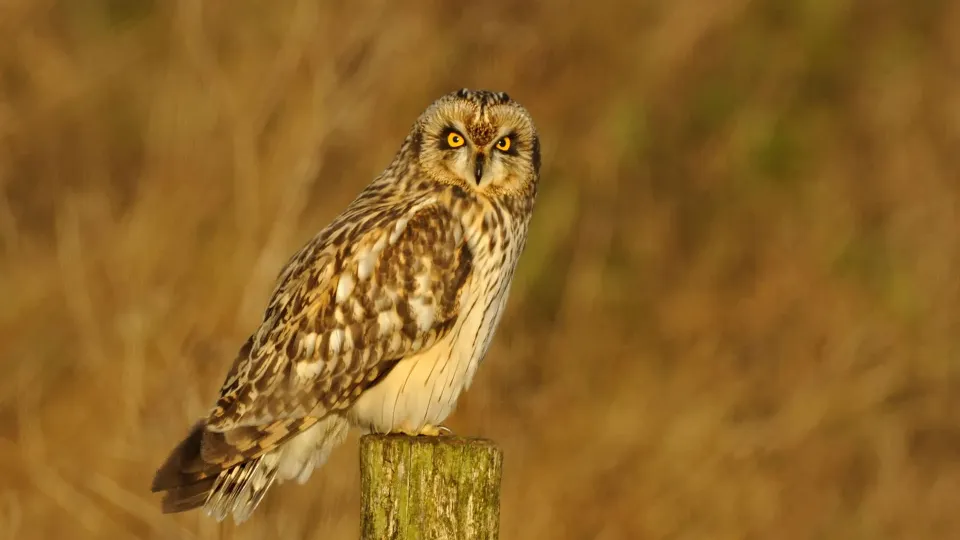
Short-eared owl
The short-eared owl, or 'Shortie', is an unusual owl because it prefers to be out and about in the daytime. Learn more about it in our species information page.
Taxa which do not qualify for Lower Risk (conservation dependent), but which are close to qualifying for Vulnerable. In Britain, this category includes species which occur in 15 or fewer hectads but do not qualify as Critically Endangered, Endangered or Vulnerable.
The short-eared owl, or 'Shortie', is an unusual owl because it prefers to be out and about in the daytime. Learn more about it in our species information page.
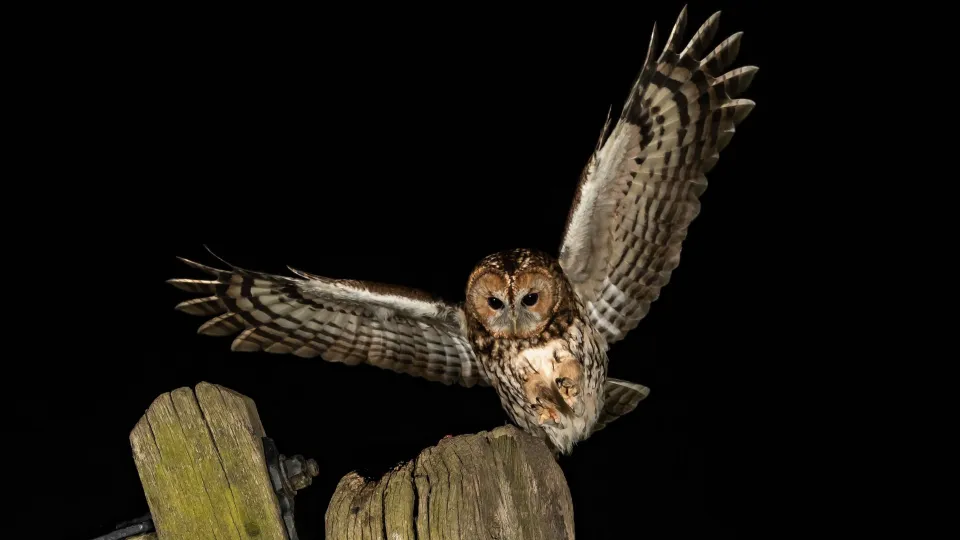
Tawny owls are the familiar brown owls of Britain’s woodlands, parks and gardens. They are known for their ‘too-wit too-woo’ song that can be heard at night-time.
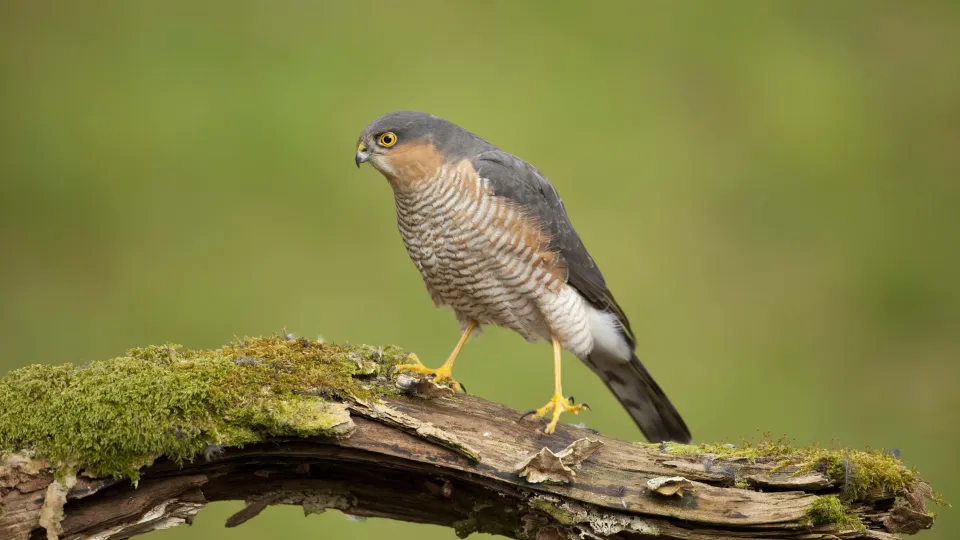
The sparrowhawk is a small bird of prey that can be found in all kinds of habitats and often visits gardens looking for its prey - small birds like finches, tits and sparrows.
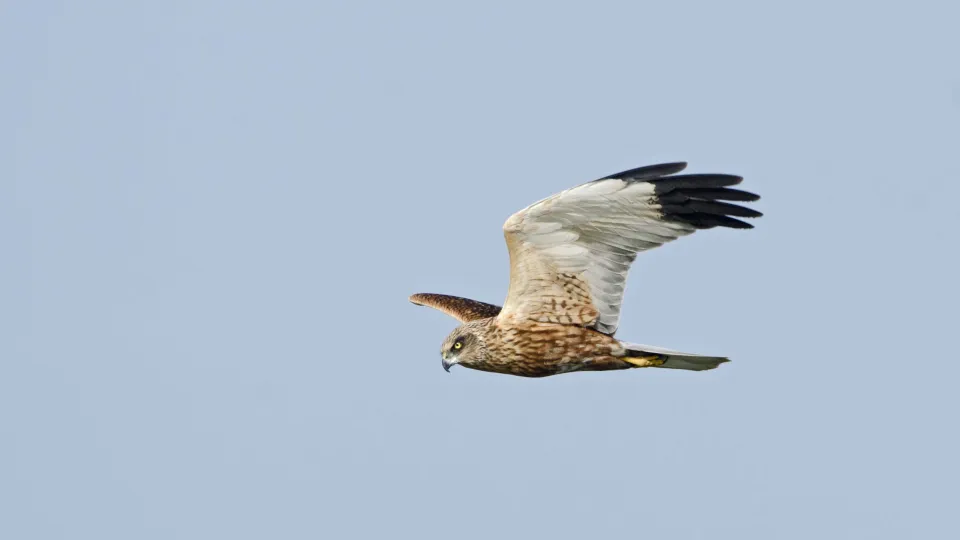
The courtship of the marsh harrier is certainly a sight to behold - wheeling and tumbling through the sky, male and female partners lock talons in mid-air. Look out for this rare bird over reedbeds in East Anglia, Somerset and the South East.
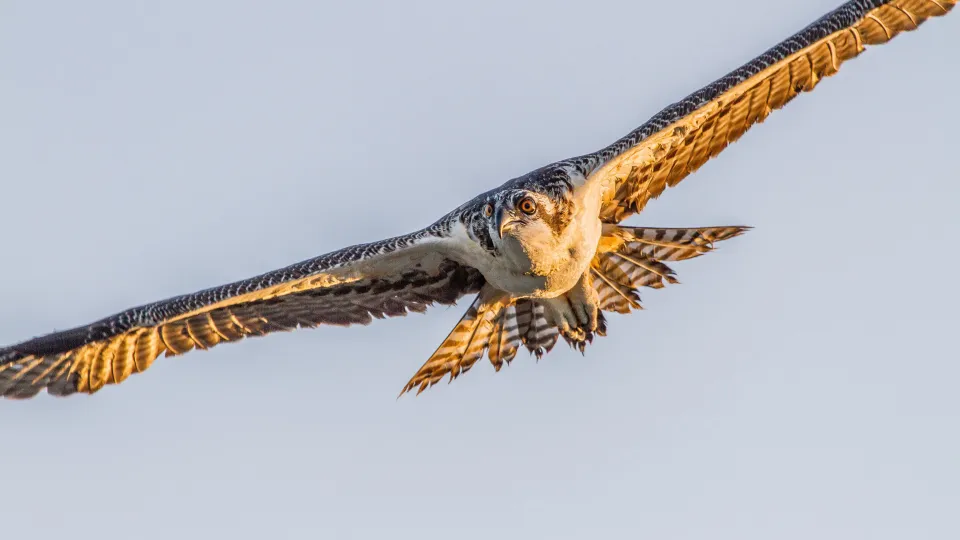
A great way to get up close and personal with the magnificent osprey is via one of the many nestcams set-up in the places that it breeds: Scotland, Cumbria, Wales and the East Midlands.
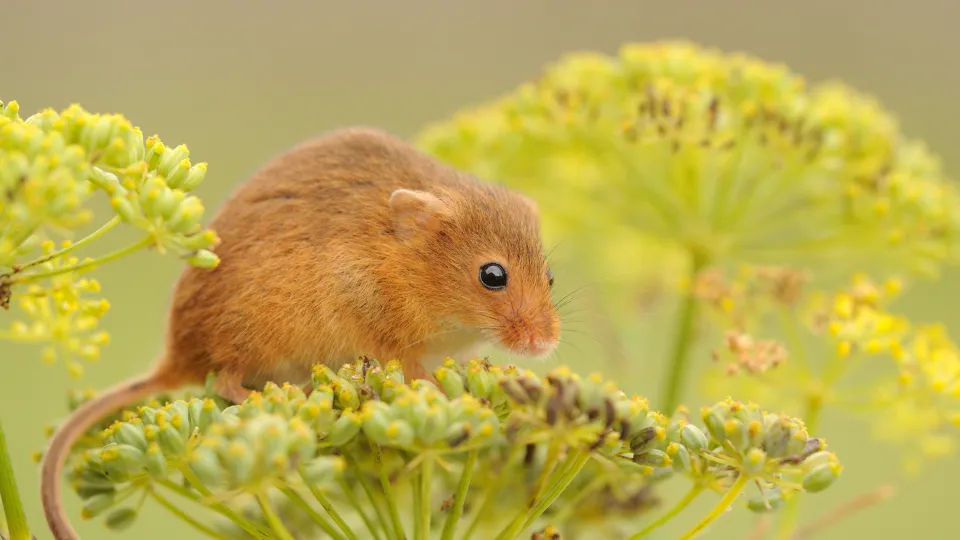
The harvest mouse is tiny - an adult can weigh as little as a 2p piece! It prefers habitats with long grass, but you are most likely to spot its round, woven-grass nests.
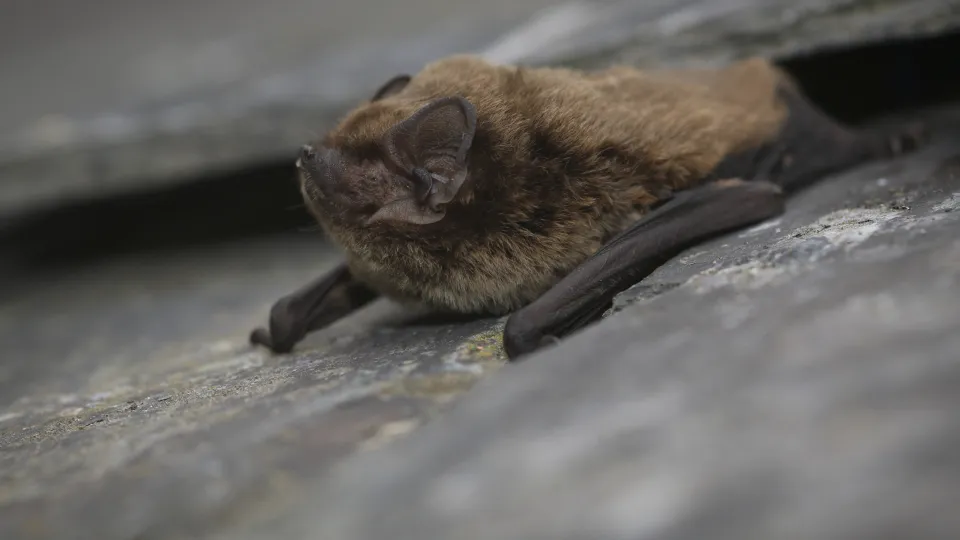
The Leisler's bat flies fast and high near the treetops, but you might also spot it flying around lamp posts, looking for insects attracted to the light.