
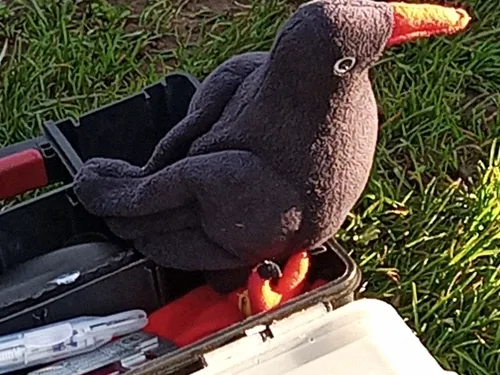
Temple Ewell’s Chough Champions
Blog
Temple Ewell is a proud to be the pilot school for Chough Champions, a recent addition to the Wilder Kent Awards. Learn more about the initiative here.

There was a huge public reaction to Thomas’s death. Pilgrims began to arrive at Canterbury Cathedral from across Europe and King Henry II received many high-status visitors.
Henry invested in Dover Castle, creating the great tower keep as a fitting venue, suitable for important travellers on their way to Canterbury, and making it truly ‘fit for a king'.
Sometime after his death, Thomas was attributed a coat of arms featuring three choughs, which first appears about 100 years later in Canterbury Cathedral, and, in the 14th century, the City of Canterbury adopted a coat of arms with three choughs and a royal lion. But no one really knows why the chough became associated with Thomas, other than the legend of the blooded crow. Whatever its origin, the chough has a long history in heraldry in glass, sculpture, coats of arms, flags, and even pub signs!
How many chough symbols can you find near you? Let us know at [email protected]
Temple Ewell is a proud to be the pilot school for Chough Champions, a recent addition to the Wilder Kent Awards. Learn more about the initiative here.
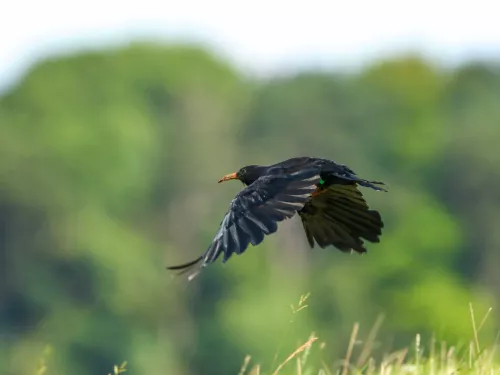
Kent Wildlife Trust's Chough Appeal is more than just a conservation initiative—it’s a powerful tool for community engagement and education. This blog is written by Jenny Luddington, the Youth Education and Engagement Officer for Kent Wildlife Trust...
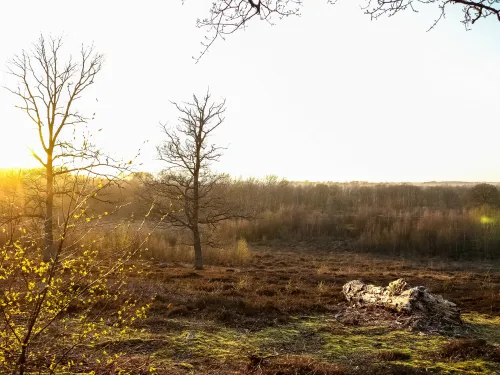
Ashford Area Warden, Will Glasson, explores autumn conservation and wildlife at Hothfield Heathlands - and how you can get involved.
This guest blog is written by Rachel Rodwell, councillor and campaigner. She explores the respite that woodlands like Oaken Wood can provide through troubling times.
You may have heard about the unusually strong El Niño developing in the Pacific Ocean. But what exactly is it? And what could it mean for wildlife and wild places in Kent?