Seasons: August

Ringed plover

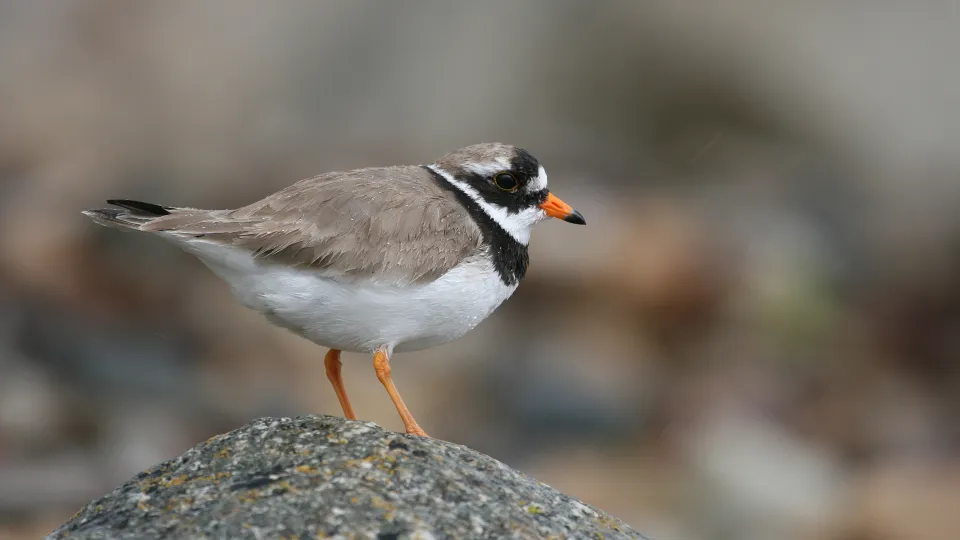
The ringed plover is a small wader that nests around the coast, flooded gravel pits and reservoirs. It is similar to the little ringed plover, but is a little larger, has an orange bill and legs, and doesn't have a yellow ring around its eye.
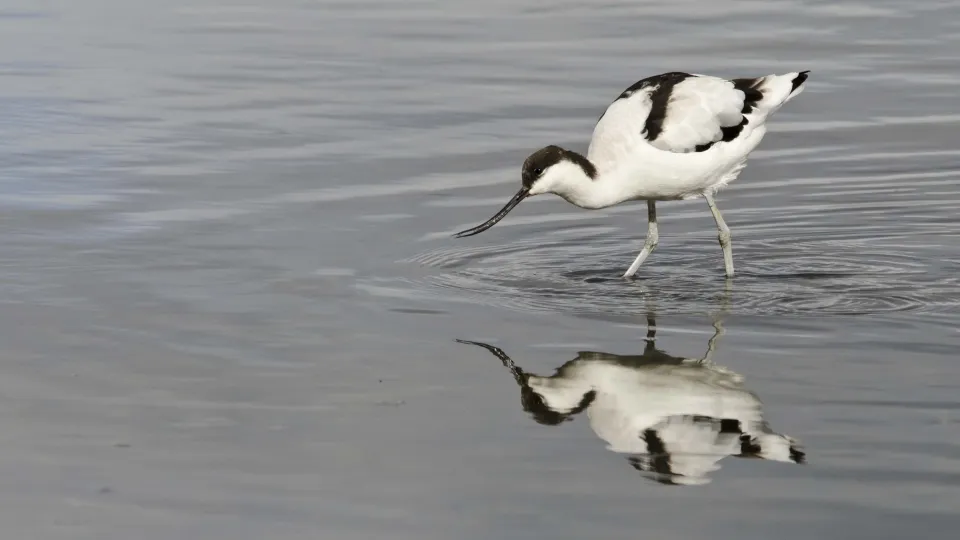

Avocet

A key species in the story of conservation, the avocet represents an amazing recovery of a bird once extinct in the UK. This pied bird, with its distinctive upturned bill, can now be seen on marshes and estuaries in the East and South West.

Oystercatcher

The loud 'peep-ing' call of an oystercatcher is a recognisable and familiar sound of the seashore. Look out for it hunting on rocky and muddy shores for shellfish to eat. It can also be spotted on some inland waterbodies where it has started to breed.

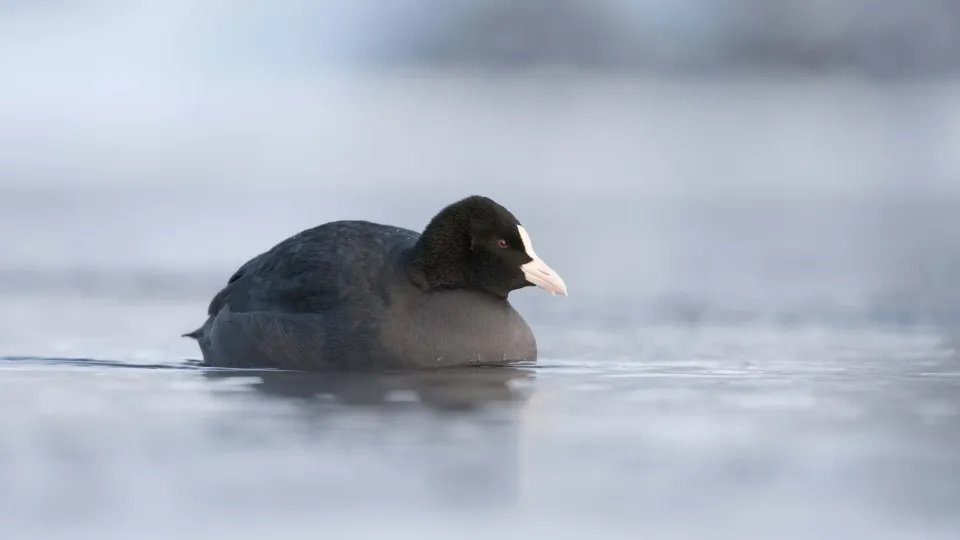
Coot

A familiar black bird of our lakes, ponds and rivers, the coot is widespread; look out for its large and untidy-looking nest on the water in spring. The coot can be distinguished from the similar Moorhen by its white beak and 'shield', and its entirely black body.

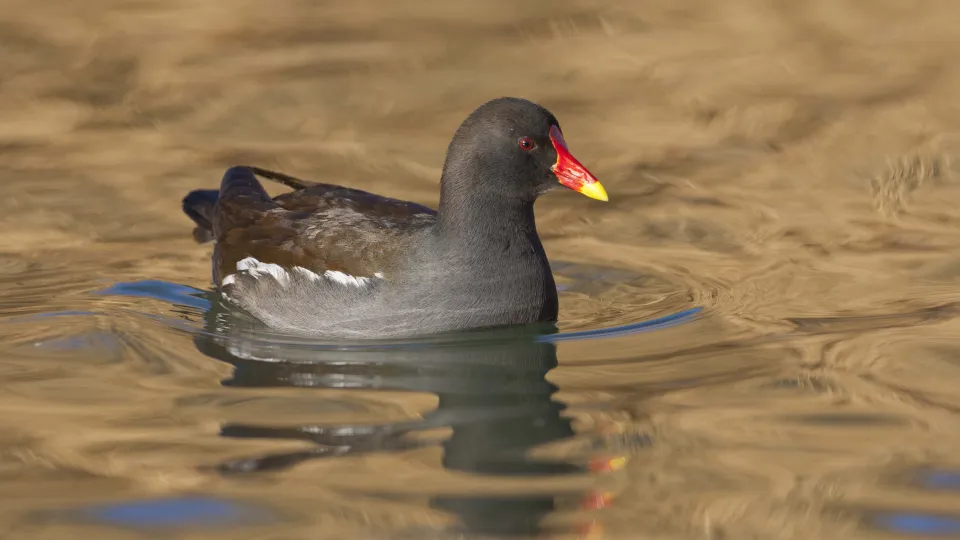
Moorhen

A familiar black bird of our lakes, ponds and rivers, the moorhen is widespread; look out for its large and untidy-looking nest on the water in spring. It can be distinguished from the similar coot by its yellow legs, red beak and the white patches on its body.

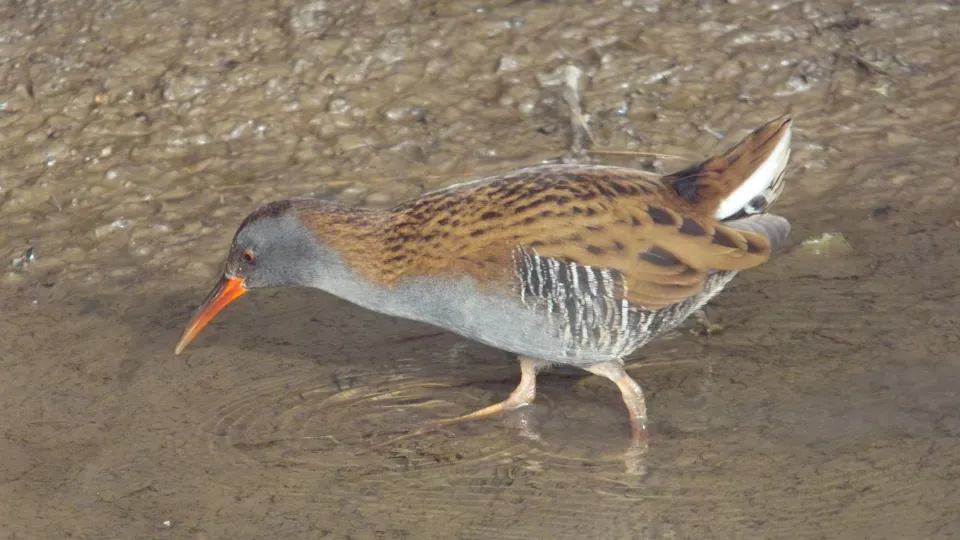
Water rail

From grunts and groans, to 'purring' and 'piglet squealing', the water rail is more often heard than it is seen! This shy bird lives in reedbeds and wetlands, hiding among the vegetation.

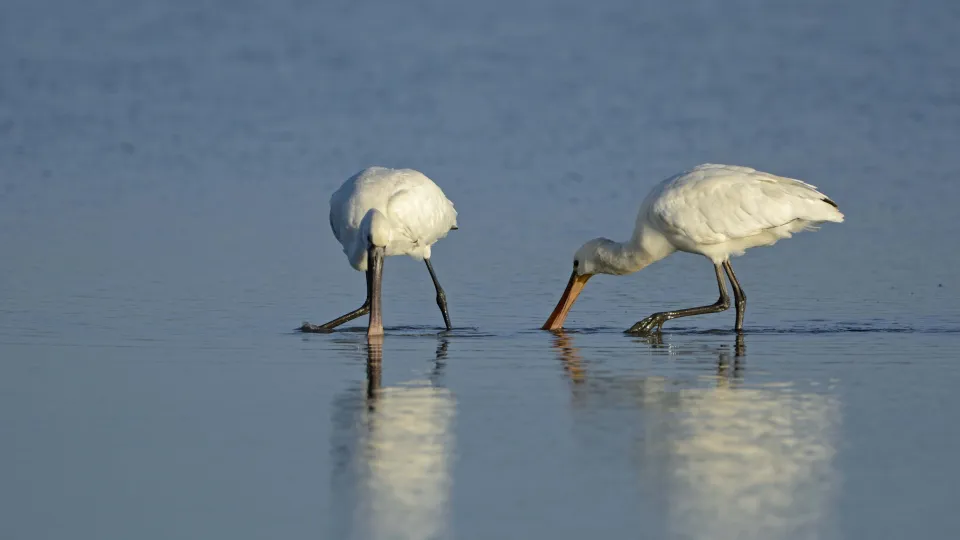
European spoonbill

The distinctive sight of a spoonbill is becoming increasingly common in the east and southwest of England, with colonies of breeding birds now established.

Little egret

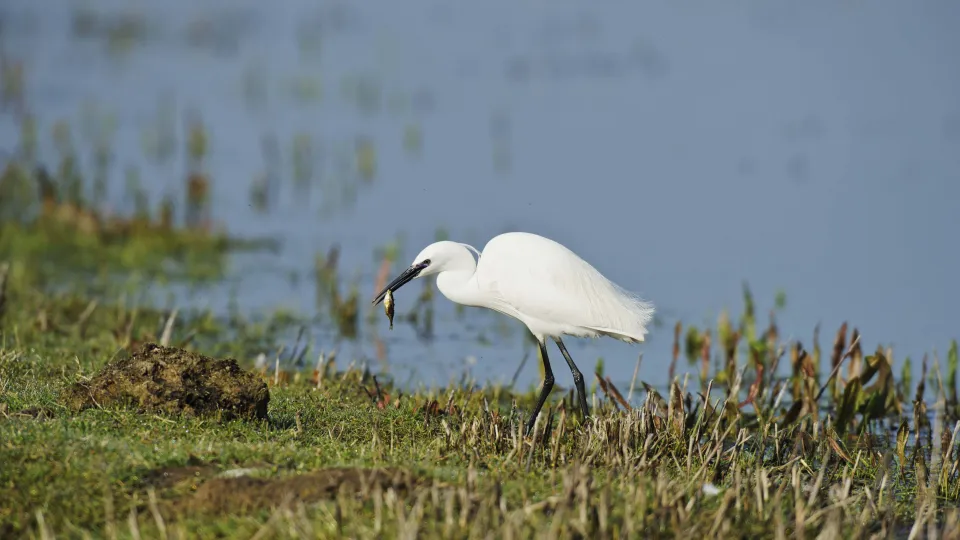
The elegant little egret was once a rare visitor to our shores, but can now regularly be spotted around the coastline of England and Wales. Look out for its beautiful neck plumes that herald the breeding season.

Grey heron

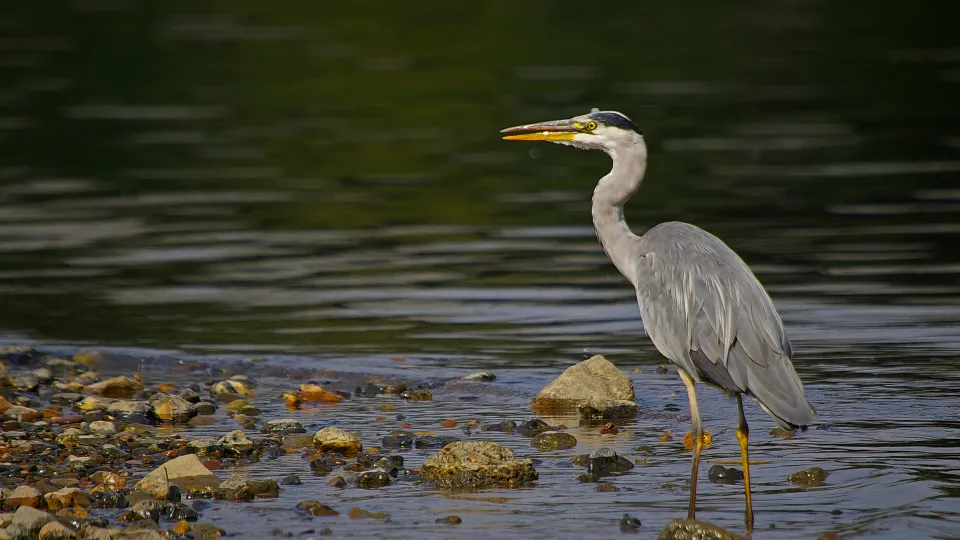
Spot these tall, prehistoric looking birds standing like a statue on the edge of ponds and lakes, contemplating their next meal.

Bittern

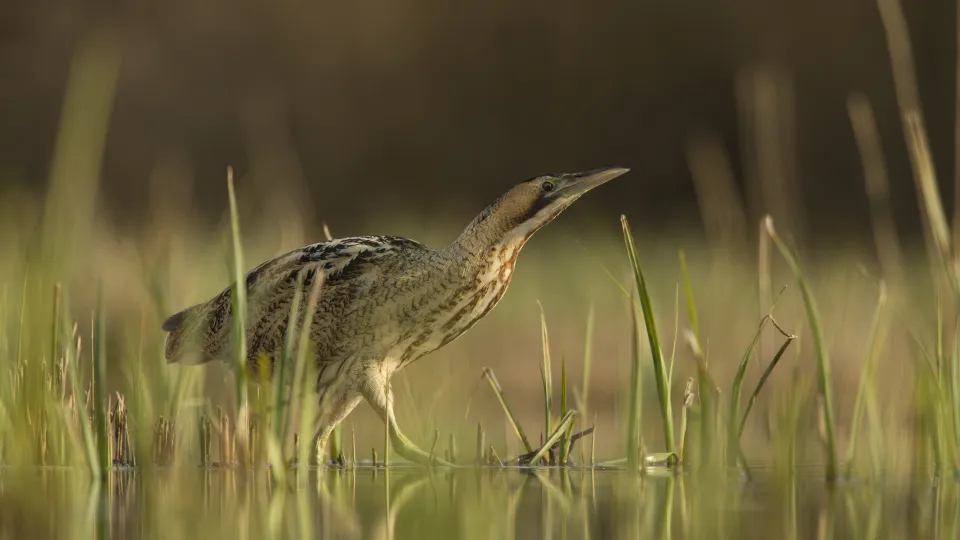
The shy and retiring bittern is a master of blending in and can be very difficult to spot in its reedbed home. It does sound like a booming foghorn, however, when it calls, so can often be heard if it cannot be seen.

Subscribe to August