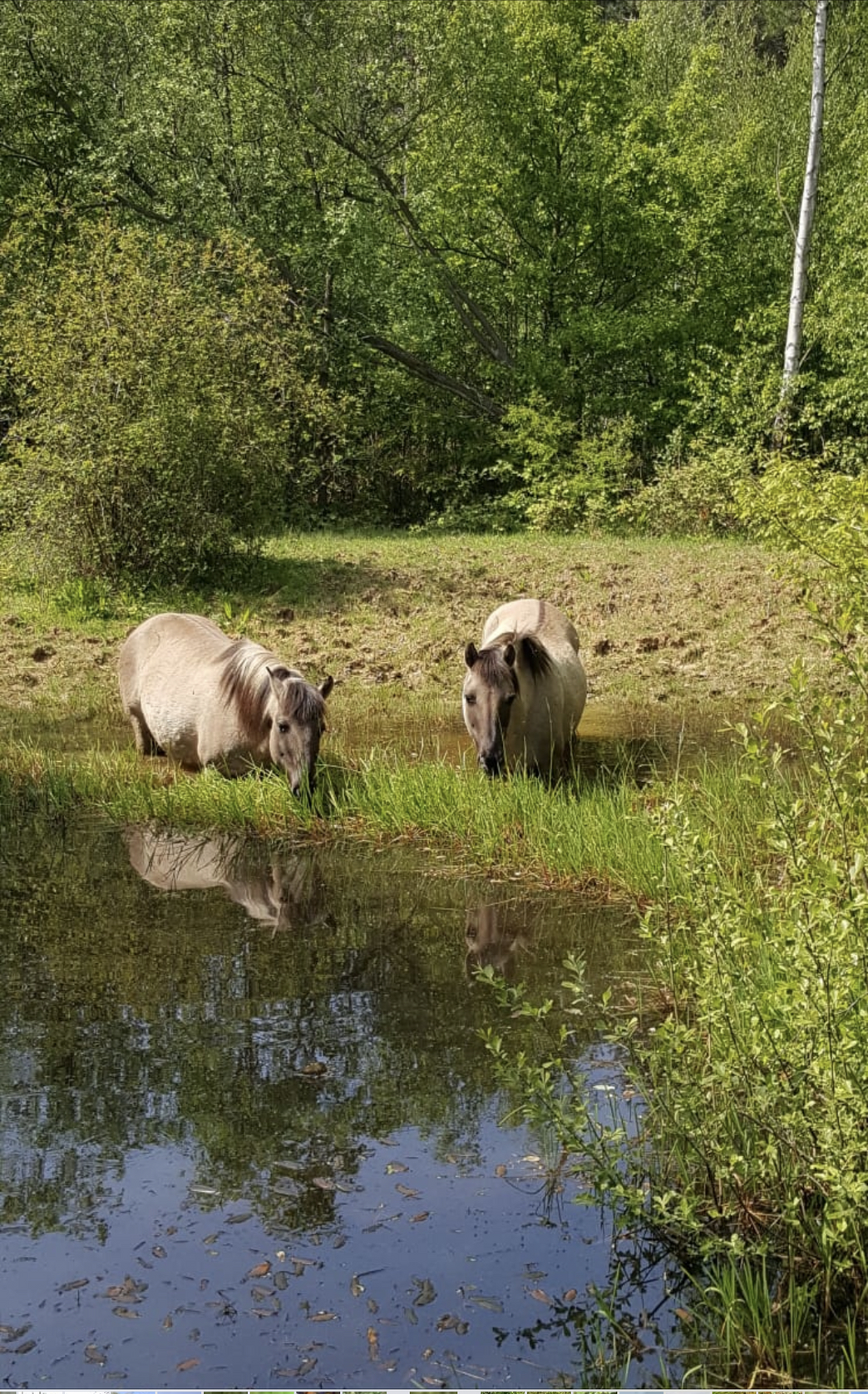
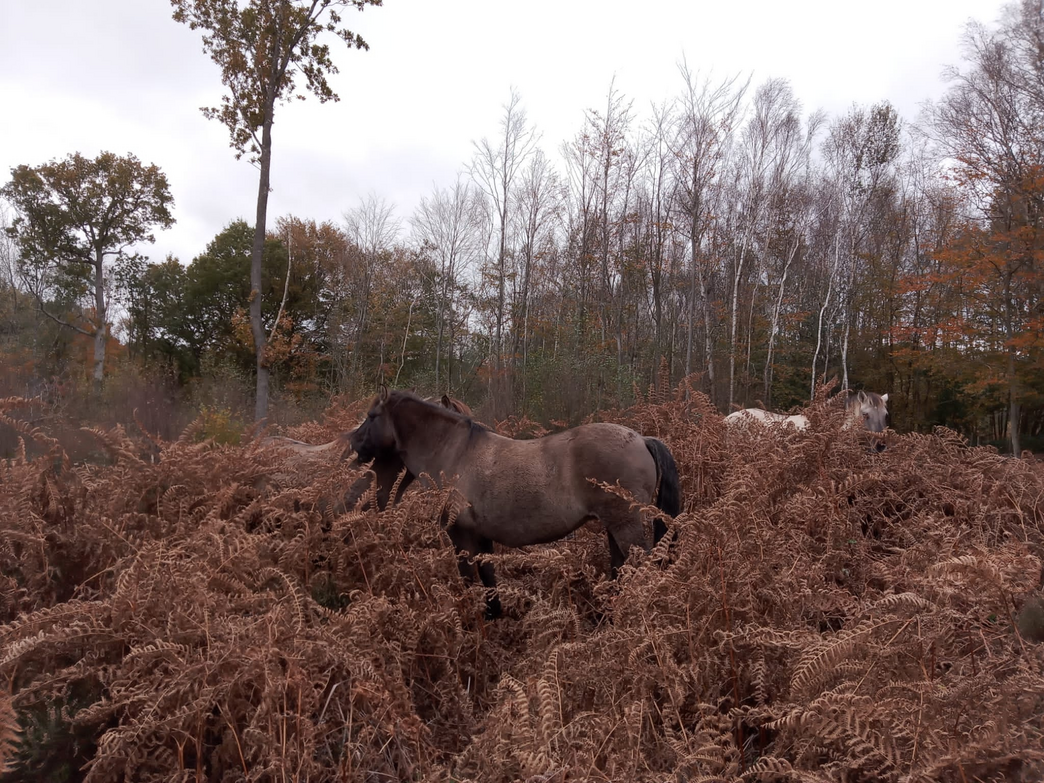
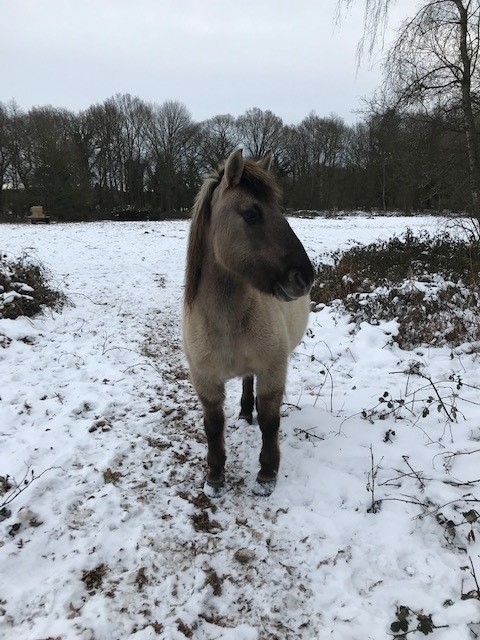
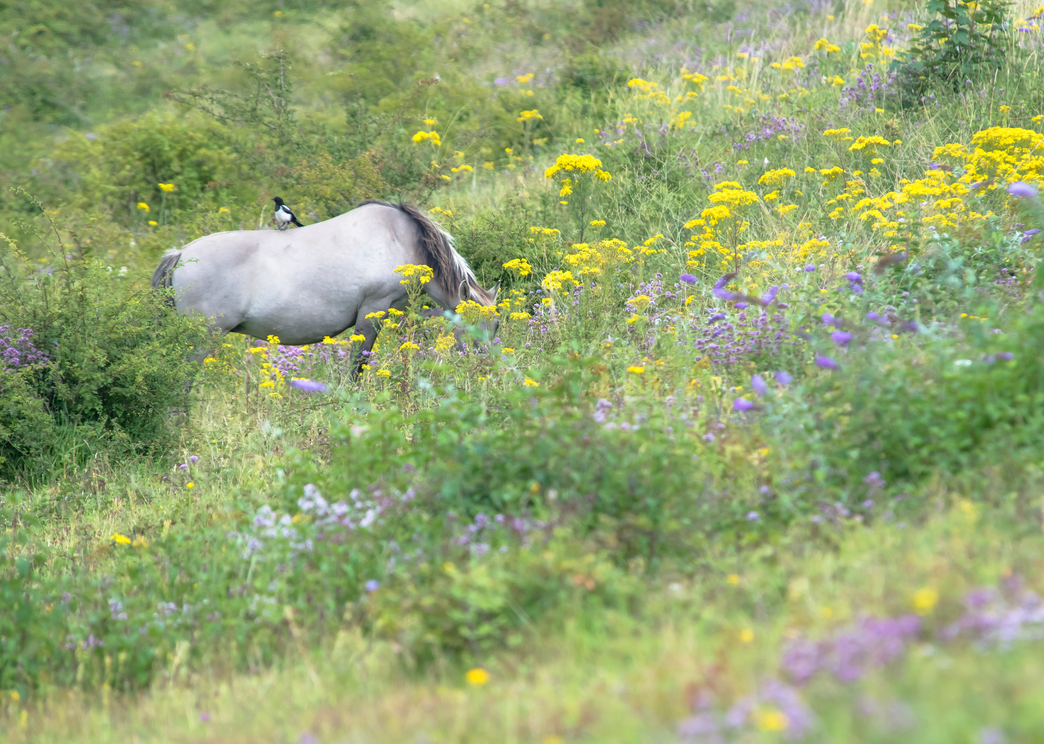
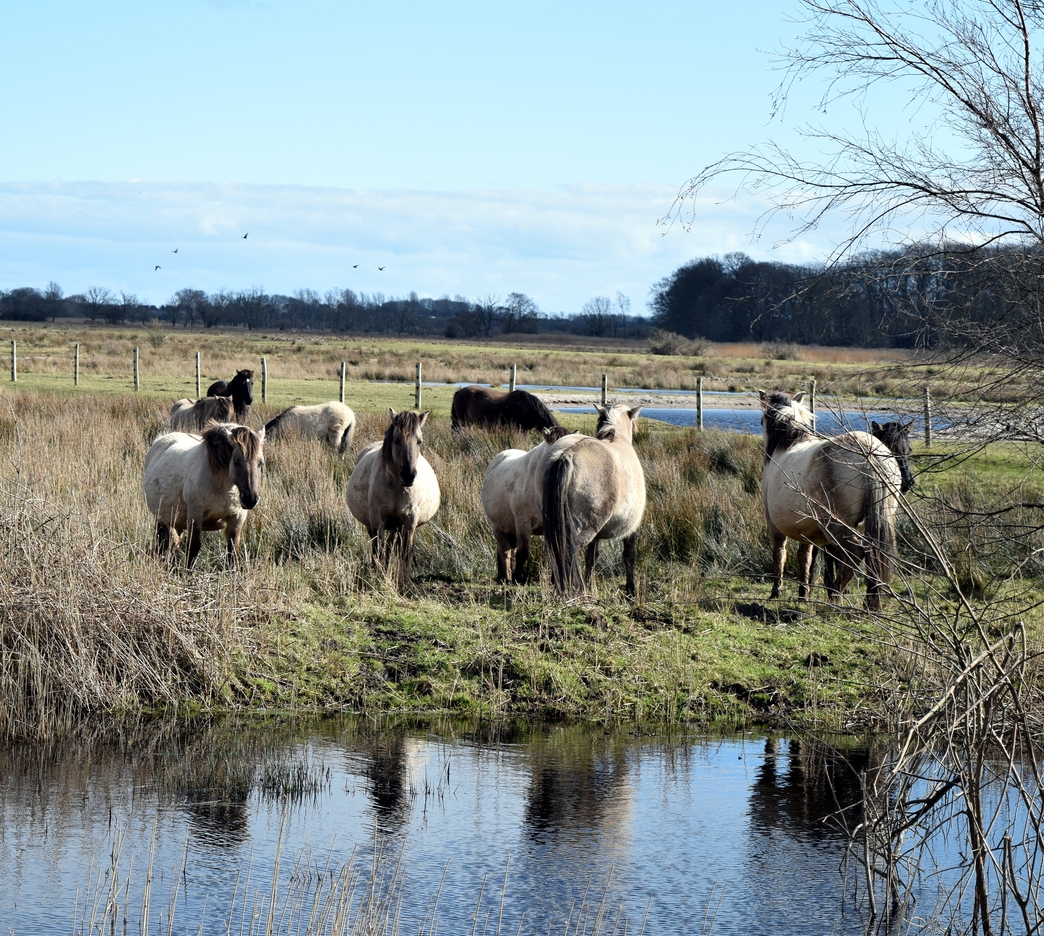
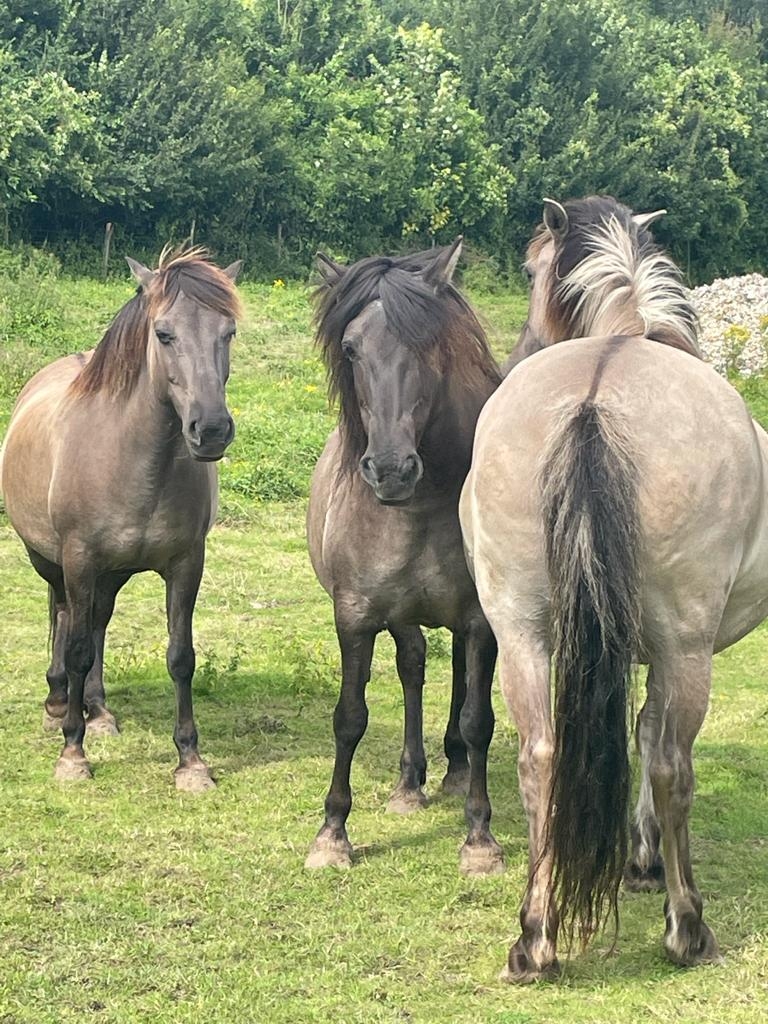
Konik ponies are typically dun (sandy coloured with black mane and tail), with a distinctive black dorsal or “eel” stripe down their spine. Like many primitive pony breeds, they’ll eat coarse grasses and scrub, helping us too open up areas for new growth, but Konik ponies in particular enjoy playing and grazing in water. Their behaviour helps to maintain a diverse and balanced habitat, with structural variation which benefits a wide range of birds, mammals and insects. As we do not de-worm our animals unless they need it, the ponies' chemical-free dung is key to supporting a wide range of insect life and maintaining a natural nutrient cycle.
At first glance against the green of the Kentish grasslands, these ponies may not look well camouflaged but, during the autumn and winter months, they can be almost indistinguishable from tussocks of tall, dry grasses and reeds.
This breed is friendly and laid back. Their greatest fear of harm is from people. Confident in wetlands and with broad hooves, they are most at home in lowland grassland landscapes. Although less prone to weight-related issues than Exmoor ponies, they are still at risk from this, particularly where members of the public take it upon themselves to feed them.