Feed seasonally
It’s important to revise what we feed garden birds during the summer and autumn months when there’s a higher risk of disease spreading.
- From 1 May to 31 October: Pause filling your bird feeders with seeds and peanuts to prevent too many birds gathering in one place. During this time, there is greater availability of natural seed, the risk of trichomonosis outbreaks is higher, and there is little evidence of beneficial effects from supplementary feeding.
- It’s okay to keep offering small amounts (in moderation) of mealworms, fat balls, or suet year-round in hanging feeders that are regularly cleaned.
- The updated guidance recommends feeding seed and peanuts from November to April, when the benefits to birds are likely to be greatest. When feeding, provide them in moderation – top up your hanging feeders little and often and clean them once a week.
Feed safely
Just one infected bird can turn your busy feeder into a disease hotspot. To help keep birds healthy, we need to prioritise hygiene.
- Clean and move your feeders weekly: Get into the habit of giving your feeders a good clean at least once a week. You can do this using warm soapy water or 5% disinfectant.
Make sure to rinse any disinfectant off thoroughly and always allow feeders to air-dry completely before adding food. Brushes and equipment used to clean feeders and baths shouldn’t be used for other purposes. Rubber gloves should be worn and hands washed afterwards. See more in our guide here: How to clean nestboxes and bird feeders | The Wildlife Trusts
If possible, place your feeders in a different spot after each clean to prevent the build-up of contaminated debris underneath. Any existing debris should be cleared up.
- Change water daily: Only offer water if you’re able to change it every day and make sure it’s tap water. Water baths should also be cleaned weekly. (This doesn’t include ponds)
- Remove flat-surfaced feeders: Research has confirmed that there’s a higher risk of the disease spreading on flat surfaces, where contaminated food can collect for other birds to eat. This means bidding a fond farewell to feeders that have any flat surfaces – including bird tables.
Your garden can help nature thrive
Our gardens still play an important role in helping nature thrive – together our gardens cover an area larger than all national nature reserves combined. There are plenty of ways to help wildlife where we live including providing natural sources of food, water, and shelter. This could include planting wildlife-friendly plants and berry-producing shrubs, creating a pond, or leaving a log pile, leaf litter or your lawn to grow a little longer to support invertebrates.
Five main types of bird food:
- Straight seeds – as the name suggests, these seeds aren’t mixed with anything. Straight seeds include black sunflower, niger, oil seed rape, peanuts, and red and white millet.
- Seed mixes – here the seeds are mixed into different blends, with the main advantage being that a greater mix of seed types attracts a greater mix of bird species.
- Husk-free seed mixes – similar to the above, the seeds in these mixes have had their husks removed, so there is much less mess to clear up and birds that can’t crack husks (such as blackbirds) can also eat the mix. Some husk-free mixes also contain other foods like dried mealworms and suet pellets.
- Suet (also called fat) – this food comes as blocks, balls and pellets. Lots of birds like suet and it provides a vital source of energy for them, particularly in the winter months.
- Live mealworms – a brilliant food to provide in the breeding and fledgling season.
Five ways of providing food:
- Hanging seed feeders - these will attract robins, tits, goldfinches, house sparrows, greenfinches and siskins.
- Niger/Nyjer seed feeders - designed to hold tiny niger seeds, these attract goldfinches, siskins and redpolls.
- Mesh peanut feeders - these allow birds to take only small chunks of peanut, rather than whole nuts that they might choke on. They will attract sparrows, starlings, chaffinches and tits.
- Ground feeding - birds such as blackbirds, collared doves, thrushes, dunnocks and robins will not use feeders, preferring to feed off the ground. Please note that bird feeder tables have been linked to the spread of diseases in birds. A hanging feeder is much more hygienic.
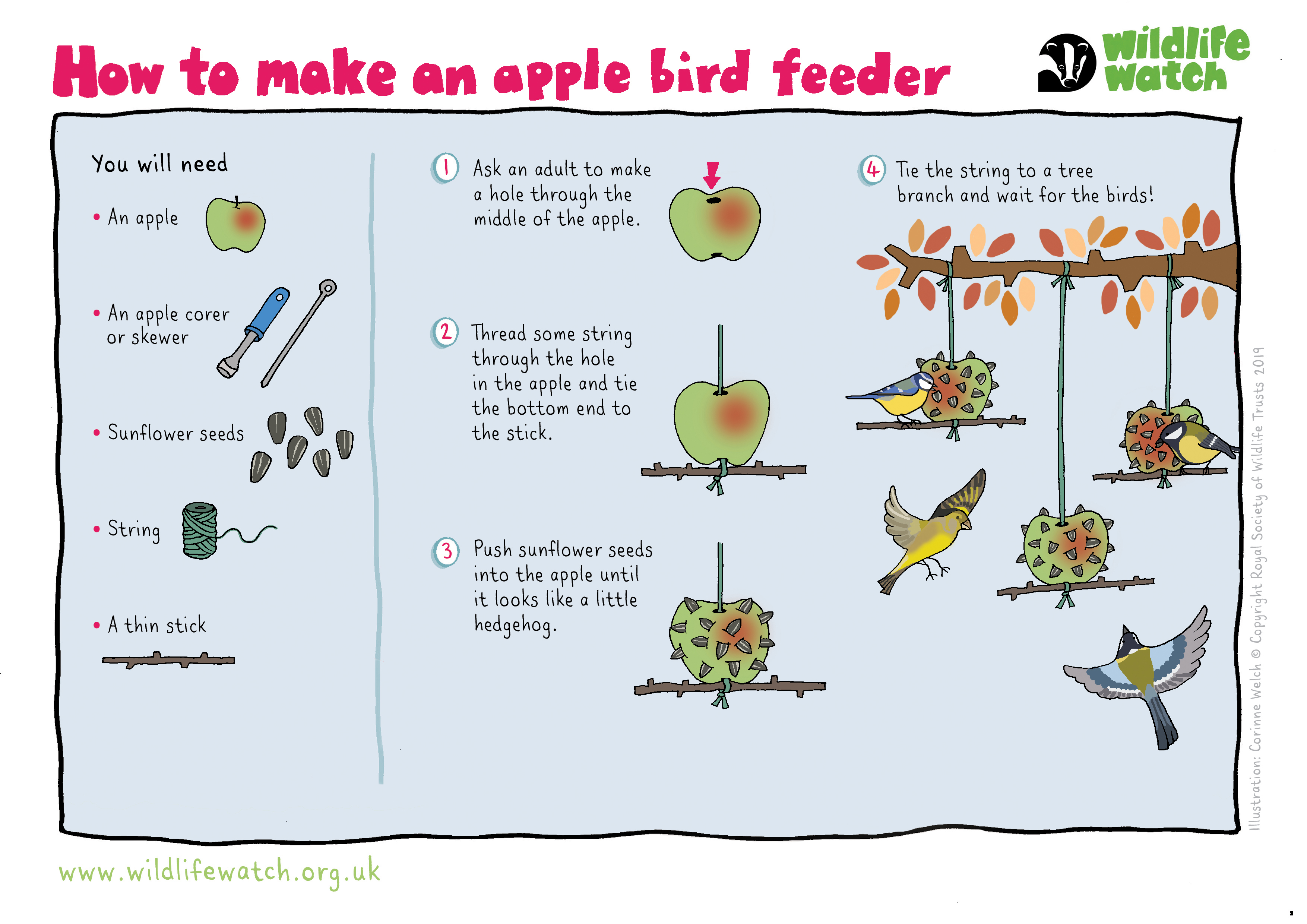
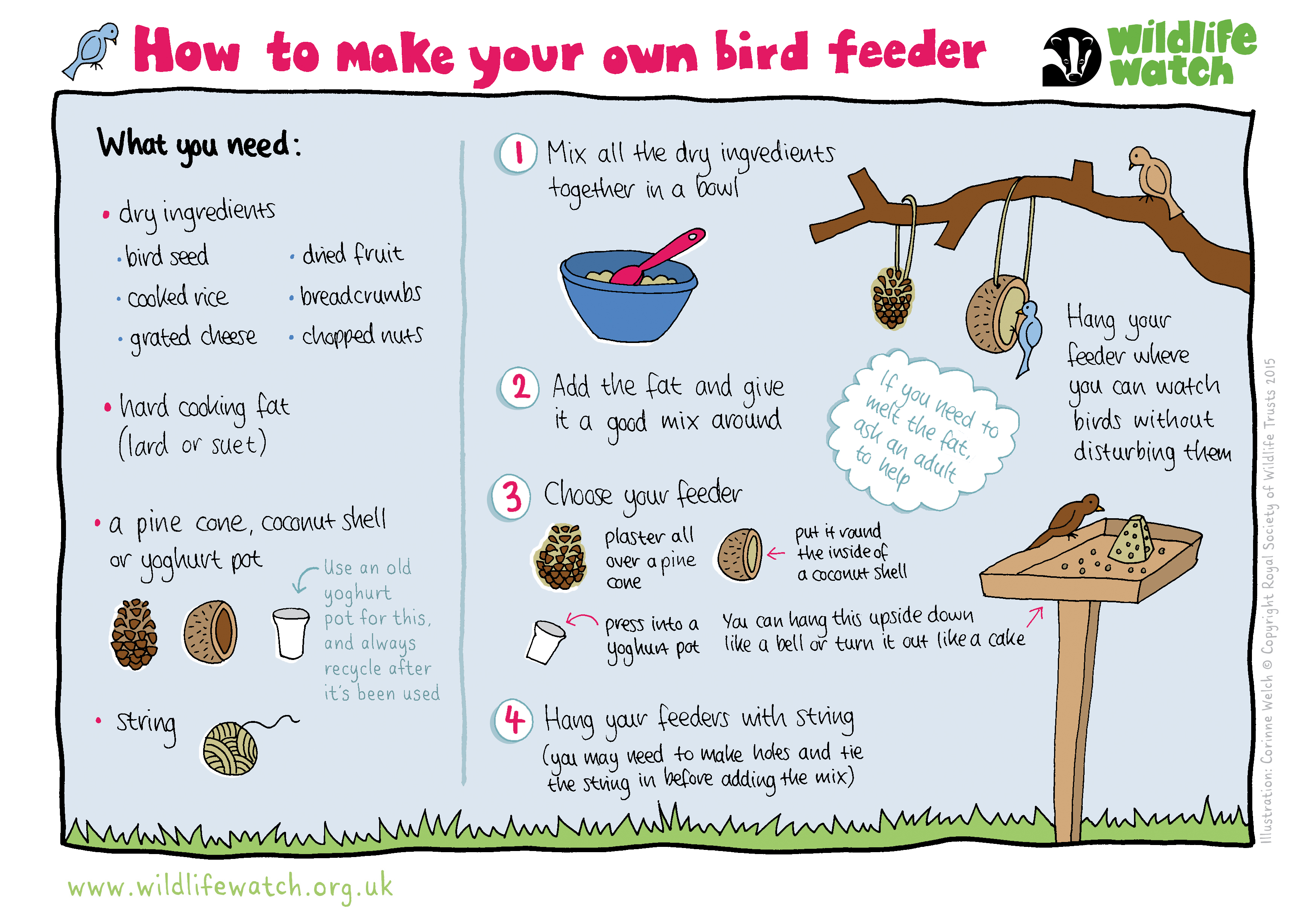
- Home made - half coconuts or a pine cone covered in fat or vegetable suet can be hung from a tree. They will attract tits, greenfinches and house sparrows.
Get started with our instructions below!